Approaching the Threshold
Step off the frantic treadmill of daily stress and master your inner architecture. Bridge ancient yogic science with modern neurobiology to rewrite subconscious patterns, calm your nervous system, and reclaim deep, lasting peace.

Bio-Alchemical Self-Mastery: Translating Yogic Science into Practical Tools for Everyday Peace
Have you ever closed your eyes to meditate? Did you find your mind buzzing like a beehive—a whirlwind of thoughts, sensations, and memories? Perhaps you even experience this as physical tension or scattered energy. You're certainly not alone. From a yogic perspective, the mind (Chitta) isn't just the brain. It's the vibrant fabric of individual consciousness interacting with nature (Prakriti). In its ordinary state, it constantly fluctuates (Vrittis).
🎬 The Screen and the Story: Finding the Steady Witness

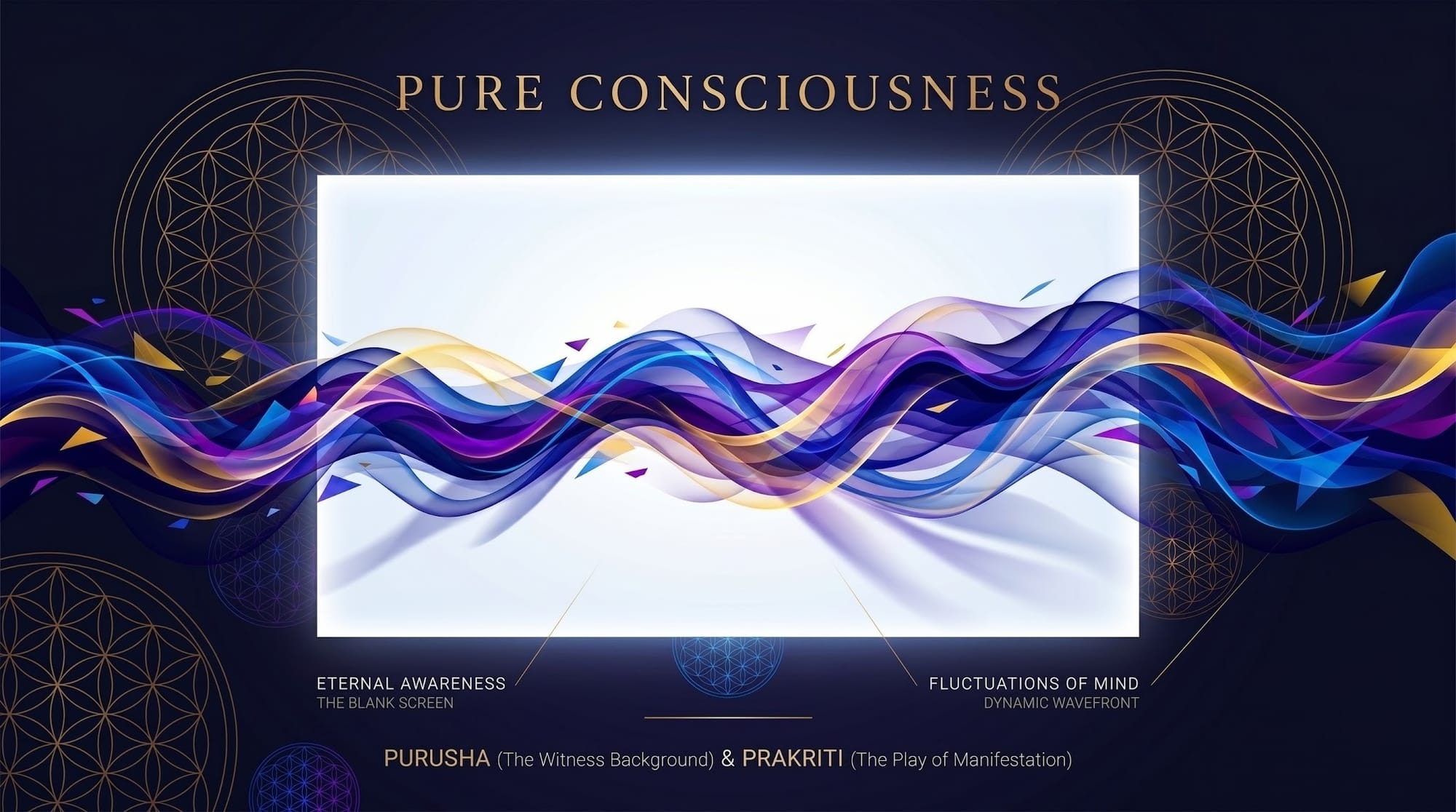
To understand this interaction, it helps to use a classic metaphysical metaphor: the relationship between the movie screen and the movie itself. Prakriti is the movie playing on the screen—full of drama, explosions, sorrow, and excitement (the Vrittis). The true Self, however, is Purusha (or Atman)—the blank white screen itself. The movie cannot stain, burn, scratch, or wet the screen. When you find yourself caught up in the chaotic drama of daily life, simply stopping to mentally state, "I am not the movie; I am the screen witnessing the movie," can instantly shift you into a state of emotional resilience.
These mental fluctuations are not random. Often, they're ripples from deeper subconscious impressions (Samskaras) left by past experiences and actions (Karma). These impressions are rooted in a fundamental misunderstanding of reality (Avidya, or ignorance). They color our perception, drive our reactions, and shape our physical tendencies. Meditation is the profound practice of observing these Vrittis and gradually calming them so that we can see beyond the veil of ingrained patterns.
According to yogic tradition, the meditating mind doesn't start as a blank slate. It embarks on a transformative journey through five distinct states (Bhumis). It moves from surface-level chaos towards deep stillness, where the calm, unchanging, pure awareness of Purusha resides.
In this exploration of "Approaching the Threshold", we look at this roadmap not just as an abstract philosophy, but as a deeply physical, neurological, and energetic experience. It is a step-by-step holistic path toward inner peace and personal growth. By understanding how these five states intersect with our biology, energy, lifestyle, and the five holistic layers of being—the Koshas—we can unlock practical, daily tools to rewrite our subconscious patterns, tune our nervous system, and change how we live.
🗺️ The 5 States of Mind (Chitta Bhumis): A Universal Bio-Energetic Roadmap

Yogic philosophy describes a systematic progression of mental states (Bhumis) along the path of meditation, as clearly outlined in Patanjali's Yoga Sutras. These aren't just psychological phases; they show the varying interplay among nature's fundamental qualities (Gunas: Sattva, Rajas, Tamas). These Gunas influence both mind and matter, determining how clearly consciousness (Purusha) reflects itself in our daily mind-stuff (Chitta).
To bridge the gap between ancient insight and modern understanding, we can view these mental states through a dual lens: how the spiritual energies described by the sages are mirrored in our physical nervous system and brainwave patterns.
Kshipta (Restless Agitation)
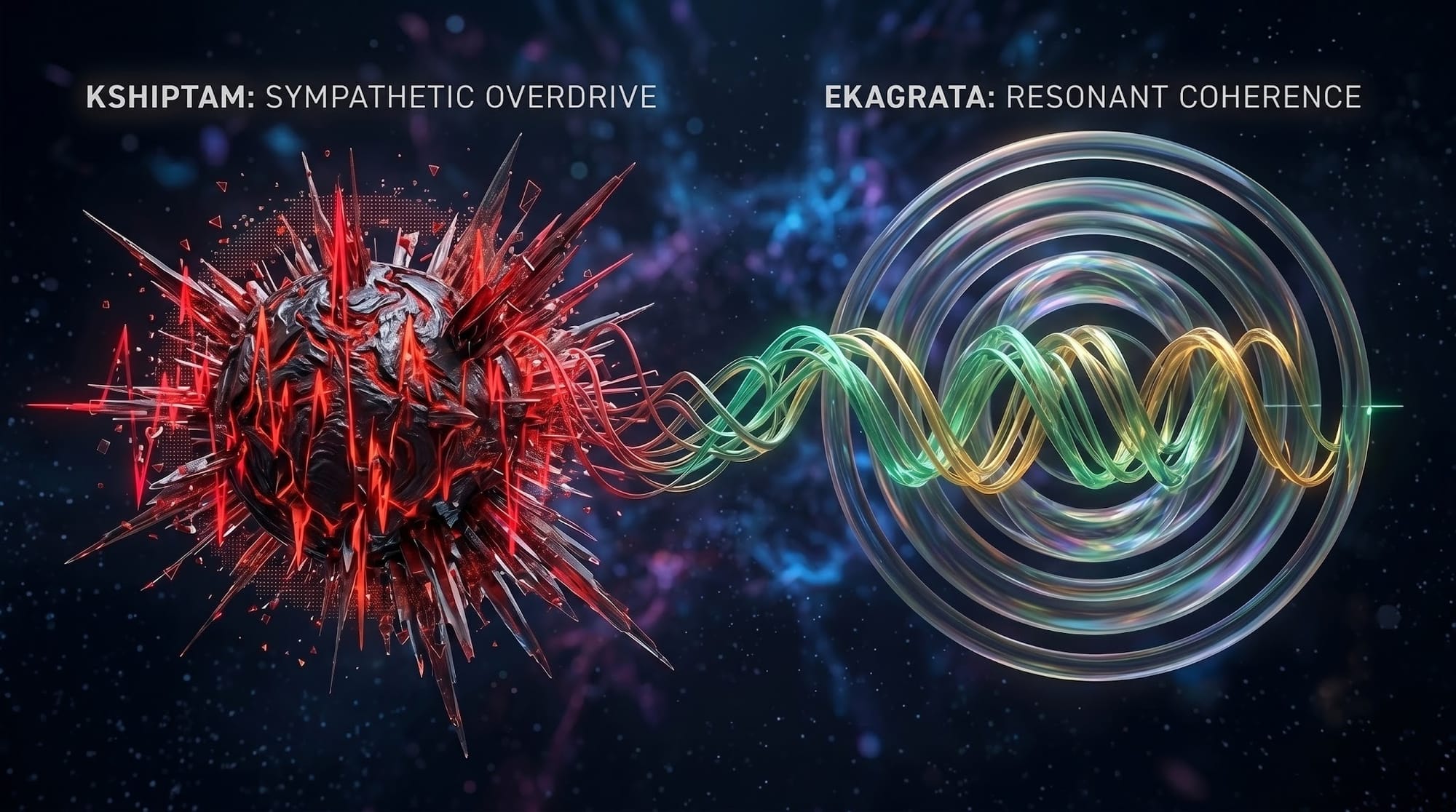
In this state, Rajas (activity, passion, restlessness) completely dominates and scatters the mind. Rajas actively distorts perception, making the mind jump uncontrollably like a monkey swinging wildly through trees. This state reflects a mind pulled outward by sensory demands, keeping consciousness bound to the external world while unresolved Samskaras constantly bubble up.
- The Kosha Connection: This state primarily affects the Annamaya Kosha (physical body) and the Manomaya Kosha (mental body), manifesting as muscle tension, a racing heartbeat, chronic anxiety, and a baseline sense of unease.
- The Holistic Alchemical Toolkit: To ground this scattered, erratic energy, we direct our attention downward into the earth. Close your eyes and visualize strong, deep roots growing from the base of your spine into the bedrock of the planet.
Mudha (Dullness/Stupor)
When the initial agitation lessens, the mind can sink into the heavy influence of Tamas (inertia, darkness, heaviness). Tamas acts as a veil (Avarana Shakti), obscuring the Self's clarity. You might feel sleepy, spaced out, or mentally foggy, which can signal low vital energy due to stagnant Prana and energetic blockages. Lifestyle factors like a heavy (Tamasic) diet or a Kapha imbalance often contribute to this heavy state.
- The Kosha Connection: This state originates from a stagnant Pranamaya Kosha (energy body) and manifests in daily life as chronic fatigue, low vitality, procrastination, and depression.
- The Holistic Alchemical Toolkit: To burn through this stagnation, physically break the inertia by moving through a few dynamic Sun Salutations or practicing Kapalabhati (Breath of Fire).
Vikshipta (Distracted Focus/Gathering)
Here, moments of clarity and focus begin to emerge as Sattva (purity, light, harmony) grows in influence. The mind can briefly hold onto a meditation object—like the breath or a mantra—but distractions still frequently arise, fueled by lingering Samskaras or the pull of Rajas and Tamas. This state feels like an oscillation, touching on focus and then drifting away, reflecting the beautiful interplay between Purusha's stability and Prakriti's momentum.
- The Kosha Connection: This state resides in the Manomaya Kosha (the lower mental body). It is the classic "busy modern life" state—highly capable and productive, but constantly fragmented by digital notifications, endless to-do lists, and passing thoughts.
- The Holistic Alchemical Toolkit: Cultivate a stable background awareness by practicing Sakshi Bhava (the witness perspective). Instead of treating distractions as failures, treat them as gentle reminders to wake up. Practicing Trataka (candle gazing) helps bring your scattered visual senses into focus by fixing your gaze on a steady flame. It coaxes the mind from external distraction into one-pointed readiness.
Ekagrata (One-Pointed Concentration)
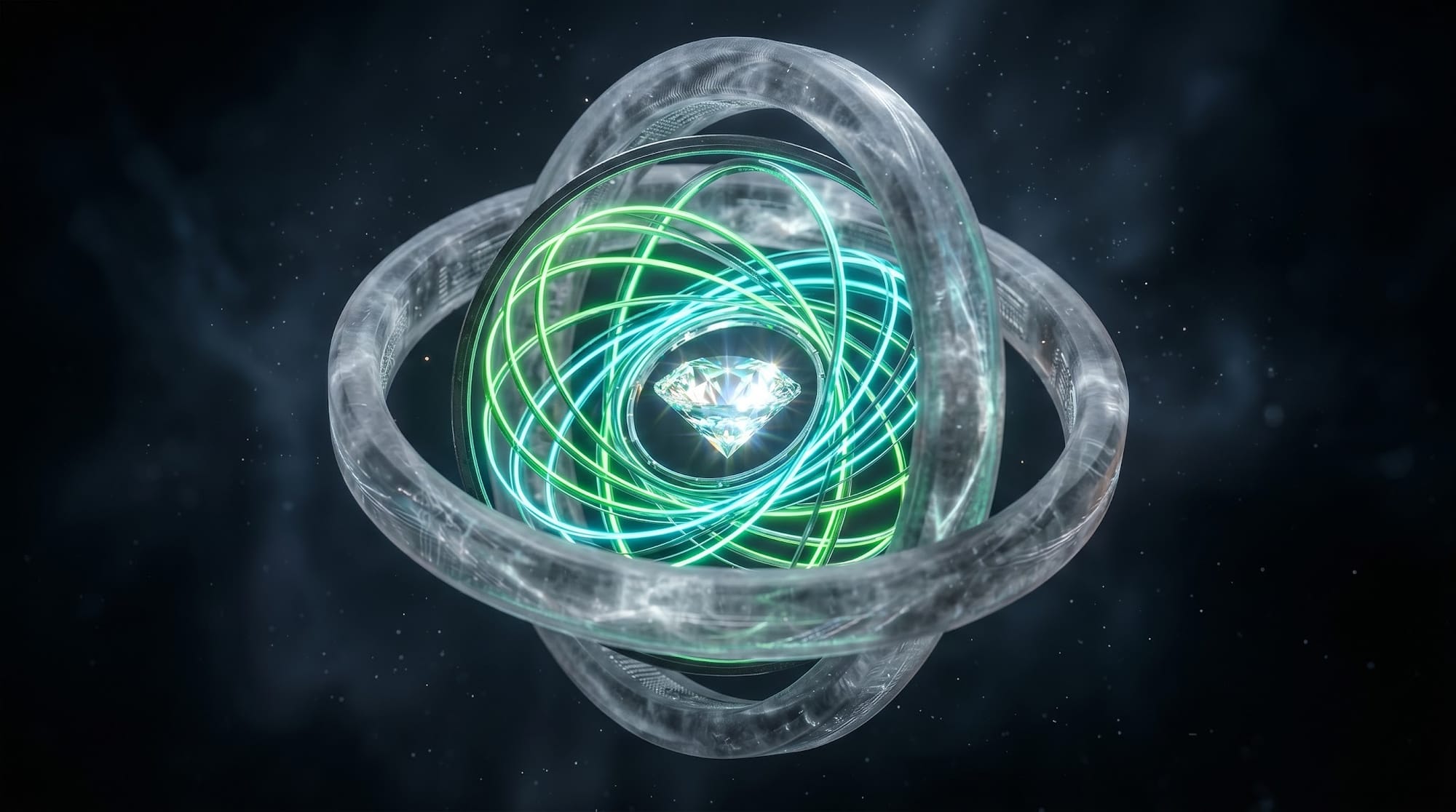
Ekagrata is where the real holistic magic happens. Deeply influenced by Sattva, the mind becomes steadily absorbed, focusing continuously on a single object with minimal distraction. It's like undisturbed water perfectly reflecting the open sky.
- The Kosha Connection: This state activates the Vijnanamaya Kosha (the body of wisdom and intuition). In daily life, this translates directly into the classic "flow state". Deep inner knowing, effortless creativity, and clear intuition arise spontaneously.
- The Holistic Alchemical Toolkit: Here, we step beyond measurable neurological harmony into pure metaphysics. While a neuroscientist views this state as peak brain performance, the yogic sage recognizes it as the awakening of Viveka (discriminative discernment). This internal coherence allows consciousness (Purusha) to disentangle itself completely from temporary mental chatter. The energy (Prana) feels beautifully balanced. Your primary tool here is simply the practice of detachment (Vairagya)—enjoying the deep bliss of this state while letting go of attachment to the bliss itself, so it doesn't become a subtle obstacle on your path.
Nirodha (Cessation/Mastery)
Nirodha represents the absolute culmination of the meditative path. As Patanjali famously wrote, "Yogas chitta vritti nirodhah" (Yoga is the cessation/mastery of the modifications of the mind-stuff). Here, all mental fluctuations cease entirely. Individual consciousness no longer identifies with the passing mental drama; it rests entirely in its true nature (Svarupa)—pure, unbound, ego-free awareness.
- The Kosha Connection: This state opens the gateway to the Anandamaya Kosha (bliss body), bringing an experience of absolute peace, unconditioned joy, and total connection to the universe.
- The Holistic Alchemical Toolkit: The Yogic tradition traditionally links this state, which represents a profound structural shift in consciousness, to the awakening of the central energy channel, the Sushumna Nadi. You cannot force it; you can only invite it through complete surrender (Ishvara Pranidhana) and dedicated silent space.
🏛️ Mastering the Inner Architecture: Practical Tools for Personal Growth

To truly empower your life with this roadmap, we can view these states not as abstract concepts but as a practical framework for everyday self-mastery.
The Art of "Samskara Rewriting"
Because our mental states are constantly driven by underlying Samskaras (subconscious impressions), we can use the heat of our awareness (Tapas) to actively rewrite negative loops. When a limiting belief or reaction surfaces during your day, follow these four steps to bridge biology and spirit:
- 🔍 Identify the Loop: Catch the recurring pattern as it happens (e.g., a flash of unworthiness or irritation during a restless Kshipta moment).
- 🧘♂️ Somatic Tracking: Close your eyes and locate where that impression lives as a physical sensation in your body (a tight chest, a knot in the stomach, clenched jaws).
- The Biophysical Bridge: Take a slow, 5-second inhalation and a 5-second exhalation directly into that area. This instant regulation creates cardiac coherence, sending a neurological safety signal to the amygdala to down-regulate the stress response.
- 🌤️ The Witness Melt: Apply Sakshi Bhava (non-judgmental observation). Instead of fighting or analyzing the feeling, flood that physical sensation with pure, warm awareness. Let the light of the witness naturally untangle the energetic knot.
- 🌟 Sankalpa (The Intentional Imprint): While the mind field is clear, soft, and neuroplastically receptive from your observation, plant a high-vibrational, intentional affirmation directly into your consciousness.
- The Esoteric Leap: Rather than just thinking the words intellectually, anchor this Sankalpa deeply at your Heart Center (Anahata) or Third Eye (Ajna). Seal it with the visceral emotional feeling of absolute gratitude, which esoterically bakes the new impression into the deepest layers of your subconscious mind.
The 3-Minute Bhumi Check-In
You don't need to sit on a cushion for an hour to experience these benefits. You can integrate this quick micro-meditation right into your modern workspace:
- Minute 1 (Assess): Pause your work, close your eyes, and scan your mind field. Is your mind currently in Kshipta (agitated), Mudha (dull), or Vikshipta (distracted)? Merely naming the state without judgment immediately reduces the ego's grip and establishes the witness perspective.
- Minute 2 (Regulate): Use your breath as an energetic dial. If you are agitated (Kshipta), intentionally lengthen your exhalations to soothe your nerves. If you are sluggish (Mudha), sharpen and double the pace of your inhalations to invite fresh Prana into your system.
- Minute 3 (Connect): Drop all effort. Rest quietly in the tiny, still space between your thoughts—the threshold of Nirodha. Celebrate even a fleeting glimpse of that inner silence.
🌀 Embracing the Holistic Journey, Not Just the Destination

Progress through these Bhumis is rarely a straight line upwards. You will naturally flow between states, even within a single meditation session. The path resembles a spiral; you may revisit Kshipta or Vikshipta many times, but each time you do, you return with more patience, awareness, and grace.
Authentic, life-changing personal growth involves cultivating holistic qualities across your entire lifestyle:
- Patience and Persistence (Abhyasa): Purifying your mind and energy system takes time. Consistent, dedicated daily practice is your primary tool for weakening old, unhelpful Samskaras.
- Self-Compassion (Ahimsa toward oneself): Meet your mental restlessness or dullness with kindness rather than harsh judgment.
- Mind-Body-Energy-Spirit Integration: Your mind does not operate in a vacuum. Your posture (Asana), breath regulation (Pranayama), and ethical choices (Yamas and Niyamas) directly set the stage for your consciousness. For example, practicing truthfulness (Satya) removes the internal friction that causes mental agitation, while practicing contentment (Santosha) settles the outward pull of desires, making it much easier for the mind to settle into Ekagrata.
As we refine our inner architecture, we naturally find that our internal state shapes our external environment. The clarity gained in the higher, harmonious states of mind naturally shifts our daily habits toward vibrant, Sattvic, plant-based food choices and a deeper appreciation for local, organic nutrition. When we treat our diet not just as fuel but as a layer of personal warmth and cellular vitality, we directly support the biological canvas on which our consciousness plays out.
🧭 Tips for Navigating the States with Deeper Awareness
- Be Kind to Your Wandering Mind: Shift your language from "I am anxious" to "Anxiety is present in the mind right now." This tiny metaphysical shift weakens the ego's grip and anchors you safely back in the seat of pure consciousness.
- Practice Regularly with Intention: Consistency builds mental resilience (Manas Shakti) and purifies the mind field (Chitta), systematically strengthening your access to clarity.
- Observe the Subtle Energetics: Start noticing how your mental states feel in your body. Does agitation feel like a scattered vibration? Does dullness feel like a heavy weight? Developing this subtle awareness turns your body into an intuitive compass for self-realization.
- Consider Guidance and Community: Navigating the deeper layers of the mind can feel disorienting at times. Seeking guidance from an experienced teacher (Guru) or sharing your practice with a like-minded community (Satsang) creates a supportive, collective energetic field that elevates your individual practice.
🕊️ Conclusion: Beyond Calm to Connection and Liberation

Understanding the five states of mind offers far more than an interesting philosophical concept. It serves as a practical, metaphysical map for your life—a daily guide that integrates your mind, body, energy, and spirit.
The ultimate goal of meditation isn't to force your mind into perfect stillness. It is a conscious, beautiful process of self-discovery that untangles your awareness from old, conditioned limitations. As you move toward your own form of stillness, don't worry if perfect awareness feels far away. Even an occasional, fleeting glimpse of Nirodha, right at the threshold of your inner experience, is a beautiful milestone worth celebrating.
By stepping onto this path, you choose observation over reaction, wisdom over chaos, and true inner freedom over old habits. Start exactly where you are today, trust the process, and watch your life transform from the inside out.
"Our actions and decisions today will shape how we will live. And so it is."
Key Takeaways
- Meditation is a dynamic journey through five distinct states of mind, moving from surface restlessness to deep inner stillness.
- Your mind's states are intimately tied to your five holistic layers of being (the Koshas), directly affecting your physical health, nervous system coherence, and intuition.
- You can actively rewrite subconscious loops (Samskaras) by bringing nonjudgmental awareness, somatic tracking, and heart-coherent breathing to your physical sensations.
- Simple habits, like the 3-Minute Bhumi Check-In, mudras, or the movie screen metaphor, let you apply high-level metaphysical concepts directly to a busy modern lifestyle.
- True growth honors the entire spiral journey with self-compassion, recognizing that even brief moments of clarity are powerful steps toward a liberated life.
Disclaimer: The information provided in this article, including discussions of neurobiology, brainwave patterns, breathing techniques, and herbal adaptogens, is for educational, metaphysical, and informational purposes only and does not constitute medical, psychological, or professional health advice. Always consult with a qualified healthcare professional or physician before beginning any new breathwork, lifestyle practice, or dietary supplement regimen, especially if you have an underlying medical or psychological condition. Reliance on any information provided in this post is solely at your own risk.
If my writing made you pause, smile, or think, I'd love your support:
Your support helps me keep writing and sharing these ideas with you.
📚 Recommended Reads & Resources

Books (via Izalgo Bookstore)
Neurobiology, Somatics & Biophysical Coherence
- The Body Keeps the Score: Brain, Mind, and Body in the Healing of Trauma by Bessel van der Kolk, M.D.: Explores how chronic stress and emotional imprints physically lodge within visceral tissues and the autonomic nervous system. This work provides the modern biological foundation for understanding how subconscious impressions (Samskaras) manifest as muscular tension and high-Beta sympathetic overdrive (Kshipta).
- Altered Traits: Science Reveals How Meditation Changes Your Mind, Brain, and Body by Daniel Goleman and Richard J. Davidson: Details groundbreaking neuroimaging research demonstrating how sustained contemplative practice physically remodels neural architecture. It validates how shifting from mental friction (Vikshipta) to single-pointed flow (Ekagrata) cultivates measurable Theta-Gamma synchronization and long-term neuroplastic resilience.
- The Polyvagal Theory in Therapy: Engaging the Rhythm of Regulation by Deb Dana: Translates polyvagal neuroscience into accessible somatic maps of the human nervous system. It provides a direct physiological correlate to the Gunas, illustrating how the dorsal vagal "freeze" state mirrors Mudha lethargy, while ventral vagal regulation fosters clarity and ease.
- The HeartMath Solution by Doc Childre and Howard Martin: Details the biophysics of Heart Rate Variability (HRV) and the physiological state of cardiac coherence. It demonstrates how intentional, heart-focused 5-second breathing sends direct neurological safety signals to the amygdala, offering scientific validation for somatic loop-rewriting techniques.
- Waking the Tiger: Healing Trauma by Peter A. Levine, Ph.D.: Introduces Somatic Experiencing, demonstrating that instinctual fight-or-flight energy must be resolved through physical tracking rather than intellectual rationalization. It underpins the somatic melting technique by showing how non-judgmental bodily awareness safely discharges stored tension.
Classical Yogic Philosophy, Subtle Anatomy & Consciousness
- The Yoga Sutras of Patanjali translated by Swami Satchidananda: Serves as the classical textual blueprint detailing the nature of mind-stuff (Chitta), the five universal mental states (Bhumis), and the systematic mastery of mental fluctuations (Vrittis). It outlines the philosophical framework required to navigate the threshold from mental chatter into pure cessation (Nirodha).
- The Subtle Body: An Encyclopedia of Your Energetic Anatomy by Cyndi Dale: An encyclopedic exploration of the human biofield, meridian systems, Nadis, and the five layers of being (Koshas). It acts as a comprehensive reference guide for understanding how unseen energetic frameworks govern biological expression and mental clarity.
- Eastern Body, Western Mind: Psychology and the Chakra System As a Path to the Self by Anodea Judith, Ph.D.: Pairs the esoteric chakra architecture with Western developmental psychology and somatic therapy. It clarifies how energetic blockages in centers such as the Solar Plexus (Manipura) or the Heart (Anahata) manifest as everyday emotional patterns and mental fog.
- Light on Life: The Yoga Journey to Wholeness, Inner Peace, and Ultimate Freedom by B.K.S. Iyengar: Examines the practical integration of the Koshas, guiding the practitioner from the physical sheath (Annamaya) inward to the bliss body (Anandamaya). It offers profound guidance on using physical alignment and breath regulation as an alchemical portal for steadying consciousness.
- The Heart of Yoga: Developing a Personal Practice by T.K.V. Desikachar: Synthesizes classical Raja Yoga philosophy with individualized energetic and breathing practices handed down from Sri T. Krishnamacharya. It provides a definitive framework showing how conscious breath regulation (Pranayama) serves as the essential bridge between the physical body and mental stillness, directly illuminating Patanjali's aphorisms for calming mental fluctuations (Vrittis) and achieving focused flow (Ekagrata).
Practical Self-Mastery, Habit Rewiring & Somatic Practice
- The Untethered Soul: The Journey Beyond Yourself by Michael A. Singer: Explores witness consciousness (Sakshi Bhava), teaching the reader to differentiate between passing mental melodrama and the steady, unblemished observer (Purusha). It directly reinforces the movie's metaphor of the blank white projection screen.
- Breath: The New Science of a Lost Art by James Nestor: Investigates the forgotten biological and energetic power of respiratory mechanics. It provides a practical, real-world rationale for using targeted breath ratios as an energetic dial to rapidly modulate nervous system states and clear metabolic sluggishness.
- Breaking the Habit of Being Yourself by Dr. Joe Dispenza: Synthesizes neuroscience, epigenetics, and mental rehearsal to explain how to unseat repetitive subconscious programs. It provides a systematic protocol for pairing clear intention (Sankalpa) with elevated emotion to actively overwrite ingrained Samskaras.
- Radical Acceptance: Embracing Your Life with the Heart of a Buddha by Tara Brach, Ph.D.: Provides actionable mindfulness and somatic tracking frameworks to meet restlessness, anxiety, and self-doubt with unconditional kindness (Ahimsa). It teaches practitioners to lean into physical sensations without resistance, untangling mental knots through open awareness.
- Yoga Nidra: The Art of Transformational Sleep by Kamini Desai, Ph.D.: Outlines the science and methodology of guided conscious relaxation across shifting brainwave bands. It details how entering receptive Alpha-Theta thresholds allows intentional affirmations (Sankalpas) to bypass the conscious ego and embed deeply into subconscious memory.
Online Resources
Neuro-Somatic Regulation & Biophysical Coherence
- HeartMath Institute: Provides biofeedback technologies (such as the Inner Balance sensor) and evidence-based training modules to track and cultivate real-time heart rate variability (HRV). It directly operationalizes heart-coherent 5-second breathing to regulate the autonomic nervous system during acute stress.
- Huberman Lab: A premier scientific resource translating peer-reviewed neurobiology into actionable protocols for nervous system modulation. Its toolkits—such as the physiological sigh and circadian alignment—provide biophysical mechanisms to break the cycle of high-beta sympathetic overdrive.
- Open: A hybrid mindfulness and somatic breathwork platform that combines modern acoustic engineering with diaphragmatic regulation. Its guided sessions serve as practical somatic circuit breakers to shift consciousness from restless agitation (Kshipta) into calm Alpha states.
- Apollo Neuro: A wearable wellness technology that delivers low-frequency, scientifically engineered vibrations to stimulate the sense of touch and improve vagal tone. It functions as a passive somatic tool to elevate HRV and restore autonomic balance during demanding workdays.
- Brain.fm: Uses proprietary, phase-locking acoustic software designed to guide brainwave oscillations into specific frequency bands. It provides a targeted neurological bridge for moving the scattered mind into sustained Alpha-Gamma focus (Ekagrata) or deep Delta regeneration (Mudha recovery).
Classical Yogic Wisdom & Contemplative Practices
- Yoga International: An extensive educational archive of masterclasses, articles, and guided practices led by master teachers. It offers structured instruction on classical Raja Yoga, Kosha balancing, Mudra mechanics, and concentration practices such as Trataka (candle gazing).
- Insight Timer: A flexible meditation ecosystem featuring customizable interval timers, ambient soundscapes, and thousands of teacher-led meditations. It provides the ideal digital environment for executing the 3-Minute Bhumi Check-In and strengthening witness consciousness (Sakshi Bhava).
- Himalayan Institute: A traditional center of living yogic scholarship that offers courses on esoteric anatomy, Pranayama, the Gunas, and the Awakening of the Sushumna Nadi. It serves as an authoritative source for deepening the metaphysical concepts underlying Patanjali's sutras.
- Waking Up: A contemplative and philosophical training app created by neuroscientist Sam Harris. It focuses on directly recognizing pure awareness, training the mind to step out of the psychological movie and rest in the unchanging witness (Purusha).
- Yogapedia: A comprehensive online encyclopedia detailing Sanskrit terminology, yogic philosophy, Asanas, and energy channels. It serves as a rapid, authoritative reference tool for unpacking concepts such as Chitta Bhumis, Vrittis, and Avidya.
Habit Systems, Daily Rituals & Integrative Well-Being
- SoBrief: An AI-powered knowledge platform delivering concise, 10-minute book summaries across science, psychology, and personal growth. It lets busy individuals quickly absorb core frameworks on habit formation, somatic regulation, and mindfulness between daily tasks.
- Izalgo: A dedicated digital hub synthesizing scientific principles with metaphysical concepts. It offers actionable toolkits, reflective guides, and structured articles designed to bridge biological mechanisms with spiritual self-mastery for holistic peace.
- The Fabulous: A behavioral science-backed habit architect developed at Duke University's Behavioral Economics Lab. It provides step-by-step structural scaffolding for building micro-rituals, helping gradually overwrite negative subconscious behavioral loops (Samskaras).
- Breathwrk: A visual and haptic breathing platform offering targeted routines to shift energy on demand. It provides immediate access to energizing patterns like Kapalabhati to ignite Manipura fire and slow-cadence pacing to ground restless mental chatter.
- Cronometer: A comprehensive biometric and nutrient-tracking tool that monitors micronutrient density and dietary balance. It supports the physical sheath (Annamaya Kosha) by helping users fine-tune vibrant, Sattvic, plant-based nutrition to fuel cellular and neurological coherence.
Approach all books and resources with an open mind, recognizing that no single source is definitive, complete, or free from controversy and debate. Trust your intuition and inner guidance to discern what truly resonates with your personal path. If a concept or historical detail does not align with your truth, you are encouraged to disregard it and prioritize what best serves your growth.
SoBrief.com is an AI-powered digital platform that provides concise summaries of an extensive catalog of books, enabling users to grasp a book's key takeaways in about 10 minutes.
🔗Affiliate Note: Some links may be affiliate links, which means we may earn a small commission at no extra cost to you. Your support helps us continue this creative and healing work. Thank you!
Izalgo co-created the images in this post using AI software.
Copyright ©️IZALGO, LLC. All Rights Reserved