
Bad habits are easier to abandon today than tomorrow.
Tired of waiting for "tomorrow" to break old patterns? True change isn't about willpower—it's nervous system safety. Discover how ancient wisdom and somatic rituals free you from autopilot today.


The Alchemy of Habit: Merging Nervous System Science and Ancient Wisdom to Break the Cycle
We have all promised ourselves that tomorrow will be the day we finally break a frustrating pattern, only to find ourselves stuck in the same loop a few days later. Old routines and procrastination can seem impossible to overcome, but both modern science and ancient wisdom offer hope: real change begins in the present moment.

Your mind, heart, and body all work together as one system. When stress or old emotions remain unresolved, they often manifest as physical tension. At the same time, small physical habits can directly influence your mood, mental clarity, and nervous system.
⏳ Why the Best Time to Change Is Now: Mind, Body, and Spirit

Habits are more than just tests of willpower. In ancient Yogic philosophy, repeating thoughts and actions creates deep energetic tracks called samskaras. Modern neuroscience describes something similar: each time you repeat a habit, your brain strengthens that pathway, making it an automatic shortcut. Every repetition makes the habit stronger.

When you say you will change "tomorrow," you let the old habit continue a bit longer. Building new habits means paying attention to the present moment. If you pause when an old urge appears, you interrupt your autopilot and give your brain a chance to let go of the old pattern and make room for a healthier one.
🧠 The Procrastination Trap: Understanding Your Nervous System

Procrastination is rarely about laziness. It is usually a way your mind tries to protect you. What seems like stubborn resistance or low motivation is often your nervous system sounding an alarm, either by making you feel panicked or frozen. It can mistake the discomfort of change or the possibility of failure for real danger.
"Procrastination is rarely about laziness. It is usually a way your mind tries to protect you."
Understanding this can help you replace self-judgment with body awareness. There is a big difference between an intuitive pause, which feels open, peaceful, and steady, and a hesitation rooted in fear, which feels tight, anxious, and restless. Often, procrastination is just part of you seeking safety.
When you feel avoidant tension creeping in, try this Somatic Reset and Dialogue:

- Check In with Your Body: Place a hand gently over your heart or stomach, close your eyes, and breathe into the tightness. Ask yourself with kindness: "What comfort is this distraction trying to give me right now?"
- Shake Out the Energy: Trapped resistance creates physical tension. Roll your shoulders, gently stretch your spine, or shake out your hands for 15 seconds to discharge restless energy and signal safety to your brain.
- Soften the Inner Critic: Clear the guilt by speaking kindly to yourself with the ancient Hawaiian practice of Ho’oponopono: "I’m sorry. Please forgive me. Thank you. I love you." This melts away self-blame and helps you move forward with ease.
🌊 Energy Follows Focus: Riding the Habit Wave

Every habit runs on a simple loop: a trigger, a routine, and a reward. If you simply try to white-knuckle your way through your cravings, you create an empty pressure cooker that usually blows up later. The real magic lies in redirecting that energy into something that actually makes you feel good.
When a sudden craving hits, it helps to understand what your body is doing:
- Ride the 90-Second Rush: The sudden, heart-racing urge is mostly a burst of adrenaline. If you avoid adding anxious thoughts, this physical wave will peak and fade within 60 to 90 seconds. Try "urge surfing" by sitting back and noticing the sensations, such as a tight chest, a dry mouth, or butterflies in your stomach, as if they were passing clouds.

- Redirect the Craving Engine: Adrenaline causes the quick physical rush, while dopamine is the brain's anticipation signal that keeps you thinking about the reward. After you get through the first 90 seconds of adrenaline, shift your focus to a pleasant or interesting task. Moving your body or starting something new gives your energy a positive direction and helps your mind stop repeating the craving.
🕯️ Five Simple Rituals for Everyday Habit Change

1. Scan Your Body and Take a "Physiological Sigh"
Instead of just thinking "I'm stressed," check where that feeling lives in your body to release it physically.
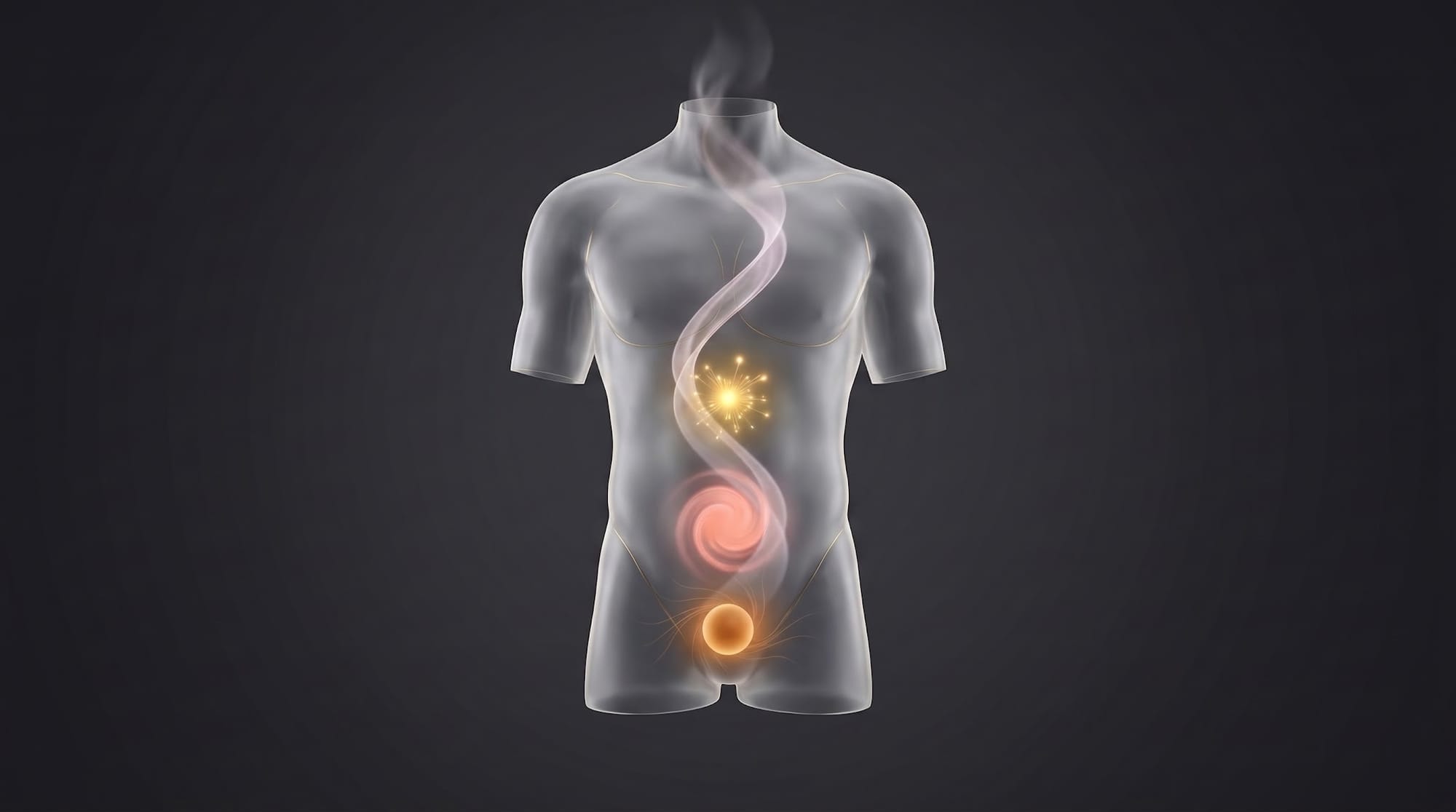
- How to do it: Scan three main nerve centers: check the base of your spine and hips for restless anxiety, check your lower belly for emotional cravings, and check your stomach for butterflies or control-seeking tension. Once you locate the spot, take a physiological sigh: breathe in deeply through your nose, take an extra quick sip of air at the very top to completely fill your lungs, and let out a long, sighing exhale through an open mouth.

- Why it works: Doing this three times reinflates the tiny air sacs in your lungs and engages your vagus nerve, which immediately slows your heart rate and melts away tension.
2. Step Into the "New You" with Your Posture
Vague goals like "I want to be better" rarely stick in the brain. Teach your nervous system who you are becoming by matching your body language to your words.
- How to do it: Unclench your jaw, drop your shoulders away from your ears, open your chest, and stand tall. In this relaxed, confident stance, speak a simple present-tense affirmation, such as "I treat my body with care and calm energy" or "I show up with focus and ease." Spend two quiet minutes imagining how this version of you walks, talks, and makes choices.
- Why it works: Your brain constantly monitors your posture to decide how you should feel. When your body feels grounded and open, your mind naturally believes and supports your new identity.
3. Reset Your Senses with Soothing Sound and Movement
When you feel an urge taking over, step away for a quick physical and sensory refresh.
- How to do it: Step away from what you are doing for three to five minutes. Put on relaxing singing bowls, ambient soundscapes, or music tuned to resonant tones traditionally used for grounding (such as 396 Hz) or heart-centered restoration (such as 528 Hz). While the sound plays, gently tap your heels on the floor or do a few light, dynamic stretches.

- Why it works: Rhythmic, calming sounds help guide your brainwaves into a more relaxed state. At the same time, physical movement releases tension in your body, helping you feel centered again.
4. Clear Your Space, Catch Morning Sunlight, and Sync with Nature
Your environment either drains your energy or lifts you up. A clear, organized space creates a calm mind.
- How to do it: Set up a peaceful corner in your home with a living plant or a favorite candle to serve as your daily grounding station. Step outside into natural morning sunlight for 5 to 10 minutes, ideally with bare feet on the grass or soil. Follow the monthly rhythm: use the New Moon to jot down habits you want to start, and the Full Moon to write down old routines you are ready to release, then safely tear up the paper to mark a clean break.

- Why it works: Morning sunlight helps set your brain's internal clock, improving focus during the day and supporting better sleep. Touching the earth directly also grounds you and helps calm your nervous system.
5. Celebrate Every Tiny Win
Big changes come from small, steady choices. If you wait for huge milestones to feel proud, your brain misses out on the motivation it needs.
- How to do it: Notice and celebrate every good choice as soon as you make it. Step outside for a breath of fresh air, light a candle, or enjoy a warm cup of herbal tea as a deliberate "thank you" to yourself.
- Why it works: Noticing and celebrating your progress gives your brain a natural dopamine boost. This teaches your mind that good habits are both rewarding and safe.
🤍 Meeting Setbacks with Kindness

Slipping up is not a failure; it is simply helpful feedback. Being hard on yourself only triggers the same stress that led you to the habit in the first place.
If you notice yourself falling back into an old routine, try to be curious instead of upset. Ask yourself if you were tired, stressed, or hungry. Take a deep breath, let go of the mistake, and focus on making your next choice a positive one.
🗓️ The 7-Day Habit Breaker Challenge

Here is an easy, step-by-step roadmap to bring these practices to life over the next week:

- Day 1: Listening to Your Body’s Signals. Pick one habit to focus on, notice where its urge registers in your body (hips, belly, or chest), and practice three physiological sighs.
- Day 2: Clearing the Resistance. When friction comes up, pause for your check-in, shake out the physical tension for 15 seconds, and practice self-compassion.
- Day 3: Surfing the Wave. When an urge strikes, sit with the physical sensation for 90 seconds, then play soothing soundscapes or stretch to redirect your focus.
- Day 4: Stepping into the New You. Stand tall, relax your shoulders and jaw, and speak your present-tense declaration aloud as you visualize your day.
- Day 5: Sharing the Journey. Connect with an encouraging friend to talk through your goals and the simple tools you are using.
- Day 6: Sunlight and Tactile Grounding. Head outside for morning sun, let your feet touch the earth to calm your system, and intentionally celebrate the small victories you have built this week.
- Day 7: Full-Circle Reflection. Reflect on how much lighter you feel, enjoy the clarity you have gained, and write down a fresh intention for the upcoming week.
Changing your habits is really about gently returning to a sense of ease with yourself. When you listen to your body, give yourself space to breathe, and choose to be present rather than run on autopilot, you create a lasting foundation for your well-being.
The choices we make today shape our future. That is why they are so important.
If my writing made you pause, smile, or think, I would truly appreciate your support:
Your support is what allows me to keep writing and sharing these ideas with you.
Disclaimer: The information provided in this article is for educational and personal enrichment purposes only and does not constitute medical, psychological, or psychiatric advice. The somatic techniques, breathwork exercises, and holistic practices described are intended to support general wellness and habit awareness; they are not designed to diagnose, treat, cure, or prevent any physical condition, mental health disorder, trauma, or substance dependency. Always consult a licensed physician, therapist, or qualified healthcare professional before making significant lifestyle changes or if you are managing persistent emotional distress or physical symptoms.
📖 Recommended Reads & Resources

Books (via Izalgo Bookstore)
Scientific Foundations: Neuroscience, Polyvagal Theory & Somatics
- The Polyvagal Theory in Therapy: Engaging the Rhythm of Regulation by Deb Dana: Translates Stephen Porges's Polyvagal Theory into accessible clinical models that demonstrate how autonomic states directly shape our thoughts, emotions, and behavioral flexibility. Dana provides the scientific architecture that underpins the document's distinction between fear-based hesitation (sympathetic fight-or-flight or dorsal shutdown) and intuitive presence (ventral vagal safety), demonstrating that physiological regulation must precede behavioral change.
- Waking the Tiger: Healing Trauma by Peter A. Levine: Explores how survival stress and chronic fight-flight-freeze responses become trapped within physical tissue and neuromuscular pathways. Levine details the innate mammalian capacity for somatic discharge through shaking, trembling, and spontaneous physical unwinding, providing the direct clinical foundation for the article's 15-second physical reset technique to disperse trapped adrenaline and tension.
- The Craving Mind: From Cigarettes to Smartphones to Love – Why We Get Hooked and How We Can Break Bad Habits by Judson Brewer: Examines the neurobiology of the habit loop—trigger, routine, reward—and deconstructs how dopamine drives craving anticipation. Brewer details how mindful curiosity and "urge surfing" interrupt automated default-mode network activity, directly substantiating the text's guidance to ride the 90-second adrenaline wave rather than white-knuckle impulses.
- Breath: The New Science of a Lost Art by James Nestor investigates the physiological, structural, and biochemical mechanisms of human respiration and its direct connection to the autonomic nervous system. Nestor establishes the clinical evidence for controlled breathing mechanics and carbon dioxide management, providing the physiological foundation for the double-inhale, extended-exhale "physiological sigh" to reinflate the pulmonary alveoli and activate the vagus nerve.
- The Body Keeps the Score: Brain, Mind, and Body in the Healing of Trauma by Bessel van der Kolk establishes how psychological stress, emotional friction, and unresolved distress directly imprint themselves on the body's anatomy and visceral organs. Van der Kolk demonstrates that cognitive willpower alone cannot override subcortical stress responses, thereby validating the document’s premise that the mind, heart, and body function as an integrated system requiring somatic interventions.
Metaphysical & Holistic Theories: Energetic Imprints & Ancient Wisdom
- The Untethered Soul: The Journey Beyond Yourself by Michael A. Singer: Bridges modern psychology and classical Yogic philosophy, focusing on the mechanics of samskaras—the energetic scars and subconscious mental grooves formed by unprocessed past experiences. Singer illustrates how resisting or identifying with mental cravings reinforces inner resistance, offering an energetic framework for watching urges pass like clouds through detached awareness.
- Zero Limits: The Secret Hawaiian System for Wealth, Health, Peace, and More by Joe Vitale and Ihaleakala Hew Len: Explores the traditional Hawaiian reconciliation and cleansing methodology of Ho’oponopono. The book details the four transformative phrases ("I’m sorry, Please forgive me, Thank you, I love you") as a subconscious reset, providing the foundational theory for the document’s practice of melting the inner critic and transforming shame into self-compassion.
- The Subtle Body: An Encyclopedia of Your Energetic Anatomy by Cyndi Dale: Offers a comprehensive exploration of global energetic systems, the human biofield, and acoustic vibrational mechanics. Dale details how specific sound frequencies interact with cellular and psychological states, substantiating the document’s inclusion of Solfeggio resonant tones (such as 396 Hz for grounding and 528 Hz for heart restoration) to recalibrate brainwaves and soothe emotional tension.
- Earthing: The Most Important Health Discovery Ever! by Clinton Ober, Stephen T. Sinatra, and Martin Zucker: Investigates the physiological and energetic benefits of direct physical contact with the Earth's surface. The authors explore how conductive grounding neutralizes free radicals and stabilizes the nervous system's electrical rhythm, directly supporting the article’s recommendations for morning sunlight paired with bare-foot grounding on soil.
- Moonology: Working with the Magic of Lunar Cycles by Yasmin Boland: Details ancient wisdom traditions surrounding lunar rhythms and presents a practical methodology for energetic alignment throughout the month. Boland outlines how to use the New Moon to plant behavioral intentions and the Full Moon to shed outdated coping mechanisms, providing a holistic framework for the text's lunar habit rituals.
Practical Behavioral Architecture: Habit Loops, Breathwork & Somatic Rituals
- Atomic Habits: An Easy & Proven Way to Build Good Habits & Break Bad Ones by James Clear: Delivers an actionable, systems-based approach to behavioral change centered on tiny lifestyle modifications, identity shifts, and environmental cues. Clear’s framework on casting votes for your future identity and designing low-friction habits translates the document's concepts of "stepping into the new you" and celebrating micro-wins into daily execution.
- Tiny Habits: The Small Changes That Change Everything by BJ Fogg: Outlines Stanford behavioral design research demonstrating that sustained behavioral change relies on immediate positive emotion rather than brute willpower. Fogg’s "Behavior Grid" and celebration rituals explain the precise neurochemical mechanism behind celebrating tiny wins, showing how instant self-acknowledgment floods the brain with dopamine, encoding new neural pathways.
- Accessing the Healing Power of the Vagus Nerve: Self-Help Exercises for Anxiety, Depression, Trauma, and Autism by Stanley Rosenberg: Provides targeted physical exercises, craniosacral adjustments, and posture corrections to stimulate the cranial nerves that regulate social engagement and autonomic calm. Rosenberg’s somatic exercises show how opening the chest, relaxing the suboccipitals, and releasing the jaw physically cue the brain that the environment is safe.
- The Mindful Way Through Anxiety: Break Free from Chronic Worry and Reclaim Your Life by Susan M. Orsillo and Lizabeth Roemer: Integrates acceptance-based behavioral therapy with practical somatic mindfulness exercises. The authors offer step-by-step tools to scan visceral holding patterns across the belly and chest, training readers to stay present with uncomfortable bodily sensations without falling into avoidant distraction.
- Presence: Bringing Your Boldest Self to Your Biggest Challenges by Amy Cuddy: Explores the science of embodied cognition and somatopsychic feedback, demonstrating how physical posture dynamically shapes neurochemistry and subjective confidence. Cuddy provides the empirical foundation for the text’s ritual of dropping the shoulders, unclenching the jaw, and standing tall to shift the nervous system into a state of empowered ease.
Online Resources
Somatic Biofeedback, Breathwork & Autonomic Resets
- HeartMath: Combines real-time pulse sensors with mobile biofeedback software to monitor Heart Rate Variability (HRV) and guide users into sustained heart-brain coherence. The tool visually illustrates the physiological transition from jagged stress patterns to smooth, balanced wave rhythms, serving as a live gauge for moving out of fear-based alarm states.
- Othership: Delivers an extensive library of guided breathwork sessions engineered for both rapid down-regulation and somatic emotional release. The app structures classes around specific physiological outcomes—such as the double-inhale physiological sigh and box breathing—making it a practical companion for interrupting acute fight-or-flight loops.
- Breathwrk: Offers animated visual and haptic pacers designed to guide users through precise breathing ratios without cognitive strain. Its targeted protocols for stress interruption and physical relaxation map directly to the text’s advice on engaging the vagus nerve and down-regulating heart rate within three breaths.
- Prana Breath: Provides fully customizable respiratory pacing software rooted in traditional Yogic pranayama methods. Users can program precise inhale, retention, and extended exhale timers to expand lung capacity, release visceral holding patterns, and dissolve emotional cravings in the belly and hips.
- Somatic Experiencing International: Serves as an educational repository and practitioner directory dedicated to somatic trauma resolution and nervous system education. It provides guided introductory exercises for tracking interoceptive body sensations, orienting to safety, and safely discharging frozen survival energy.
Sound Therapy, Resonant Frequencies & Restorative Audio
- Insight Timer: Features a vast, searchable directory of acoustic sound baths, singing bowls, and Solfeggio resonant-frequency tracks (specifically 396 Hz and 528 Hz). The app includes an unguided meditation timer with customizable interval bells, functioning as an accessible audio hub for the article's three-to-five-minute sensory refresh breaks.
- Brain.fm: Employs patented auditory brainwave entrainment software with rhythmic phase-locking to nudge neural oscillations into desired states of calm focus or deep relaxation. It actively quiets mental chatter and reduces sympathetic overarousal, helping users move past avoidant procrastination without relying on willpower.
- Endel: Uses proprietary algorithms to generate personalized, continuous soundscapes that adapt in real time to inputs such as time of day, heart rate, and natural circadian cadence. Its soothing acoustic textures stabilize against sensory overload, creating an auditory buffer that dissolves the restlessness of habit cravings.
- Hemi-Sync: Utilizes clinically developed binaural beat patterns and specialized sound frequencies to foster interhemispheric brainwave coherence. Its restorative sound programs help synchronize neural firing, grounding the mind in deep meditative awareness while working to release ingrained subconscious loops.
- myNoise: Provides custom-calibrated sound generators, including binaural drones, singing bowls, and customizable harmonic soundscapes. The platform allows users to adjust individual frequency bands to match their unique auditory sensitivities, making it an effective tool for grounding attention during urge surfing.
Habit Architecture, Daily Rituals & Nature Synchronization
- The Fabulous: Developed from behavioral economics research, this platform guides users step by step in building sustainable morning and evening rituals. It emphasizes progressive micro-steps, tactile anchoring, and morning hydration/sunlight habits, providing a structured container for the text's 7-Day Habit Breaker Challenge.
- Moonly: Integrates ancient Eastern lunar calendars with daily mindfulness wisdom, providing practical guidance keyed to lunar phases. It offers dedicated prompts for setting conscious intentions during the New Moon and releasing destructive behavioral patterns during the Full Moon, translating ancient celestial cycles into practical habit checkpoints.
- D-minder: Tracks solar geometry, weather conditions, and personal location to pinpoint optimal windows for natural outdoor light exposure. It serves as an exact tracking companion for the text’s fourth ritual: stepping outside into morning sunlight to set the brain's internal master clock, optimize dopamine production, and anchor circadian rhythms.
- Habitica: Gamifies daily habits, tasks, and routines by rewarding positive behaviors with immediate in-game progression and visual feedback. By providing instant acknowledgment for every micro-choice, it leverages the brain's reward circuitry to make healthy routines feel rewarding and safe.
- Stoic: Provides a structured mental health and journaling platform featuring morning preparatory prompts, somatic check-in logs, and evening reflections. Its guided cognitive reframing prompts help users meet behavioral setbacks with curious self-compassion rather than punitive self-criticism.
- Somatic Habit Workbook: Reading about nervous system regulation is only the first step—sustainable habit change requires body-level practice. We’ve turned the tools, breathwork sequences, and diagnostic charts from this guide into a printable 4-page companion workbook.
Approach all books and resources with an open mind, recognizing that no single source is definitive, complete, or free from controversy and debate. Trust your intuition and inner guidance to discern what truly resonates with your personal path. If a concept or historical detail does not align with your truth, you are encouraged to disregard it and prioritize what best serves your growth.
SoBrief.com is an AI-powered digital platform that provides concise summaries of an extensive catalog of books, enabling users to grasp a book's key takeaways in about 10 minutes.
🔗Affiliate Note: Some links may be affiliate links, which means we may earn a small commission at no extra cost to you. Your support helps us continue this creative and healing work. Thank you!
Izalgo co-created the images in this post using AI software.
Copyright ©️IZALGO, LLC. All Rights Reserved