A Window to the Future
Step out of survival mode and into pure potential. Discover how blending neuroplasticity with quantum consciousness empowers you to overcome fear and intentionally design your tomorrow. Open the window and let in the winds of change.
The Architecture of Tomorrow: Merging Biology and Belief to Shape Your Future
We sometimes focus on the past because the future feels uncertain. Do you ever feel nervous about what’s ahead? You’re not alone—the unknown can be exciting, but it can also be a little scary. But to move forward, we need to face that fear.
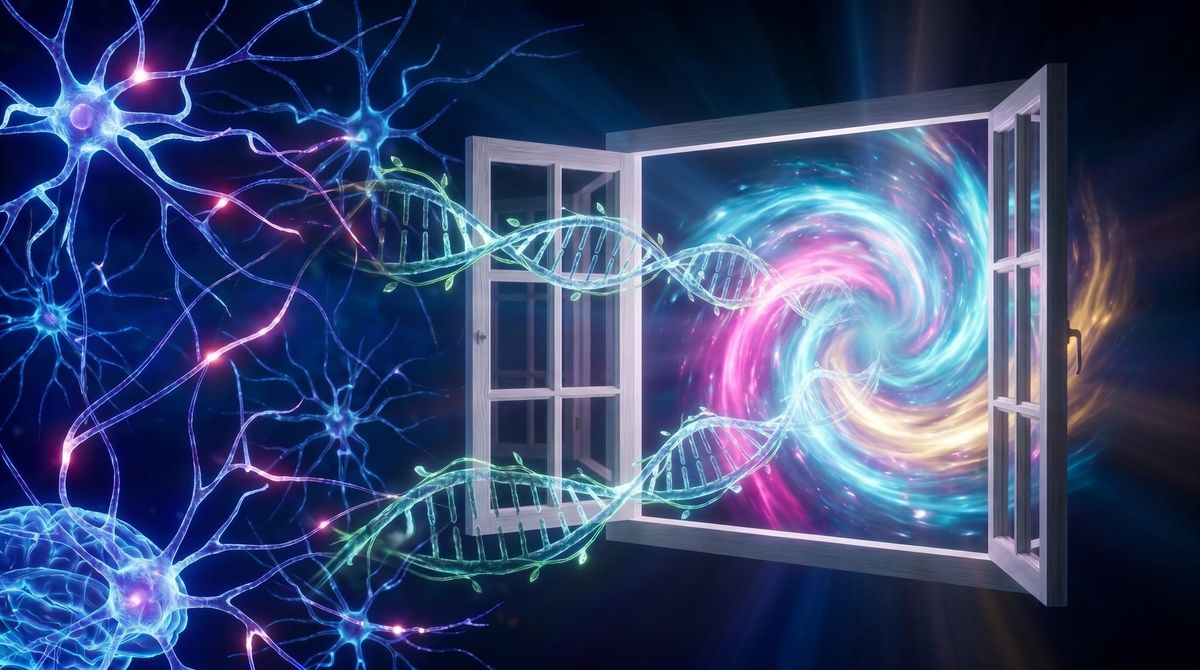
The good news is that you already have what you need to look forward and shape your future with intention. Picture the future as a calm countryside and see yourself looking out a window. Open the window and let in the gentle winds of change. Once you realize there’s nothing to fear, you can welcome the future with confidence.
This guide will look at why we feel fear, how science fiction sparks new ideas, what today’s trends can teach us, and how your choices shape what’s next. Whether you’re thinking about your own growth or society’s path, you’ll find ideas and tips here to help you move forward with clarity, courage, and creativity.
🧠Understanding and Overcoming Your Fear of the Unknown

To face the future, we first need to understand and work through our fear of the unknown. This feeling is normal, but it can keep us from growing. Thankfully, both science and spiritual practices offer ways to handle it.
A Neuroscience & Somatic Insight
Our brains like things that feel familiar and predictable. The amygdala, a small part of the brain, helps us notice threats. When we face uncertainty, the amygdala can react as if there’s real danger, even when there isn’t. The amygdala’s reaction can cause stress and racing thoughts, making decision-making harder. While this response once kept us safe, it can now hold us back from progress and creativity.
Since our nervous system holds onto survival energy, we need to do more than change our mindset. Practices such as heart coherence, somatic experiencing, and intentional breathwork help calm the body and support clear, creative thinking. When we regulate our biology first, we create space to breathe and choose how to respond. “We cannot easily imagine a beautiful future if our bodies are locked in a state of survival.”
A Spiritual and Metaphysical Perspective
Many spiritual traditions teach that the unknown is not something to fear, but a place where growth happens. Mystical teachings say we find deeper wisdom in the unknown. In Buddhism, impermanence and uncertainty are seen as natural. We can find peace by letting go of the need for certainty and accepting the mystery as it unfolds.
In Christian mysticism, the “dark night of the soul” is a journey through the unknown that leads to deeper faith and purpose. Facing this darkness often means doing shadow work. Our collective fears and past traumas can shape how we imagine the future. Healing means bringing these hidden parts into the light so they no longer control us. In Indigenous worldviews, the unknown is part of the larger web of life, where people meet unseen forces with respect and connection. Entering the unknown is where miracles and new ideas can happen.
🌌Synthesis: The Biology of Potential
Practicing heart coherence, which means creating a steady, intentional connection between the heart and brain, sends a safety signal to the amygdala. The safety signal helps turn off the body’s threat response. In New Thought and metaphysical teachings, people see the unknown as a place of pure potential, where our awareness helps shape reality.
Here’s How to Begin Reframing Fear:
- Mindfulness and Self-Reflection: Take a deep dive into your anxieties. What triggers them? Are they rooted in past experiences, outdated beliefs, or unfounded assumptions?
- Challenge Misconceptions: Fear often feeds on fiction. Gather accurate information, seek diverse perspectives, and question the validity of your fears.
- Focus on the Present: While future planning is essential, obsessing over uncertainty can be paralyzing. Ground yourself in the now.
- Build Resilience: Equip yourself with tools like breathwork, journaling, and healthy routines to strengthen your inner foundation.
- Set Realistic Goals: Break your long-term vision into small, achievable milestones. These steps make the future feel less abstract and more manageable.
🔭The Power of Imagination: Science Fiction and Quantum Consciousness
Science fiction is more than entertainment. It helps us imagine new possibilities, encourages us to think in new ways, and can inspire or warn us about what’s ahead. At its core, science fiction asks, 'What could happen?' This question invites us to help shape the future. Many technologies we use today started as ideas in science fiction. For example, Star Trek’s communicators inspired the modern flip phone, showing how imagined tools can become real inventions.
The power of imagination leads us to an interesting idea from quantum physics called the Observer state. “Physics suggests the observer effect—where our focused attention actively collapses potential realities into our current experience.” The observer effect isn’t just a theory; it also drives neuroplasticity. When we imagine the future without fear, we’re not just guessing. We’re acting as observers, actually changing our brain pathways to help us step into that new reality.
Try writing a short sci-fi story set 50 years in the future. Or imagine a futuristic version of your own life: What does a day look like if your most profound dreams and ideas take form?
🧬Decoding the Present: Trends, Advancements, and Emergent Systems
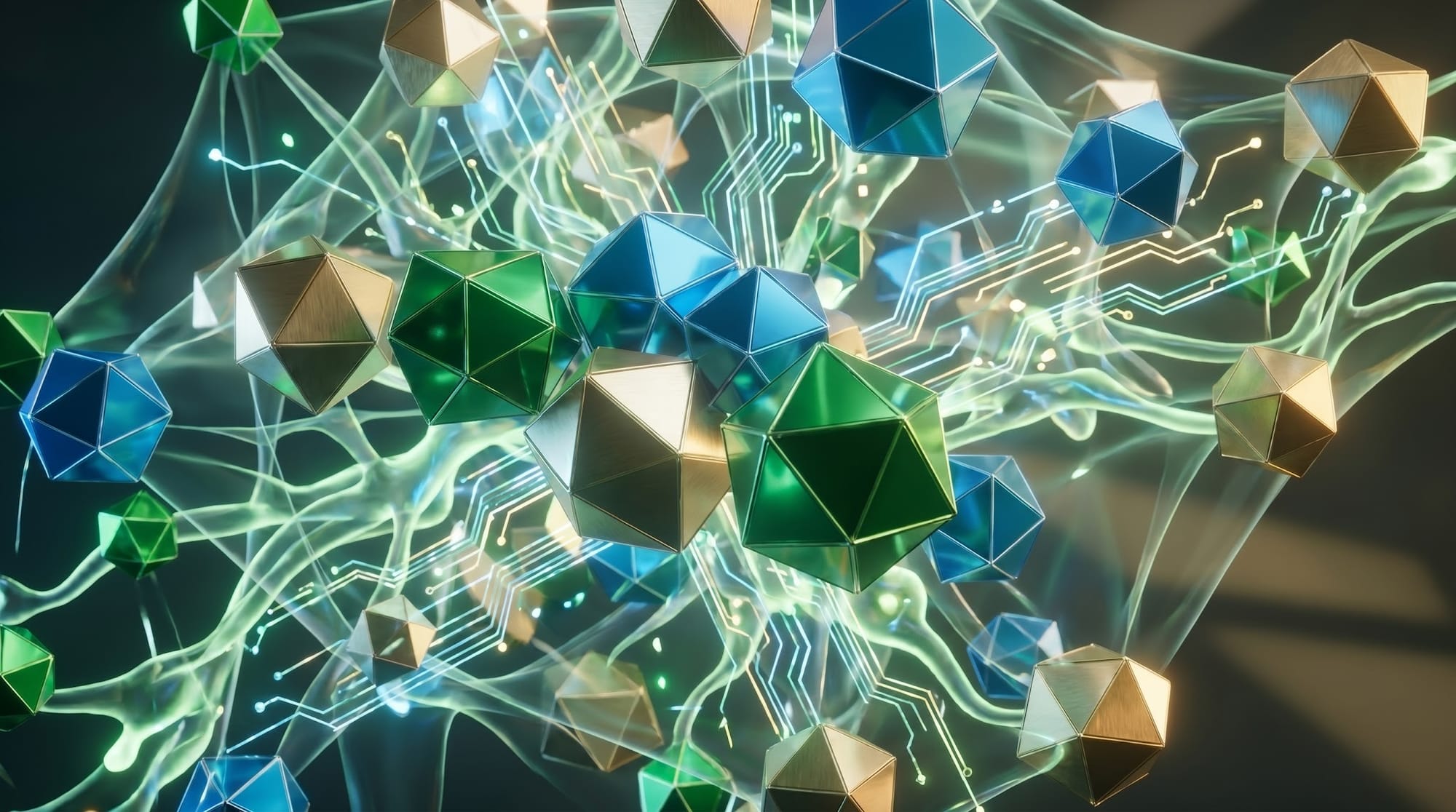
The future doesn’t come out of nowhere. The present gives us hints about what’s ahead. By paying attention to new trends, technologies, and cultural shifts, we can gain a better sense of what the future might hold. Think of these changes as gentle winds blowing through the open window from earlier.
- Health & Human Longevity: CRISPR gene editing is revolutionizing medicine. Longevity technologies and biohacking communities are working to extend human lifespans, improve healthspan, and challenge our assumptions about aging.
- Technology & Digital Transformation: Quantum computing could vastly outpace today’s fastest supercomputers, redefining what’s possible in science, cryptography, and medicine. Web3 technologies are reshaping the internet by emphasizing decentralization, user ownership, and digital sovereignty.
As we welcome these new advancements, we must see them as part of a bigger picture that connects everything. Emergent Systems show this well: they are complex systems in which new patterns and behaviors arise from simple interactions. Our technology starts to reflect the interconnectedness we find in nature, showing that our progress links everything.
Thinking like a futurist isn’t about predicting the future. It’s about using your imagination and getting ready for what’s next. This way, we can create new possibilities rather than react to change. Let these winds of change refresh your outlook and clear away old habits.
💭Envisioning Breakthroughs: The “What If” Game
A great way to imagine a better future is to ask, 'What if?' This simple question helps us think differently and explore new ideas. Asking 'What if?' activates the default mode network in your brain, which supports imagination, self-reflection, and future planning. This network is active when we daydream, reflect, or imagine different scenarios.
“Tomorrow's breakthroughs are already alive inside the questions you dare to ask today.”
🎲Interactive Element: Play the Game Yourself
Let's take this deeper into consciousness with metaphysical what-ifs:
- What if human consciousness is evolving to communicate telepathically?
- What if we discovered that plants possess a distinct, measurable intelligence? How would that reshape our cities?
- What if I approached my challenges with curiosity instead of fear?
- What if I lived five years into a future where my dreams had come true—what would that life look like?
Action Step: Create a “What If” Vision Board. Collect images or sketches that reflect your imagined futures.
⚖️The Power of Choice: Values to Vibrations
The future isn’t something that happens to us. We shape it with our choices, one step at a time. Every decision you make is like planting a seed. To make thoughtful choices, it helps to use different frameworks. Not every decision needs to be fully logical or completely emotional. Try to balance your intuition (quick, gut feelings) with analysis (slower, fact-based thinking). Besides logic, you can also notice how a choice feels energetically.
The Action vs. Energy Framework
When people choose to buy ethically, industries adapt. When communities embrace sustainability, ecosystems begin to heal. Culture evolves when enough people commit to kindness, equity, and creativity.
⏳The Lineage of Time: Navigating the Illusion of Linearity
Time isn’t as simple as it seems. The idea of linear time makes us think of the future as a straight line from the past. We can move past this idea by seeing that time is layered and personal. It’s less like a straight path and more like a collection of moments happening together.
By resting fully in the present moment, the Observer can simultaneously access the wisdom of the ancestors and the potential of the descendants, shifting our perspective from a strict timeline to a powerful state of presence.
Try the "Lineage" Meditation: picture your place in the flow of time. Imagine your ancestors behind you, guiding and strengthening you. Then, see your descendants ahead, feeling the effects of your choices today. When you return to the window at the beginning, notice that the peaceful countryside is not just about watching time pass. It’s about feeling your deep connection to both your roots and the horizon ahead.
🌍Ecopsychology and Earth-Based Futurism
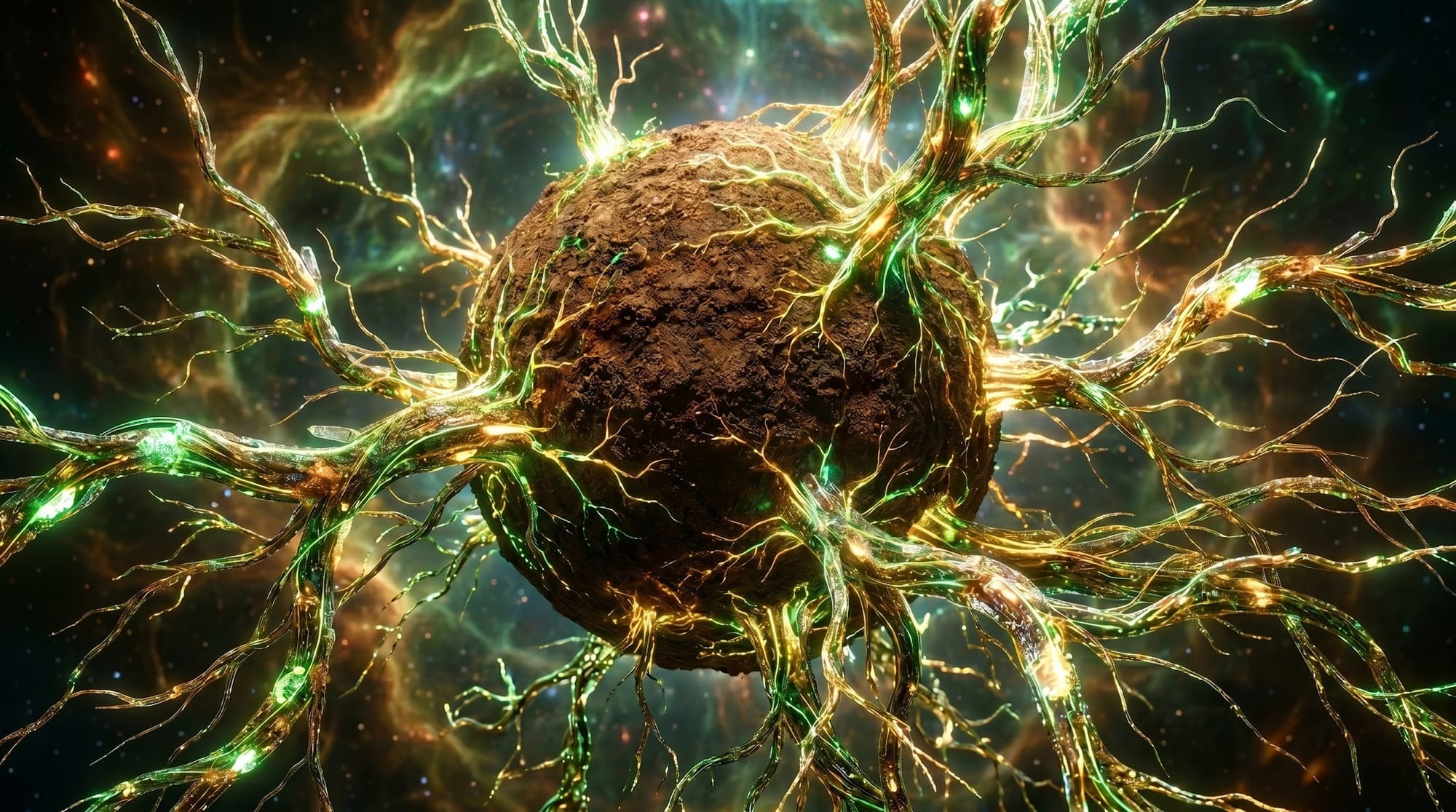
Think back to the peaceful countryside you imagined at the start. Regenerative agriculture is a real way to create and protect that kind of landscape. It goes beyond just sustaining the land. Its goal is to restore ecosystems and heal the planet by renewing soil and supporting biodiversity. Regenerative Design is a way of creating solutions that restore and revitalize the systems they affect, whether ecological, social, or economic.
The core of ecopsychology is the understanding that our inner well-being and spiritual evolution are inseparable from the Earth's vitality. This perspective aligns seamlessly with authentic futurism, emphasizing that creating a thriving tomorrow requires us to immerse ourselves in the natural world and synchronize our lives with planetary rhythms. By merging ecopsychology with earth-based futurism, we transform environmental stewardship and long-term planning into a unified, soulful endeavor. Ultimately, by nurturing the very ground beneath our feet, we ensure that the horizon remains lush and flourishing for generations to come.
🌅Conclusion: Embarking on the Journey

A Window to the Future: The Art of Active Creation
The future isn’t a set place waiting for us, and it’s not something we watch happen. We are always changing and creating it together. You’re not just a bystander—you help shape the future with your choices and actions. Every thought, choice, and action you take today helps build what comes next.
When we face our fears and move beyond them, we find new strengths. If we allow ourselves to dream big and imagine new possibilities, we open the door to real progress. By making thoughtful choices in your life, community, and work, you help build a future filled with strength and opportunity. The future isn’t something that happens to us by chance. We create it together, on purpose. Let’s work together to build a future that matches our best hopes.
Call to Action: Step Into the Future You’re Shaping
You don’t need a time machine to start moving toward the future. It all starts with one small, intentional step. Now that you have some tools and ideas, it’s time to use them.
Write a Letter to Your Future Self
Take a quiet moment to picture yourself five years from now. What have you built, overcome, and learned? Prompt: “Dear future me, I hope you’re proud of the steps I’m taking today…” Write down your hopes, intentions, and the path you’re choosing now. You might want to save it in a digital time capsule.
Mini-Quiz: What Kind of Futurist Are You?
- A: You’re a Visionary Dreamer—you thrive on inspiration and possibility.
- B: You’re a Strategic Foresighter—you map patterns and prepare with precision.
- C: You’re a Conscious Connector—you ground the future in ethics, empathy, and unity.
- D: You’re a Practical Architect—you love building tangible steps toward a better world.
Community Prompt: Share your favorite “What if…” question below. What if education were built around empathy and creativity? What if healing became more accessible than harm?
You’re not just getting ready for the future. You are part of it. The more intentional you are, the more powerful your role will be.
“Our actions and decisions today will shape how we will live. And so it is.”
Disclaimer: IZALGO intends the information in A Window to the Future for general educational and informational purposes only. You should not construe this content as professional medical, psychological, or psychiatric advice. While this guide discusses concepts related to neuroscience, somatic practices, and personal well-being, these insights encourage self-reflection and personal growth rather than diagnosing, treating, or curing any mental health or medical conditions. We encourage readers to exercise their own judgment and consult with a licensed healthcare or mental health professional before adopting any new wellness practices, especially if they experience significant anxiety, stress, or psychological distress.
If my writing made you pause, smile, or think, I’d love your support:
Your support helps me keep writing and sharing these ideas with you.
📚Recommended Reads & Resources

Books (via Izalgo Bookstore)
Scientific Foundations: Neuroscience, Somatics, and Quantum Physics
- The Biology of Belief by Bruce H. Lipton, Ph.D.: This text explores epigenetics and how our thoughts control our biology, rather than just our DNA, directly supporting the concept of merging biology and belief. It provides a foundational framework for understanding how our physiological destiny is shaped by our conscious awareness, empowering readers to intentionally reprogram their biological reality.
- The Body Keeps the Score by Bessel van der Kolk, M.D.: Essential for understanding how the amygdala and nervous system store survival energy, and how somatic practices can clear it. This book validates the assertion that we cannot easily imagine a beautiful future if our bodies are locked in a state of survival and provides actionable insights into regulating the nervous system.
- Breaking the Habit of Being Yourself by Dr. Joe Dispenza: A practical synthesis of quantum physics, neuroplasticity, and brain chemistry that offers tools to move beyond familiar biological baselines. By demonstrating how focused attention creates new neural pathways, this resource anchors the exploration of the observer effect and intentional future creation.
- Heart Intelligence by Doc Childre, Howard Martin, et al.: This book delves into the science of heart coherence and how synchronizing the heart and brain can alter our physiological state and perception. It provides a scientific basis for using heart-brain alignment to send safety signals to the amygdala, fostering clear and creative decision-making.
- Helgoland by Carlo Rovelli: A highly readable exploration of quantum mechanics that emphasizes the relational nature of reality and provides a scientific framework for the Observer effect. It grounds metaphysical concepts by validating the idea that our conscious observation actively influences and collapses potential realities into our current experience.
Metaphysical & Holistic Theories: Consciousness and Spiritual Growth
- The Seat of the Soul by Gary Zukav: Examines the evolution of human consciousness from a five-sensory survival mindset to a multi-sensory, intentional existence. This aligns perfectly with spiritual perspectives on outgrowing fear-based reactions, teaching readers how to elevate their daily decisions into energetic vibrations that shape reality.
- Becoming Supernatural by Dr. Joe Dispenza: Merges mysticism with biological science to demonstrate how intentional focus can collapse potential realities into the present. It reinforces the core thesis that individuals can function as powerful observers, using heightened emotions and clear intentions to prepare their bodies for a new biological future.
- The Tao of Physics by Fritjof Capra: A classic text that draws profound connections between quantum-mechanics discoveries and ancient holistic philosophies. It provides a comprehensive backdrop for synthesizing New Thought and metaphysical teachings, illustrating how modern science reflects deep spiritual wisdom about the interconnected web of life.
- The Power of Now by Eckhart Tolle: A foundational guide for stepping out of the illusion of linearity and accessing the present moment, where all true creation occurs. By teaching the art of intense presence, it offers a practical method for "Lineage Meditation," allowing readers to anchor themselves in the now and actively shape their horizon.
- Braiding Sweetgrass by Robin Wall Kimmerer: Beautifully weaves together botany and Indigenous traditions, grounding concepts of ecopsychology and earth-based futurism. It supports the assertion that authentic futurism requires nurturing our ecosystem, illustrating how a deep reverence for planetary rhythms ensures a lush, flourishing tomorrow.
Practical & Imaginative Futurism: Fiction and Science Fiction
- The Ministry for the Future by Kim Stanley Robinson: A visionary hard-science fiction novel that explores how humanity might successfully navigate climate change through regenerative design and global cooperation. It serves as a narrative blueprint for ecopsychological concepts, demonstrating how complex, earth-based futurism can be applied in practice to heal a fractured world.
- Childhood's End by Arthur C. Clarke: A classic exploration of human evolution, focusing on the metaphysical leap of consciousness beyond our current biological limitations. This imaginative work expands the reader’s ability to ask "What if?", mirroring ideas about humanity evolving past survival-based biology into higher states of awareness.
- The Dispossessed by Ursula K. Le Guin: Explores alternative societal structures, challenging the reader to imagine new ways of living, cooperating, and organizing future human ecosystems. By pushing the boundaries of political and social norms, it perfectly embodies how science fiction can spark emergent systems and break free from outdated historical patterns.
- Dune by Frank Herbert: Beyond its epic narrative, it is a profound study of ecology, human potential, and the consequences of long-term futurist planning. It masterfully illustrates the themes of emergent systems and regenerative design, showing how careful stewardship of planetary resources dictates a civilization's survival and evolution.
- Parable of the Sower by Octavia E. Butler: A striking narrative that examines societal collapse and the birth of a new, earth-centric philosophy centered on proactive change and adaptability. It challenges readers to engage deeply with the winds of change, illustrating how resilience and intentional community-building can forge a path forward even amid profound uncertainty.
Online Resources
Somatic Regulation, Breathwork, and Daily Rituals
- HeartMath Institute: Offers research and training on heart coherence and on synchronizing your heart, mind, and emotions to reduce stress. This platform provides the exact biofeedback tools needed to send safety signals to the amygdala, helping you move out of a survival state and into a space of clear, intentional future planning.
- Insight Timer: A free app offering thousands of guided meditations, including breathwork and shadow work. It serves as a practical daily tool for implementing metaphysical recommendations, allowing you to establish a somatic circuit breaker that grounds nervous-system energy.
- The School for Somatic Experiencing: Provides detailed resources on how somatic insights can help regulate the nervous system and clear survival energy. For those looking to engage deeply with the assertion that our bodies hold survival energy, this site offers professional directories and educational frameworks to safely process and release physiological blockages.
- Wim Hof Method: An expansive platform offering structured breathwork and cold-exposure training designed to recalibrate the nervous system and build extreme biological resilience. Teaching users to override the body’s innate stress responses consciously is a powerful, real-world way to conquer the physiological fear of the unknown.
- Calm: A widely accessible digital hub offering mindfulness techniques, guided sleep stories, and somatic relaxation exercises. It directly supports the emphasis on finding stillness and engaging the default mode network through relaxation, creating the mental spaciousness required to reflect and envision future breakthroughs.
Future Studies, Quantum Consciousness, and Knowledge Synthesizers
- The Long Now Foundation: A platform dedicated to long-term thinking and futurism, helping individuals shift their perspective on the lineage of time. It provides a vast repository of talks and essays that put the mandate to transcend the illusion of linearity and embrace deep, ancestral, and descendant-focused time horizons into practice.
- Institute of Noetic Sciences (IONS): Conducts scientific research on the interconnected nature of reality, bridging the gap between objective science and subjective inner knowing. This research hub offers concrete validation for exploring the observer state, providing scientific literature on how consciousness physically interacts with and shapes the material world.
- Foresight Institute: A research organization that promotes the development of highly ambitious emerging technologies, such as neurotechnology, biotech, and longevity. It is a vital tool for readers seeking to decode the present and engage in discussions about digital transformation and the emergent systems actively shaping tomorrow.
- SoBrief: An AI-powered tool that quickly distills key takeaways from books on energy management and well-being. For readers eager to expand their understanding of the biology of potential but constrained by time, this tool distills vast amounts of data into actionable, scannable insights to fuel daily decision-making.
- Izalgo: Serves as a central hub for exploring the harmonious blend of scientific, holistic, and metaphysical perspectives. It provides ongoing articles, frameworks, and community prompts that encourage active participation in earth-based futurism, enabling readers to effectively merge biology and belief.
- Izalgo Bookstore: A curated digital space to find specific titles on holistic health and spiritual growth.
Approach all books and resources with an open mind, recognizing that no single source is definitive, complete, or free from controversy and debate. Trust your intuition and inner guidance to discern what truly resonates with your personal path. If a concept or historical detail does not align with your truth, please disregard it and prioritize what best serves your growth.
SoBrief.com is an AI-powered digital platform that provides concise summaries of an extensive catalog of books, enabling users to grasp a book's key takeaways in about 10 minutes.
🔗Affiliate Note: Some links may be affiliate links, which means we may earn a small commission at no extra cost to you. Your support helps us continue this creative and healing work. Thank you!
Izalgo co-created the images in this post using AI software.
Copyright ©️IZALGO, LLC. All Rights Reserved