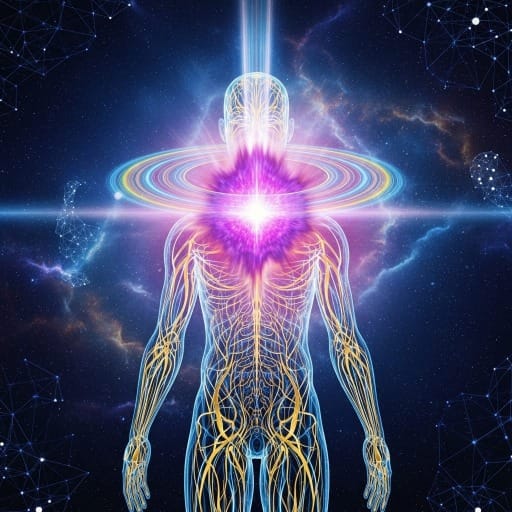
Good for the body is the work of the body, good for the soul the work of the soul, and good for either the work of the other.
Inspired by Thoreau, this guide explores how body and soul are one. It blends philosophy, science, and practical habits—like movement, mindfulness, and time in nature—to dissolve the illusion of separation and cultivate a unified, embodied, and meaningful life.

Key Takeaways
- Henry David Thoreau emphasizes the interconnectedness of body and soul, promoting a holistic approach to well-being.
- Thoreau's philosophy suggests that physical activities can enhance spiritual health and vice versa, fostering overall harmony.
- Modern science supports Thoreau's views by showing how emotions and thoughts affect physical health.
- The article offers practical tips, such as mindful eating, yoga, and spending time in nature, to nurture both the body and the soul.
- Embracing Thoreau's wisdom can lead to a more fulfilling and unified life experience.
🌿Unifying Body and Soul: 7 Thoreau-Inspired Practices for Holistic Well-being

Have you ever felt a disconnect between your physical and spiritual selves? As if your body is just a vehicle carrying a weary spirit through a checklist of daily demands? You're not alone. This profound sense of separation is a common ailment of modern life. Our culture often teaches us to treat our bodies like machines to be optimized and our souls like abstract concepts to be pondered on weekends. The timeless wisdom of Henry David Thoreau offers a solution: a holistic approach to well-being that recognizes the interconnectedness of body and soul, seeing them not as two accounts to be balanced, but as a single current of life to be experienced—a force that flows seamlessly between muscle and meditation, breath and belief.
In this blog post, we will delve into Thoreau's philosophy, exploring its holistic and metaphysical implications. We will uncover practical ways to integrate physical and spiritual practices into your daily life, fostering a sense of harmony and synthesis. By the end of this post, you will have a deeper understanding of how to nurture your whole being and live a more fulfilling life.
📜Thoreau's Philosophy: A Holistic Foundation
Henry David Thoreau, a 19th-century American philosopher and naturalist, believed in the interconnectedness of all things. His famous quote, "Good for the body is the work of the body, good for the soul the work of the soul, and good for either the work of the other," encapsulates his holistic view of well-being. For Thoreau, a key figure in American Transcendentalism, the body wasn't a lesser object to be disciplined; it was a part of nature itself, a sacred vessel through which we experience the world. For a Transcendentalist, the body wasn't just part of nature; it was a conduit for the same divine intelligence that animates a forest.
This final phrase of his quote is the alchemical key: "and good for either the work of the other." Thoreau is saying that chopping wood does more than build physical strength; its focus and rhythm can bring a clarifying stillness to the soul. Conversely, the soul's work—contemplation and reflection—isn't just a mental exercise; it informs how we inhabit our bodies, making our movements more mindful and our senses more alive. The physical and the spiritual are inseparable pathways to wholeness.
🔬✨The Mind-Body Connection: Science Meets Spirituality

Modern science is only now catching up to this ancient, intuitive wisdom. Research shows that our thoughts and emotions can significantly affect our physical health. But let's look deeper. When we say that stress weakens our immune system, what are we really observing? It is the soul's unease that leaves a physical imprint on our cells. Conversely, when practices like meditation and mindfulness lower blood pressure, it is the soul’s tranquility that literally calms the storms in our bloodstream.
Your body is not a machine that simply breaks; it is a living manuscript. It records the history of your inner world—every stress, every joy, every moment of peace is written into its tissues. This is why a massage can sometimes release not just a knot, but a memory. Science even calls our capacity for this inner awareness interoception—the quiet sense of our own heartbeat, our breath, our digestion. But we can think of it more poetically: it is the language the body uses to speak to the soul. Practices like meditation don't teach us a new language; they simply teach us how to listen to the one we were born with.
☯️Integrating Physical and Spiritual Activities

One key takeaway from Thoreau's philosophy is that the work of the body becomes the work of the soul, and vice versa. It’s a kind of alchemy where one is transformed into the other. Examples include:
- Yoga: Prayer in Motion. The physical postures (asanas) are more than just stretches; they are shapes that can unlock emotions and memories stored deep within our muscle fascia. As you hold a hip-opening pose, you may be releasing not just physical tension, but the echo of an old anxiety. Breath (pranayama) is the literal bridge that unites physical effort with the meditative mind, turning each session into an embodied prayer.
- Hiking in Nature: A Walking Meditation. The rhythmic work of your legs and lungs grounds you in the present, quieting the restless mind. Simultaneously, being surrounded by nature's intelligence provides deep spiritual nourishment. Each element becomes a spiritual lesson: the resilience of a wind-bent tree teaches the soul about flexibility; the persistence of a river carving stone teaches it about gentle, consistent effort. Your physical journey through the woods mirrors your inner journey.
- Tai Chi: A Dance of Energy and Form. This gentle practice integrates slow, deliberate movements with focused awareness, harmonizing the body's energy (Qi) with the quiet stillness of the soul.
- Mindful Eating: Nourishing the Whole Self. This practice cultivates a deeper appreciation for food by paying full attention to the act of eating. It becomes a spiritual act when you recognize the web of interdependence on your plate—the sun, the soil, the rain, the farmer. In that moment, the boundary between your body and the earth dissolves. You are not just eating food; you are partaking in a cycle of life.
- Mindful Chores: A Sanctuary in the Mundane. Even washing the dishes can become a unifying practice. Instead of rushing through it, feel the warmth of the water on your hands (and your body's work). Listen to the plates clink. This simple act of presence can quiet the mind and ground the spirit (soul's work), transforming a routine task into a moment of peace.
🌌The Metaphysics of Wholeness: Dissolving the Illusion of Separation

Beyond simple well-being, Thoreau's philosophy invites deeper inquiry. We are often conditioned to see ourselves as a "spirit" trapped inside a "body." The metaphysical truth is that this separation is an illusion. You don't have a body; you are a body. You don't have a soul; you are a soul. They are a single integrated consciousness expressing itself across different planes.
What does it feel like to make this shift? It's the difference between saying "My feet feel the grass" and feeling "I am the sensation of grass underfoot." It's a move from being an observer of your life to being the experience itself. The body ceases to be a container and becomes the very medium of your consciousness.
The ultimate goal of many spiritual practices, then, is not for the soul to escape the "prison" of the body, but for it to fully and incandescently inhabit it. The body is the temple, yes, but it is also the altar, the prayer, and the worshiper, all at once. True enlightenment is embodiment.
🌱7 Practical Tips for Nurturing Body and Soul

- Engage in Regular Physical Activity: Find activities you enjoy and that energize your body.
Reframe: Animate your vessel and let it teach you about strength and presence. - Make Time for Spiritual Practices: This could include meditation, prayer, journaling, or simply sitting in silence.
Reframe: Listen to your inner compass and find your true north. - Cultivate a Healthy Diet: Eat plenty of fruits, vegetables, and whole grains, seeing food as life-giving energy.
Reframe: See food not as fuel, but as a communion with the earth. - Get Enough Sleep: Recognize rest not as downtime, but as a sacred time for physical and spiritual restoration.
Reframe: Honor rest as a sacred time for the body to heal and the soul to dream. - Connect with Others: Spend time with loved ones, volunteer in your community, or join a social group.
Reframe: Recognize the shared soul in others and heal the illusion of separateness. - Practice Mindfulness: Pay attention to the present moment without judgment, whether you're washing dishes or walking outside.
Reframe: Inhabit the present moment so thoroughly that body and soul have no choice but to be in the same place at the same time. - Spend Time in Nature: Immerse yourself in the beauty and tranquility of the natural world to help you heal and restore.
Reframe: Return to the source and remember that you are not separate from the natural world, but an expression of it.
⚖️Embracing a Balanced Lifestyle

By incorporating these practices into your daily life, you can cultivate a more balanced and harmonious lifestyle. Remember, it's not about being perfect. It's about making small, sustainable changes that will positively impact your overall well-being. As Thoreau said, "Go confidently in the direction of your dreams. Live the life you have imagined."
🧭Conclusion: Your Journey to a Unified Life Begins Now

The wisdom of Henry David Thoreau is not a relic of the past but a practical blueprint for navigating the complexities of modern life. We’ve explored how his philosophy, supported by modern science, champions a holistic existence where body and soul are not adversaries to be balanced, but the dancer and the dance itself—indistinguishable in the flow of a truly lived life. The disconnect you feel is not a permanent state; it is the ache of this partnership being ignored. True well-being is found by weaving simple, nourishing practices for both body and soul so deeply into the fabric of your daily life that they can no longer be told apart.
👟Your First Step: The Body & Soul Commitment

Reading and reflection are essential, but it's action that drives transformation. This isn't about overhauling your entire life overnight. It's about taking one deliberate, meaningful step today. Here is your challenge:
- Choose Your Pair: Look back at the "7 Practical Tips." Select just one activity for your body and one for your soul that you will commit to this week. Keep it simple and achievable.
- Example Body: A 20-minute walk during my lunch break.
- Example Soul: 5 minutes of journaling before bed.
- Make it Accountable: Take out a piece of paper, open a note on your phone, or post a sticky note on your mirror. Write down your two chosen activities as a pledge to yourself. Then, add one more line: your 'why.' This transforms it from a task into a declaration of intent. For example: "This week, I commit to my 20-minute daily walk (body) to feel grounded and my 5 minutes of evening journaling (soul) to find clarity." See this not as a to-do list, but as a sacred contract with your whole being—a promise to listen to both its voice and its vessel.
- Share Your Intention: To solidify your commitment, share your chosen "Body & Soul" pairing in the comments below or tell a friend what you plan to do. Public accountability is a powerful motivator and inspires others to join in.
This simple act is more than just a task on a to-do list; it is a conscious decision to honor your whole being. It is the work of the body and the work of the soul, coming together to create the harmony you deserve. Don't just imagine a more fulfilling life. Start building it, one intentional step at a time. The path to a unified self is waiting.
“Our actions and decisions today will shape how we will live. And so it is.”
If my writing resonated with you—making you pause, smile, or think—consider buying me a coffee. Your support fuels my thought process and keeps this dream alive, word by word.🍵
📚Recommended Reads & Resources

Suggested Books
1. By Henry David Thoreau & The Transcendentalists
- Walden; or, Life in the Woods by Henry David Thoreau: This is the essential source text. It details Thoreau's experiment in simple, self-sufficient living and is filled with his reflections on nature, society, labor, and the integration of the physical and spiritual life.
- Walking by Henry David Thoreau: A brilliant essay that elevates the simple act of walking to a spiritual, philosophical, and sacred pilgrimage. It perfectly captures the essence of the blog post's idea, "Hiking in Nature: A Walking Meditation."
- The Essays of Ralph Waldo Emerson: As a mentor to Thoreau and a key figure in Transcendentalism, Emerson’s essays, such as "Nature," "Self-Reliance," and "The Over-Soul," provide the philosophical foundation for the ideas discussed in the blog.
2. On The Mind-Body Connection & Embodiment
- The Body Keeps the Score: Brain, Mind, and Body in the Healing of Trauma by Bessel van der Kolk, M.D.: A landmark book that scientifically explains how trauma and emotional stress are held in the body. It strongly supports the blog's assertion that the body is a "living manuscript" in which our inner world is recorded.
- Waking the Tiger: Healing Trauma by Peter A. Levine: This book explores Somatic Experiencing, a body-focused approach to healing. It provides a practical framework for understanding how to release stored stress and emotion from the body’s tissues, as hinted at in the article's yoga section.
- Complete Catastrophe Living by Jon Kabat-Zinn: The definitive book on Mindfulness-Based Stress Reduction (MBSR). Kabat-Zinn masterfully bridges the gap between ancient meditative practices and modern science, showing exactly how the "soul's work" (mindfulness) can heal the body.
- My Grandmother's Hands by Resmaa Menakem: This book extends the concept of embodiment, exploring how racialized trauma is passed down and held within individuals' and communities' bodies, and offers body-centered practices for healing.
3. On Nature & Spirituality
- Braiding Sweetgrass: Indigenous Wisdom, Scientific Knowledge and the Teachings of Plants by Robin Wall Kimmerer: Perhaps the perfect modern companion to Thoreau. Kimmerer, a botanist and member of the Citizen Potawatomi Nation, writes beautifully about a reciprocal relationship with the earth, perfectly aligning with the idea of "Mindful Eating" as a communion with the planet.
- The Spell of the Sensuous: Perception and Language in a More-Than-Human World by David Abram: A profound philosophical work that argues our modern disconnection from nature stems from a disconnection from our own senses and bodies. It's a deep dive into the metaphysics of embodiment and our place in the living world.
- How to Do Nothing: Resisting the Attention Economy by Jenny Odell: A very Thoreauvian book for the 21st century. It’s a compelling argument for redirecting our attention from digital demands to the natural, local world around us, fostering a deeper sense of place and presence.
4. On Mindfulness & Practical Application
- The Miracle of Mindfulness by Thich Nhat Hanh: A simple, elegant, and powerful guide to integrating mindfulness into everyday life. It famously teaches how to find peace and presence while washing the dishes, an exact example used in the article.
- Wherever You Go, There You Are: Mindfulness Meditation in Everyday Life by Jon Kabat-Zinn: An accessible and classic introduction to the practice of mindfulness for those who want to begin their journey.
Online Resources
1. Websites & Organizations
- The Thoreau Society (thoreausociety.org): The definitive source for information, events, and scholarship related to Henry David Thoreau and his work.
- Mindful.org: A comprehensive resource for learning about mindfulness through articles, guided meditations, and practical tips for integrating awareness into daily life.
- The On Being Project (onbeing.org): Led by Krista Tippett, this media project explores the great questions of meaning, spirituality, and the human condition. The interviews and articles frequently explore the interconnectedness of the body, soul, and the natural world.
- Greater Good Science Center (greatergood.berkeley.edu): Based at UC Berkeley, this center studies the psychology, sociology, and neuroscience of well-being and translates cutting-edge research into practical tools. It provides the scientific "why" behind many of the article's suggestions.
2. Apps for Guided Practice
- Calm: Offers guided meditations, sleep stories, and mindfulness exercises designed to reduce stress and enhance well-being.
- Headspace: Provides structured, guided meditation courses to teach the fundamentals of mindfulness and meditation in a user-friendly format.
- Insight Timer: A massive free library of guided meditations from thousands of teachers worldwide, covering everything from mindfulness and yoga to spiritual talks and walking meditations.
3. Podcasts
- On Being with Krista Tippett: Long-form conversations with scientists, theologians, artists, and poets about the spiritual and intellectual landscape of our time. Many episodes provide a deep dive into the themes explored in the blog post.
- Tara Brach: A leading voice in mindfulness, Brach’s weekly talks and guided meditations blend Western psychology and Eastern spiritual practices to foster healing and emotional awareness. She often addresses the themes of embodiment and self-compassion.
SoBrief.com is an AI-powered digital platform that provides concise summaries of an extensive catalog of books, enabling users to grasp a book's key takeaways in about 10 minutes.
Remember to explore these resources with an open mind and trust your intuition to find what resonates most deeply with your journey of rediscovery.
🔗 Affiliate Note: Some links on this page may be affiliate-based, allowing us to earn a small commission at no additional cost to you. Your support helps fuel this creative and healing mission—thank you!
Izalgo produced the images herein with AI-powered software.
Copyright ©️IZALGO, LLC All Rights Reserved