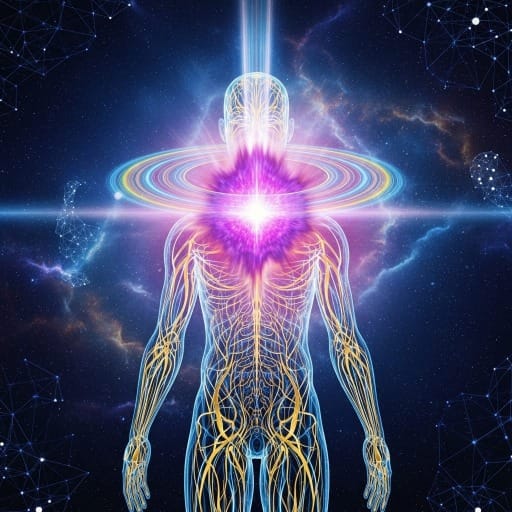
Do I contradict myself? Very well, then, I contradict myself. I am vast, and I contain multitudes.
Feeling like a walking contradiction? Walt Whitman’s wisdom, "I am large, I contain multitudes," is a powerful guide to self-acceptance.

Key Takeaways
- Walt Whitman emphasizes that we contain multitudes, acknowledging the complexity of human nature and embracing contradictions.
- The article presents five lessons from Whitman on self-acceptance, cultivating empathy, and challenging social norms.
- By practicing self-acceptance, we integrate our shadow selves and appreciate the diverse inner worlds we and others possess.
- Engaging in inner dialogue helps reconcile conflicting feelings and fosters personal harmony.
- The 'Multitudes Challenge' encourages active reflection on contradictions, self-acceptance, and understanding others.
🌌Embracing Our Inner Multitudes: 5 Lessons from Walt Whitman on Self-Acceptance and Human Complexity

Have you ever felt like you were a walking contradiction? One moment you're confident and outgoing, the next you're introspective and reserved. You crave solitude, yet you yearn for connection. You value tradition, yet you embrace change. If so, you're not alone. The great American poet Walt Whitman celebrated these contradictions, famously writing, "Do I contradict myself? Very well, then I contradict myself. (I am large, I contain multitudes.)".
In this blog post, we'll explore Whitman's powerful message and how it can help us embrace our own complexities, cultivate self-acceptance, and appreciate the diversity of the human experience. Get ready to dive deep into the heart of Whitman's wisdom and discover how his words can illuminate your own journey of self-discovery.
💡Understanding Whitman's "Multitudes"

Whitman's declaration that he contains "multitudes" is a powerful acknowledgment of the inherent complexity of the human spirit. He recognized that we are not one-dimensional beings, but rather a tapestry of experiences, beliefs, and emotions. This complexity can sometimes lead to contradictions, but Whitman saw these not as flaws, but as evidence of our vast inner landscape.
His vision of the self extends beyond the individual. He saw each person as a microcosm of the universe, reflecting its vastness and diversity. This is a poetic expression of the ancient Hermetic axiom, "As above, so below," which teaches that the patterns of the cosmos are mirrored within our own souls. From a more metaphysical perspective, this suggests that the contradictions within us are a reflection of the dynamic, ever-shifting nature of existence itself. Just as a single fractal contains the pattern of the entire design, each of us holds the complexities of the universal consciousness. Our inner multitudes are a personal symphony of energies, and embracing them helps us resonate more fully with the world around us.
☯️Lesson 1: Embracing Contradiction

Whitman's message encourages us to relinquish the need for consistency and predictability. It's okay to have conflicting thoughts, feelings, and desires; in fact, these are a natural part of being human. This echoes the Taoist concept of yin and yang, where two seemingly opposing forces are interconnected and necessary to form a dynamic, complete whole. This philosophy encourages wu wei, or effortless action. Rather than fighting our contradictory natures, we can learn to flow with them, allowing our desire for security to ground our thirst for adventure. By embracing our contradictions, we open ourselves up to a greater understanding of ourselves and the world.
🤗Lesson 2: Cultivating Self-Acceptance

Whitman's words remind us that it's okay to be imperfect. We don't have to strive for some idealized version of ourselves. Instead, we can learn to accept ourselves as we are, with all our strengths and weaknesses. This journey is an act of holistic healing. The aspects of ourselves we find most contradictory are often parts of our "shadow self" that we have learned to deny.
This journey of acknowledgment is precisely what the psychologist Carl Jung referred to as “integrating the shadow”—a vital process for achieving psychological wholeness. From a more spiritual perspective, this is an act of "soul retrieval." By bringing these facets into the light with gentle awareness, we reclaim our energy and move toward a state of wholeness that is not just mental, but spiritual. This self-acceptance is the foundation for a healthy and fulfilling life.
🤝Lesson 3: Appreciating Human Complexity

Whitman's vision of the self extends beyond the individual. By recognizing the multitudes within ourselves, we can also appreciate the complexity of others. This practice helps dissolve the metaphysical illusion of separation. At our core, we are all interconnected through what some traditions refer to as the collective unconscious or the akashic field. Seeing the beautiful, complicated multitudes in another person is a way of recognizing a reflection of our shared consciousness. This understanding can lead to greater empathy, compassion, and connection.
🚀Lesson 4: Challenging Social Norms

Whitman's message is a call to authenticity. In a world that often values conformity, he encourages us to embrace our individuality and resist the pressure to fit in. By being true to ourselves, we can live more meaningful and fulfilling lives.
🌍Lesson 5: Fostering Connection and Understanding

By acknowledging our own contradictions and embracing the complexity of others, we can create a more inclusive and understanding world. When we engage with others through empathetic resonance—truly seeking to understand their unique perspective—we expand our own consciousness. When we recognize that we all contain multitudes, we can bridge the divides that separate us and build a more connected and compassionate society.
🧘Practical Techniques for Inner Harmony

These lessons offer a new philosophy for self-acceptance. But how can we put this into practice, especially in moments of inner turmoil? Here are a couple of deeper techniques to try.
🧭The Body as a Compass: Tuning into Somatic Wisdom

Your body is a living oracle, constantly communicating the truth of your multitudes. This is often referred to as somatic intelligence. When you feel torn between two choices—for instance, the desire to speak up versus the urge to stay silent—take a moment to check in with your body. You can think of this as sensing your own energetic anatomy. Where do you feel the 'yes'? It might be warmth or an openness in your chest (the heart chakra). Where do you feel the 'no'? It could be a tightening in your stomach (the solar plexus chakra) or a lump in your throat. These physical sensations are not random; they are the voice of your inner multitudes. One part of you is expressing its need for safety (the clenched stomach), while another is expressing its desire for authentic expression (the expansive chest). By learning to listen to these signals without judgment, you are not just making a choice; you are honoring the different, valid needs within you.
⚖️From Inner Conflict to Inner Dialogue

While embracing contradiction is liberating, the feeling of being pulled in different directions can still be stressful. The goal is to transition from a state of inner conflict to one of inner peace and harmony through a process of inner dialogue. Think of yourself not as the warring factions, but as the wise and compassionate chairperson of your own inner committee—your Higher Self.
When you notice a strong internal contradiction, try this practice:
- Give the 'Parts' a Voice: Personify the conflicting desires. For example, "My 'Adventurous Self' wants to move to a new city, but my 'Security-Seeking Self' wants the comfort of staying put".
- Let Each Part Speak: In your journal or in quiet reflection, genuinely listen to each part. What does the Adventurous Self hope to gain? What does the Security-Seeking Self fear losing? Allow each one to state its case fully.
- Seek Creative Integration: From the seat of your Higher Self, ask the committee: "Is there a way we can honor both of your needs?". Often, you'll discover that both parts ultimately want the same thing for you—perhaps happiness or peace. The solution may be a creative compromise you hadn't considered.
By facilitating this inner dialogue, you affirm that every part of you has value. You move from being a battleground to being a council, guided by the calm, centered 'Self' who contains all these multitudes.
✨Conclusion: Embracing Your Own Multitudes

Walt Whitman's timeless words offer a powerful invitation to embrace our own inner multitudes. By letting go of the need for consistency, cultivating a holistic self-acceptance, and appreciating the complex, shared consciousness in ourselves and others, we can live more authentic, fulfilling, and connected lives. So, the next time you feel like you're a walking contradiction, remember Whitman's words and embrace your own multitudes.
🎯Your Challenge: Unleash Your Multitudes

Don't just be inspired by Whitman's message; put it into practice. Take on the "Multitudes Challenge" to actively embrace your complexities and cultivate a deeper understanding of yourself and others.
Here are four tasks to guide you:
- Acknowledge Your Contradictions: For one week, keep a journal. Each day, note moments when you feel conflicting thoughts or desires. Do you crave solitude and connection at the same time? Instead of judging these feelings, simply acknowledge them as a natural part of your inner landscape. Reflect on them as the dynamic interplay of your inner energy, asking, "What does my quiet self feel like? Is it calm and watery? What about my adventurous self? Is it fiery and expansive?".
- Practice Intentional Self-Acceptance: Make a list of your strengths and what you perceive as your "energies in shadow" or weaknesses. Whitman’s words remind us that it’s okay to be imperfect. View this as gentle "shadow work". Next to each perceived weakness, write how it is also a part of your complexity—for example, "impatience" might be the shadow of "decisive action". Hold this list as a reminder to accept your whole self.
- Discover the Multitudes in Others: This week, consciously connect with someone whose perspective differs from your own. Approach the conversation with an appreciation for its complexity. Listen to understand, recognizing that they, too, are a "microcosm of the universe," reflecting a consciousness as vast as your own. This act can foster greater empathy and connection.
- Take One Authentic Action: Identify one area where you feel pressure to conform. This week, take one small, deliberate step toward being more authentic in that area. Embracing your individuality is key to a more meaningful life.
By actively embracing your inner multiplicity, you not only transform your own life but also contribute to building a more inclusive and compassionate society.
“Our actions and decisions today will shape how we will live. And so it is.”
If my writing resonated with you—making you pause, smile, or think—consider buying me a coffee. Your support fuels my thought process and keeps this dream alive, word by word.🍵
📚Recommend Reads & Resources

Books
On Walt Whitman and His Philosophy
- "Leaves of Grass" by Walt Whitman: This is the essential source text. The specific poem that contains the famous quote is "Song of Myself". Reading the full work provides the complete context for his celebration of the individual, democracy, and the interconnectedness of all things.
- "Walt Whitman's Song of Myself: A Sourcebook and Critical Edition," edited by Ezra Greenspan: For those who wish to dive deeper, this book provides literary and historical context for Whitman’s most famous poem, helping to unpack the "multitudes" he describes.
On Psychology and Self-Acceptance
- "The Gifts of Imperfection" by Brené Brown: This book directly addresses the theme of living an authentic and wholehearted life by embracing vulnerability and imperfection, echoing the author's call to let go of an "idealized version of ourselves."
- "Owning Your Own Shadow" by Robert A. Johnson: A clear and accessible introduction to the concept of the "shadow self" mentioned in the text. It explains the importance of acknowledging and integrating the less desirable aspects of the psyche to achieve wholeness, a process Carl Jung termed "integrating the shadow."
- "No Bad Parts: Healing Trauma and Restoring Wholeness with the Internal Family Systems Model" by Richard C. Schwartz, PhD: The document suggests personifying and having an inner dialogue with conflicting internal desires. This book is the definitive guide to the practice of Internal Family Systems (IFS), which views the psyche as a family of "parts" to be understood, rather than a battleground to be won.
- "Radical Acceptance" by Tara Brach: This book explores Buddhist teachings on mindfulness and compassion to help individuals overcome shame and feelings of unworthiness. It aligns with the article's message of self-acceptance and observing inner turmoil without judgment.
- "The Body Keeps the Score" by Bessel van der Kolk, M.D.: For readers interested in the "Somatic Wisdom" section, this book offers a deep scientific and practical exploration of how our bodies hold our experiences and how we can listen to them to heal and integrate our inner worlds.
On Philosophy and Spirituality
- "Tao Te Ching" by Lao Tzu (translated by Stephen Mitchell): The document explicitly references Taoist concepts, such as yin and yang, and wu wei (effortless action), as a way to flow with our contradictory natures. This is the foundational text of Taoism, offering poetic wisdom on balance, harmony, and non-resistance.
- "The Wisdom of Insecurity" by Alan Watts: Watts argues that security is an illusion and that true peace arises from embracing the present moment and the ever-shifting nature of existence, a perspective that mirrors the text's metaphysical account of our inner multitudes.
Online Resources
Websites & Blogs
- The Marginalian (formerly Brain Pickings) by Maria Popova: This website frequently explores the wisdom of historical figures, including Walt Whitman, and connects their insights to modern questions of science, art, philosophy, and how to live a meaningful life.
- The On Being Project: This platform offers podcasts, articles, and resources dedicated to exploring the big questions of life. It aligns with the document's themes of fostering connection, empathy, and understanding of our shared consciousness.
- Tiny Buddha: A website that shares personal stories and practical tips for applying concepts like mindfulness, self-love, and letting go of judgment, directly supporting the "Practical Techniques for Inner Harmony" section.
Podcasts
- "On Being with Krista Tippett": An award-winning podcast featuring interviews with poets, scientists, theologians, and activists about faith, spirituality, and the complexities of the human experience.
- "The One You Feed": This podcast uses the parable of two wolves (one good, one bad) to explore how to manage our inner world. Episodes frequently cover topics such as mindfulness, managing difficult emotions, and integrating our "shadow," aligning closely with the document's core message.
- "Tara Brach": Each week, Dr. Tara Brach shares a guided meditation and a talk that blends Western psychology and Eastern spiritual practices, often focusing on self-acceptance and compassion for our inner multitudes.
SoBrief.com is an AI-powered digital platform that provides concise summaries of an extensive catalog of books, enabling users to grasp a book's key takeaways in about 10 minutes.
Remember to explore these resources with an open mind and trust your intuition to find what resonates most deeply with your journey of rediscovery.
🔗 Affiliate Note: Some links on this page may be affiliate-based, allowing us to earn a small commission at no additional cost to you. Your support helps fuel this creative and healing mission—thank you!
The images herein were produced by Izalgo with AI-powered software.
Copyright©️ IZALGO, LLC All Rights Reserved