
All humanity is one undivided and indivisible family.
Can we heal a divided world by changing how we breathe? Discover how Mahatma Gandhi’s ancient wisdom meets modern science to decode your body's stress signals, unlock profound heart coherence, and reclaim your ultimate daily inner peace.
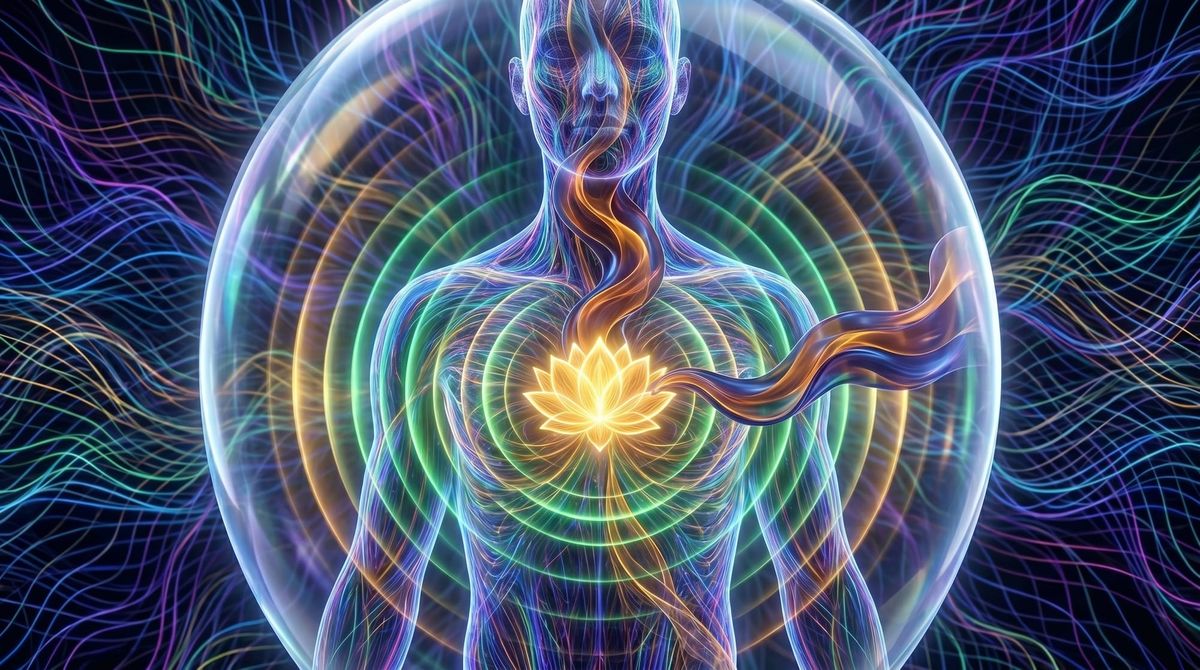
The Anatomy of Oneness: Using Soul Force, Heart Coherence, and Ancient Wisdom to Transform Your Daily Vitality
Have you ever felt a strong connection to someone who seemed very different from you? Or maybe you’ve felt a bit sad about the divisions and arguments we see in our world today? In those moments, Mahatma Gandhi’s wisdom can give us a lot of hope. He beautifully said, "All humanity is one undivided and indivisible family, and each one of us is responsible for the misdeeds of all others." Even though he shared these words decades ago, they matter now more than ever. They invite us to step into unity, kindness, and a shared care for one another.
Gandhi’s ideas came from a deep place of love and spirit. He believed that everything in life is connected, and that our truest nature is to live helpfully and treat the world as our home. He learned about selfless love from sacred stories like the Bhagavad Gita, which he lovingly called his "eternal mother." He was also inspired by writers who believed in the power of inner truth over force, and who taught that everyone's daily work has equal dignity.
By looking at Gandhi’s ideas of oneness, we can discover some wonderful, practical tools to help us find inner peace, boost our daily happiness, and bring a little more harmony to our big human family.
🧩 The Essence of Human Oneness: Beyond Our Differences

Gandhi’s main message is simple: look past outward differences such as nationality, background, or social status, and recognize that we all share the same human heart. At its core, this means noticing that everyone has basic needs, feelings, hopes, and a desire to be respected. Think about the pure joy of a baby’s laughter, or the comforting feeling of being safe at home—these are things every single person on Earth understands, no matter who they are.
We are all linked together. When something happens to one group of people, it ripples out and affects us all, just like how pulling a single thread can change the pattern of a whole tapestry. Because of this, big challenges like caring for our planet or helping people out of poverty require us to work as a team. Gandhi believed that our daily actions have power. A single kind act can send out a wave of good energy, while staying silent or being unkind can send a ripple in the opposite direction.
🛠️ Gandhi's Vision: Active Tools for a Peaceful Life

Gandhi didn't just talk about these big ideas; he lived them every day. We can use his four core principles as simple, daily exercises to help us clear our minds, calm our bodies, and feel more connected:
Ahimsa (Active Love and Kindness)
Ahimsa is often translated as non-violence, but Gandhi explained that in its warmest form, it means "the greatest love and the largest charity." It’s an active kind of love that you even share with people you disagree with.
How to feel it in your body: When we get upset or see divisive news, our body’s internal alarm system goes off, making our heart race and our muscles tighten. We can use our breath as a natural volume knob to quieten that alarm and open our heart center.
- 🧘♂️ Somatic Interlude: The Heart-Calming Breath
- When to use: When you feel your internal alarm system go off or read divisive news.
- * Position: Sit comfortably and place both hands over the center of your chest.
- * Focus: Close your eyes and breathe gently into this space.
- * The Count: Inhale for a count of 4, hold for a count of 2, and exhale extra slowly for a count of 8. This long, slow exhale sends a physical message to your body that it is safe to relax.
- Sending Out Your Light: As you keep breathing, imagine a warm, gentle golden or green light growing inside your chest. Once you feel a cozy sense of warmth there, imagine sending that light outward in growing circles: first to yourself, then to your close family and friends, then to your local neighborhood, and finally, stretching all the way around the world to the whole human family.
- The Reset Button: The next time someone pushes your buttons or makes you angry, stop for just a second. Drop your attention out of your racing thoughts and into your chest. Take one deep, slow breath right into your heart before you speak. You'll be amazed at how it dissolves the urge to snap back!
Satyagraha (Soul Force and Truth)
Satyagraha means "holding firmly to the truth." It’s the practice of using "soul force"—the quiet power of honesty and love—rather than physical force to solve problems. A famous example of this was Gandhi’s Salt March, where thousands of people walked together peacefully to protest an unfair tax. The goal was never to defeat the other side, but to help everyone find a fair, shared understanding.
How to feel it in your body: In our daily lives, this means ensuring our outer actions align with our deep inner truth. Your body is actually an amazing lie detector! Your throat and your stomach are connected by sensitive nerve pathways that react instantly to how honest you are being.
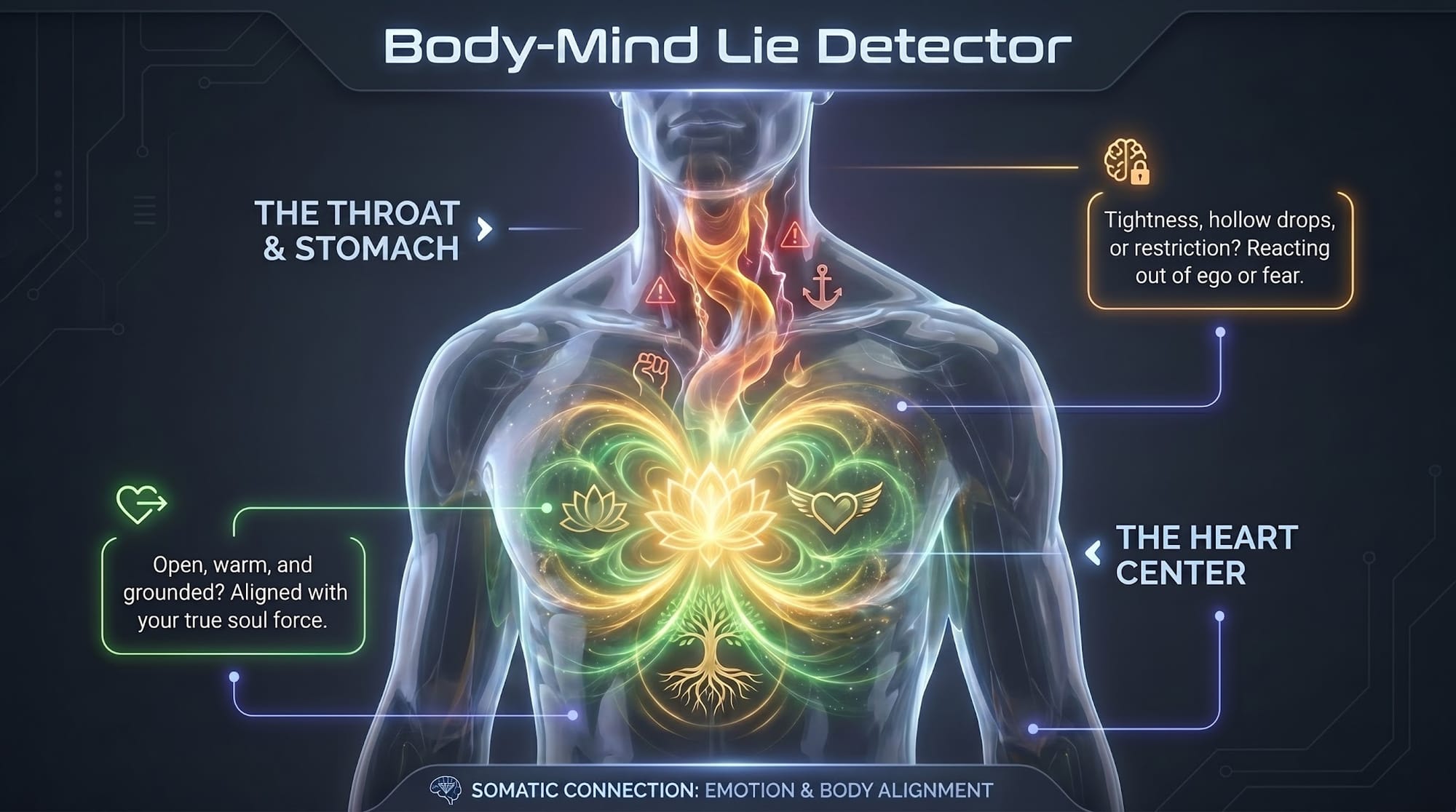
The Truth Check: When you have a tough choice to make, or before you post a comment online, close your eyes and ask yourself what you truly want to do. Listen to your body’s reaction. If your throat feels tight or your stomach gets a hollow, nervous drop, that's an inner warning sign. It usually means you are reacting out of ego, fear, or pressure from others. But if your chest feels open, warm, and grounded, you are aligned with your true "soul force." Use this quick scan to make sure your words are meant to help and heal, not to hurt.
Tapasya (Mindful Courage)
Tapasya is the willingness to sit with discomfort or face difficulties out of love, without trying to pass the pain along to someone else. Holistically, we can use this as a super-tool for emotional recycling—clearing out heavy, stuck feelings so they don’t turn into long-term stress.
How to feel it in your body: When we get hurt, criticized, or upended, our body releases stress chemicals that tend to settle in specific places, like a clenched jaw, tight shoulders, or a knotted stomach. If we instantly shout, distract ourselves with a screen, or swallow our feelings, that heavy tension gets trapped in our muscles.
- The Sitting-Still Practice: The next time a moment of friction happens, try a little experiment. Instead of walking away or arguing, sit perfectly still with the feeling for just two minutes. Locate exactly where the anger or sadness is hiding in your body. Breathe right into that tight spot without judging it or telling yourself a story about who is right or wrong. Just watch the physical sensation with gentle curiosity. If you stay present with it without feeding it new angry thoughts, the physical tightness will naturally begin to melt away, turning a stressful moment into a source of deep personal strength.
Swaraj (Self-Rule and Mastery)
The ultimate goal of Swaraj is internal mastery—learning to govern our own minds and actions with calm discipline. In our busy digital world, we are constantly flooded with internet noise, bad news, and collective anxiety. True self-rule means deciding for yourself what kind of energy you want to let inside your mind.
How to feel it in your body: Think of yourself as living in a beautiful inner house. You get to decide who and what comes through the front door!
- The Energy Bubble Ritual: Spend just a few minutes every morning right after you wake up to ground yourself. Close your eyes and picture a bright, clear, protective bubble of light surrounding your body. Mentally say to yourself: "I am the boss of my own peace. I choose to stay calm, and I don't have to carry the stress of the outside world today." This invisible boundary allows you to send love out into the world, while acting as a shield that keeps the world's chaos from draining your happiness.
⚖️ Nuances and Challenges: Keeping it Real

Gandhi’s vision is incredibly beautiful, but putting it into practice isn't always easy. It’s totally normal to feel a bit overwhelmed by how big the world's problems are. Recognizing these challenges helps us keep our goals realistic and down-to-earth.
📍 Real-World Divides
📍 Gandhi’s Own Journey
Even Gandhi struggled to balance his big ideals with daily life, which makes him a very relatable and human figure:
- Local vs. Global: He often believed that to fix the world, we have to start by helping our immediate neighbors first.
- Family and Mistakes: Balancing global work and family life created real tension in his home. His early history in South Africa also shows that his thinking had to grow and evolve over many years to become truly inclusive.
- Is Peace Practical?: Some critics wonder whether peaceful solutions work against leaders who refuse to listen, or whether they require too much patience and sacrifice during a crisis.
Knowing these challenges doesn't mean we give up; it just reminds us to keep trying, talk openly, and be patient with ourselves and others.
🌐 Modern Connections

Every single day, we get reminders of how connected we really are. When major emergencies occur—such as an earthquake or a health crisis—countries around the world immediately send help across borders, showing that we truly are a global family. Even the things in our homes, from our food to our electronics, rely on a vast network of workers across the planet.
Technology also lets us video-chat and support friends thousands of miles away in real time. Of course, the internet can sometimes make us feel a bit lonely or trapped in arguments if we aren't careful. But overall, these modern tools show us that Gandhi's dream of a connected human family is a very real, living thing.
🌱 A Legacy of Hope

Gandhi's peaceful practices directly inspired some of history's greatest heroes, such as Martin Luther King Jr., who fought for civil rights in America, and Nelson Mandela, who worked for freedom in South Africa. They proved that the strongest societies are built on fairness and care, not on weapons. Imagine a world where communities focus on healing and helping people learn from mistakes rather than just punishing them. That is the power of treating humanity as a family.
🗺️ Your Daily Harmony Blueprint

Believing that all people are one family means bringing that love into our normal, daily routines. Here is an easy, step-by-step guide to weaving these peaceful energy tools into your week:
1. Morning: Your Peace Checklist
- Open Your Mind: Start your day by promising to catch yourself when you make quick judgments about others.
- The Step: Spend your first five minutes doing the Energy Bubble Ritual right after waking up to protect your peace. Before you check your phone, do a quick Truth Check to feel grounded in your body. When talking to family or coworkers in the morning, practice active listening—truly hear what they are saying without interrupting or planning your next answer.
2. Mid-Day: Staying Calm in Action
- Build Bridges: Step out of your comfort zone! Smile or strike up a friendly chat with someone you wouldn't normally talk to at school, work, or the grocery store, focusing on finding common ground.
- The Step: If a stressful moment pops up or you see an upsetting headline, pause and do the Heart-Calming Breath to steady your inner alarm. If you listen to a podcast or read an article, pick a viewpoint you don't usually agree with and practice listening with a calm, curious mind.
3. Evening: Sharing and Unwinding
- Do Some Good: Find one small way to make things fairer. Support a small local business, choose to fix a broken item instead of throwing it away, or lend a tool to a neighbor.
- The Step: Before bed, apply Gandhi's Talisman by picturing the face of someone who might be lonely or struggling. Imagine a bright, golden thread connecting your heart directly to theirs, and imagine sending them a wave of your day's happy energy to lift them up. Finally, if you are holding onto any lingering frustration from the day, use the Sitting-Still Practice to breathe through the tightness in your muscles, letting the stress dissolve into pure, quiet strength before you drift off to sleep.
⏳ Conclusion: Starting Right Now
With so many big conversations happening today, remembering that we are all one human family isn't just a sweet daydream—it's a beautiful necessity. By playing with these simple tools of breathing, listening, and protecting our energy, we can easily break down walls and create a friendlier world from the inside out.
The challenges out there are real, but you have so much power in your own choices. Every small, kind step you take helps glue our global tapestry back together.
“Our actions today shape how we will live tomorrow. And so it is.”
Disclaimer: The breathing techniques, mindfulness reflections, and somatic practices shared in this post are intended for educational and personal development purposes only. They are designed to support general well-being and daily vitality, not to diagnose, treat, or substitute for professional medical advice, therapy, or mental health care. Always listen to your body, and consult a qualified healthcare professional if you have any questions or concerns regarding your physical or emotional health.
If my writing made you pause, smile, or think, I’d love your support:
Your support helps me keep writing and sharing these ideas with you.
📚 Recommended Reads & Resources

Books (via Izalgo Bookstore)
Scientific Foundations
- The Biology of Belief by Bruce H. Lipton: Explores how consciousness, thoughts, and emotional environments alter cellular expression and biology, proving that we are not locked-in victims of our genetic code.
- The Polyvagal Theory by Stephen W. Porges: Establishes the definitive neurological model that maps how the vagus nerve governs the body's internal threat responses, heart rate changes, and social behavior loops.
- Molecules of Emotion by Candace B. Pert: Documents the discovery of neuropeptide receptors throughout the human body, providing a direct neurochemical bridge that shows how emotions settle within physical tissues.
- Widen the Window by Elizabeth A. Stanley: Examines the neurological underpinnings of chronic stress and survival psychology, detailing practical physiological frameworks to enhance the nervous system's resilience.
Metaphysical & Holistic Theories
- The Bhagavad Gita by Eknath Easwaran: A timeless translation that details the spiritual unity, mutual responsibility, and interconnectedness of all human beings, emphasizing daily actions aligned with inner truth.
- The Heart’s Code by Paul Pearsall: Examines the heart’s unique cellular memory and electromagnetic broadcasting field, offering a holistic theory that positions the heart as a primary thinking, energetic center.
- The Myth of Normal by Gabor Maté: Connects individual bodily health directly to societal dynamics, presenting an expansive holistic theory on how collective cultural pressures and divisions degrade human vitality.
- The Wisdom of Your Body by Hillary L. McBride: Investigates how reclaiming an embodied, holistic worldview enables individuals to dismantle rigid mental divides and experience sacred interconnectedness with the world.
Practical "How-To" Elements
- Non-Violent Resistance (Satyagraha) by Bharatan Kumarappa: Offers actionable methods for embodying active love and using inner soul force to resolve interpersonal conflict, serving as an essential guide for practicing Ahimsa in daily life.
- An Autobiography: The Story of My Experiments with Truth by Mahatma Gandhi: Acts as an explicit, intimate manual detailing how personal daily mastery and physical self-rule directly generate the quiet, resilient "soul force" required to transform interpersonal friction.
- My Grandmother's Hands by Resmaa Menakem: A body-centered guide offering step-by-step practices to identify, track, and naturally dissolve heavy emotional trauma and protective muscle tension trapped inside our tissues.
- Anchored by Deb Dana: Translates complex polyvagal science into simple, real-world exercises designed to help readers easily navigate daily stressors, regulate heart rate, and cultivate safety.
- The Vagus Nerve Reset by Anna Ferguson: Provides a highly practical toolkit of somatic circuit breakers, breath exercises, and mindful adjustments designed to quieten internal alarm systems on demand.
Online Resources
Biometric Coherence & Nervous System Regulation
- HeartMath Institute: Offers biofeedback apps and hardware designed to guide individuals into heart-brain coherence, helping users measure and quiet internal alarm systems through targeted breathing loops.
- The Polyvagal Institute: Provides courses and interactive anatomical guides that teach individuals how to decode internal warning signs, such as a tight throat or a hollow stomach drop.
- Breathwrk: A digital application offering visual, science-backed breathing blueprints configured to physically signal the body to relax, balance heart rate, and release stress.
- Elite HRV: A powerful biometric app that tracks heart rate variability to measure autonomic nervous system balance, offering a precise method for monitoring how effectively your chosen somatic circuit breakers are restoring your daily physical equilibrium.
Mindfulness & Daily Ritual Frameworks
- Insight Timer: Hosts a massive global library of guided meditations, timers, and polyvagal tracks, useful for anchoring daily practices such as morning bubble rituals and body scans.
- Headspace: Features highly structured mindfulness courses, daily checklists, and animations designed to build personal accountability and step-by-step emotional self-mastery.
- Calm: Delivers production-forward ambient soundscapes, targeted evening unwind practices, and guided breath sessions to reset racing thoughts and promote deep rest.
- Down Dog: A fully customizable yoga and somatic movement application that provides targeted physical routines to release trapped muscle tension, perfectly complementing daily mindfulness habits and supporting profound physical self-rule.
Nonviolent Communication & Conflict Transformation
- Center for Nonviolent Communication: Provides communication tools, empathy resources, and actionable steps to develop active listening and speaking from a place of deep inner truth.
- The Embody Lab: An online platform delivering somatic workshops and emotional recycling techniques to help individuals sit with social discomfort without lashing out or passing pain along.
- Charter for Compassion: A digital global hub offering networking resources and actionable project outlines designed to unite communities, bridge real-world economic divides, and foster connection.
Concise Learning & Summaries:
- SoBrief.com: An AI-powered platform to quickly grasp the key takeaways of books related to energy management and well-being in about 10 minutes.
- Izalgo Bookstore: A curated digital space to find specific titles on holistic health and spiritual growth.
- Izalgo: This platform is a dedicated environment for exploring the harmonious integration of scientific, holistic, and metaphysical perspectives, presenting them as interconnected facets of a single truth. Through in-depth resources, it provides a central hub of concrete tools and practical advice to help you move from tension to deep inner tranquility.
Approach all books and resources with an open mind, recognizing that no single source is definitive, complete, or free from controversy and debate. Trust your intuition and inner guidance to discern what truly resonates with your personal path. If a concept or historical detail does not align with your truth, you are encouraged to disregard it and prioritize what best serves your growth.
SoBrief.com is an AI-powered digital platform that provides concise summaries of an extensive catalog of books, enabling users to grasp a book's key takeaways in about 10 minutes.
🔗Affiliate Note: Some links may be affiliate links, which means we may earn a small commission at no extra cost to you. Your support helps us continue this creative and healing work. Thank you!
Izalgo produced the images herein with AI-powered software.
Copyright ©️IZALGO, LLC. All Rights Reserved