Age is mostly a matter of mind. If you don't mind, it doesn't matter.
Ever heard "age is just a number"? It’s a deep truth. Your attitude profoundly shapes your aging experience. Step across the invisible bridge of the mind-body connection to shift your paradigm and reclaim your innate, ageless vitality today!

The Quantum Art of Ageless Living: How to Program Your Mind and Cells for Lifelong Vitality
Have you ever heard the phrase, "Age is just a number"? Maybe you know someone like Julia "Hurricane" Hawkins, who started running competitive races at age 100 and set world records, showing us all what is possible when we refuse to let a calendar dictate our lives. This saying is far more than just a comforting phrase; it reflects a deep truth about how we navigate our journey through time. This hopeful and empowering perspective, beautifully captured by Mark Twain, reminds us that our personal attitude and mindset profoundly shape our daily experience of aging.
But how exactly does this work, and how can we use this truth to actively create a daily reality filled with energy and joy?
When we look closer, we find a beautiful, interconnected balance. Age is simultaneously a mental, physical, and emotional experience. Our bodies undergo natural physical changes as the years pass, requiring mindful adjustments, gentle care, and an honest acknowledgment of our physical needs. A vibrant, healthy mindset doesn’t mean wearing blinders or pretending these transitions aren't happening. Instead, it means gathering your inner resilience, flexibility, and daily habits to meet life's hurdles with unshakeable confidence. By keeping your spirit young, staying deeply curious, and protecting the peaceful connection between your thoughts and your physical body, you can remain completely energized, purposeful, and alive.
Let's explore how you can deliberately shift your perspective and activate practical, everyday rituals to reclaim your innate vitality.
🧠 The Mind-Body Connection: Tuning Into Your Best Energy

The invisible bridge connecting our minds and bodies is an active, living current. What we think, believe, and feel about the aging process doesn't just sit quietly in our heads; it directly guides our physical health and well-being. Far beyond simple positive thinking, an intentional shift in your mental state creates real, positive changes within your physical body.
Consider how stress works: when we internalize negative stereotypes or dwell on fears of getting older, our bodies react. This worry causes the body to release stress hormones like cortisol, which, over time, can lead to fatigue, reduced immune function, and other health concerns.
Conversely, look at the incredible power of a positive outlook. A landmark study found that individuals who held a cheerful, celebratory view of aging lived an average of 7.5 years longer than those who held negative cultural beliefs about aging. A vibrant attitude can even serve as a wonderful shield, keeping your mind sharp and clear.
"A landmark study found that individuals who held a cheerful, celebratory view of aging lived an average of 7.5 years longer than those who focused on negative cultural beliefs."
How old you feel—your "subjective age"—is completely fluid and responsive. You might feel heavy and tired after a night of poor sleep, or beautifully young and timeless when you are fully immersed in an activity you love. Because your felt age changes from day to day, you aren't trapped on a single path; you have the power to consciously choose a vibrant, youthful, energetic timeline.
🛠️ The Daily Step: Remembering Your Inner Strength
- Catch the Gripe: Actively question and reject internal or external messages that paint aging solely as a decline. When a limiting thought pops up, pause and ask yourself: "Is this thought a factual rule, or am I just adopting an old assumption?"
- Pick a Peak Memory: Sit comfortably in a quiet space for five minutes every morning. Close your eyes and deliberately bring to mind a specific, vivid memory from your past where you felt peak physical strength, sharp mental clarity, or boundless joy.
- Feel It Completely: Don't just look at the memory like an old photograph—step back inside it. Recreate the exact physical sensations, the rhythm of your breath, and the feeling of absolute wellness.
- Set Your Day's Tone: Let that wonderful feeling fill up your entire body right now. Tell yourself that this vibrant energy is your true baseline for the day, helping you wipe away morning stress and reset your focus.
🌬️ Gentle Breathwork & Heartfelt Words: Finding Your Inner Calm

We can directly guide and improve the mind-body connection through the simple, natural mechanics of our breath. While regular deep breathing is wonderful for relieving immediate anxiety, we can elevate it into a dedicated daily practice that builds your prana (your vital life-force energy) and calms your nervous system.
When you breathe with deliberate intention, you send an immediate signal of safety, deep relaxation, and balance to your heart, brain, and immune pathways. The space between your breaths—the intentional, comfortable pause—is incredibly powerful. This moment of absolute stillness acts as a reset button, shifting your brain out of a rushed or worried state.
"The space between your breaths—the intentional, comfortable pause—is incredibly powerful. This moment of absolute stillness acts as a reset button..."
Following this pause, a long, slow, controlled exhalation serves as the physical trigger that lowers your heart rate and signals to your body that it is completely safe. By pairing this calming breath with focused, positive self-talk, you flood your day with peace while intentionally rewriting your inner dialogue.
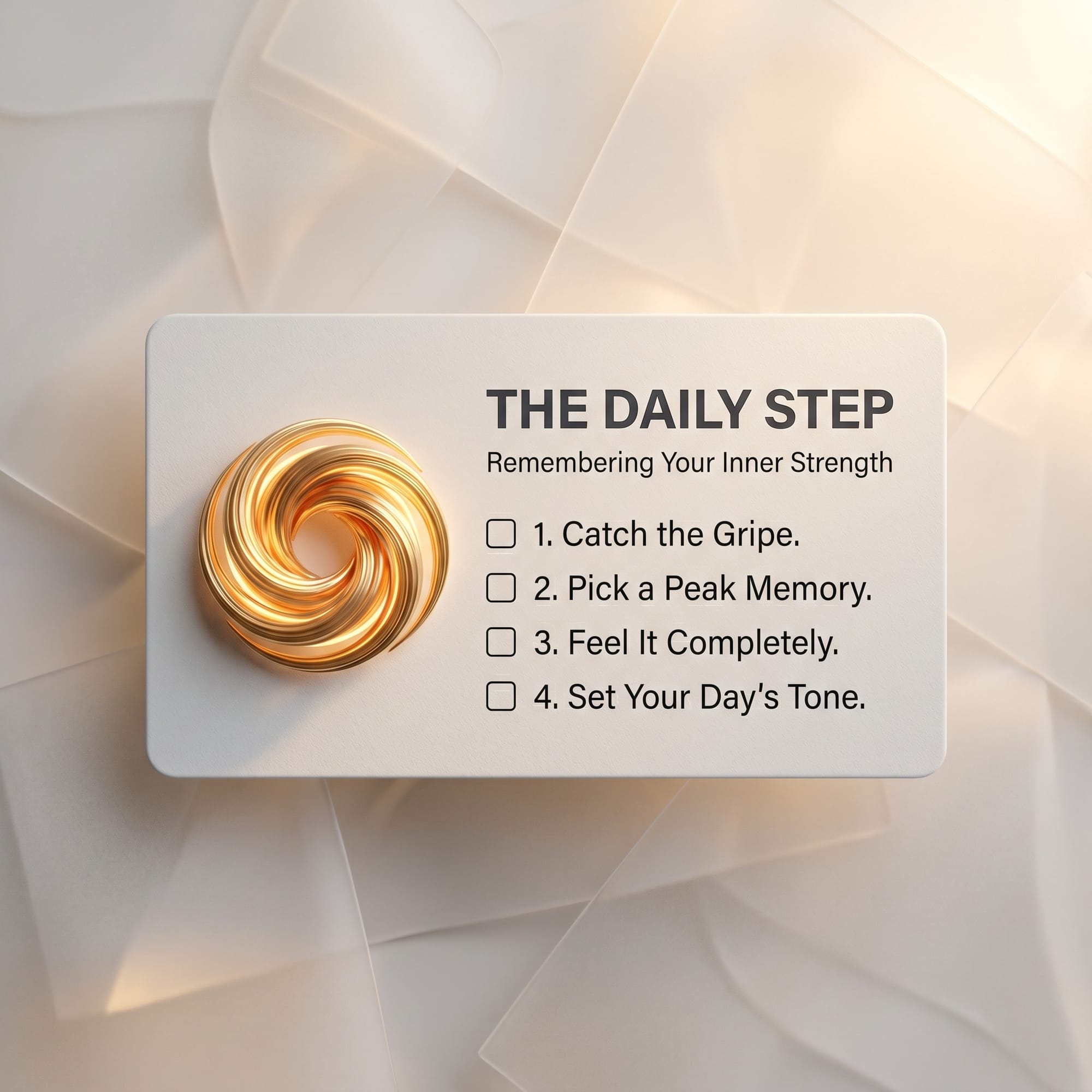
🛠️ The Daily Step: The Quick Energy Reset
- The Easy Counting Rhythm: Sit upright and relax your shoulders. Empty your lungs. Inhale deeply through your nose for a count of four, imagining a wave of clear, luminous, vital energy expanding within you.
- The Peaceful Pause: Hold your breath gently for a count of four. Instead of freezing or tensing up, relax into the stillness. Imagine this pause gathering all your physical and mental strength and sending it straight to your brain for clear thinking.
- The Slow Release: Exhale smoothly through your mouth for a count of four, completely letting go of any heavy thoughts, tension, or worries. Hold your lungs empty for a count of four before gently drawing in your next breath.
- Speak with Kindness: Repeat this easy pattern 3 to 5 times. As you finish, speak to yourself with unconditional love and confidence, repeating internally: "I am capable, resilient, and filled with vibrant health and peace."
📚 Lifelong Learning: Keeping Your Mind Fresh and Flexible
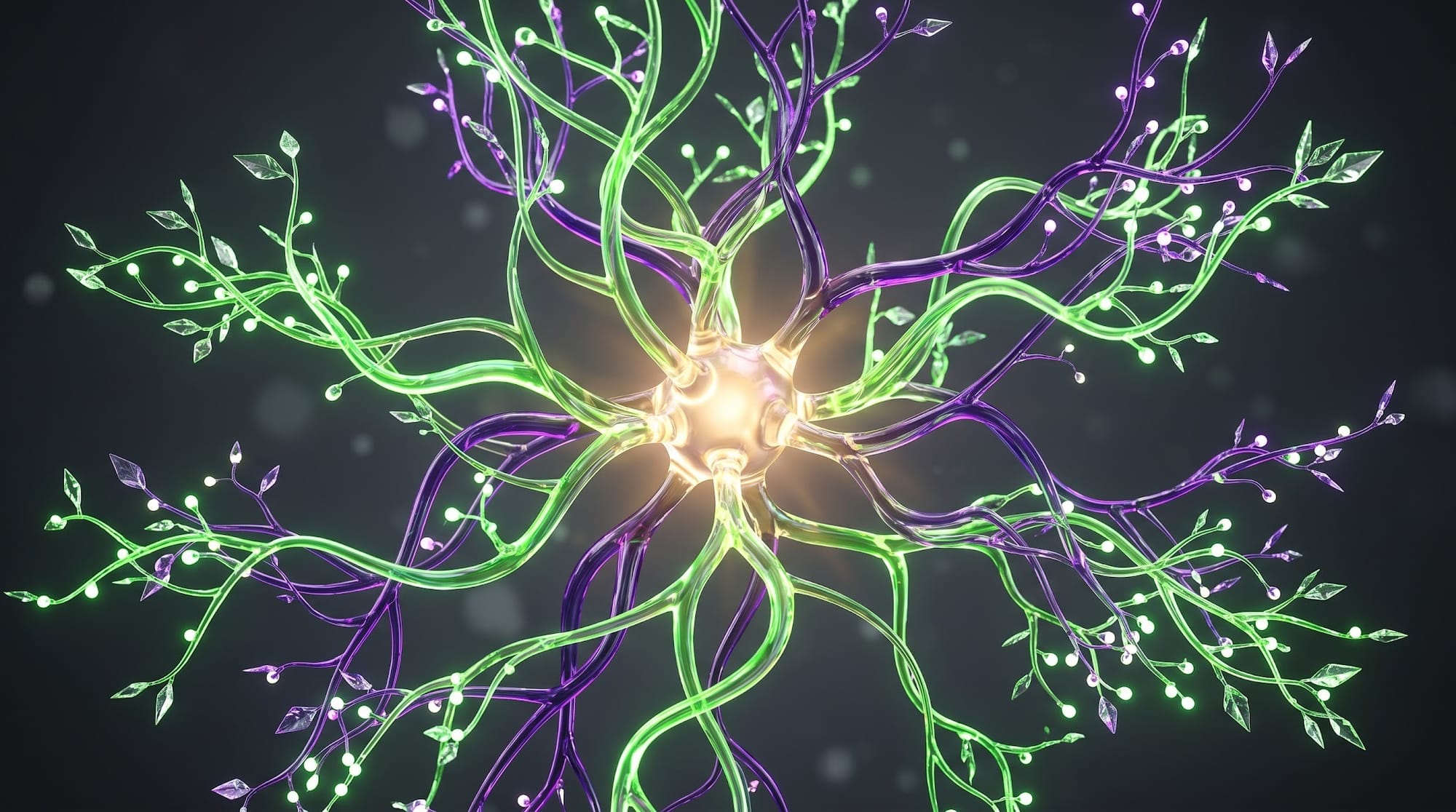
One of the most exciting scientific discoveries is neuroplasticity—your brain’s natural ability to physically adapt, grow new branches, and form brand-new connections throughout your entire lifespan. This proven reality completely shatters the old myth that losing your mental sharpness is an unavoidable part of growing older. Your mind is systematically designed by nature to learn, stretch, and evolve at any age.
Think of neuroplasticity as the physical reflection of your spirit's ongoing growth. When you step out of your routine and spark your curiosity, your brain goes through a wonderful growth spurt. As you repeatedly practice a new language or handle a paintbrush for the first time—much like Grandma Moses, who started her famous painting career in her late 70s—your brain builds high-speed pathways to lock in those fresh mental circuits permanently.
However, your brain is also highly efficient: it naturally clears unused pathways. If we repeat the same daily routines and allow ourselves to fall into predictable, uninspired thinking, our world can feel a bit smaller. But when we treat learning as a joyful daily adventure, we keep our minds and spirit completely flexible, fluid, and youthful.
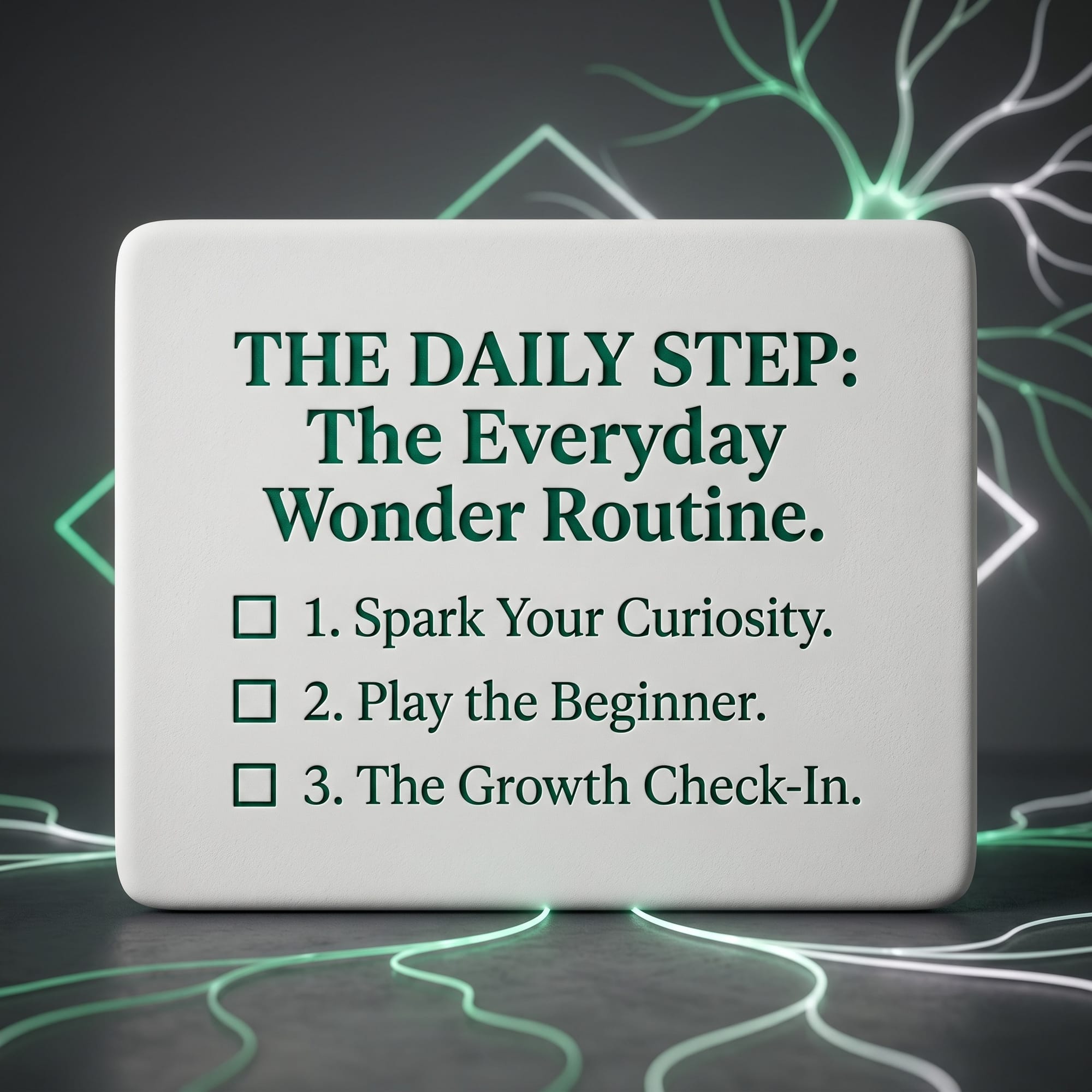
🛠️ The Daily Step: The Everyday Wonder Routine
- Spark Your Curiosity: Actively seek out unfamiliar topics. Listen to a podcast on a subject you've never considered, watch an interesting online documentary, or pick up a book from a completely new section of the library.
- Play the Beginner: Download a fun language app, join a local book club, try an introductory art class, or learn a new digital skill. Push past the fear of making mistakes, and focus entirely on the joyful, expansive process of learning.
- The Growth Check-In: Keep a small notebook. After learning something new or trying a fresh experience, don't just write down the facts. Take a moment to answer this simple question: "How did learning this today expand my view of what is possible in my life?"
🤝 Staying Connected: Sharing Joy and Good Vibes

Deep, meaningful relationships are the true lifelines of happiness at any age, and they become increasingly vital as we navigate the second half of life. To keep our energy high, it helps to understand the difference between social isolation (simply not seeing people regularly) and loneliness (the emotional feeling of being disconnected or left out). Both states place a heavy burden on our well-being. On the other hand, a supportive circle of friends and family serves as a powerful shield against life's natural stressors, preserving our clear thinking, emotional well-being, and physical vitality.
We do not live in a vacuum; we constantly share energy with the people around us. When we feel genuine appreciation, love, or compassion, our heart rhythms naturally smooth out into a beautifully balanced, wave-like pattern.
When you spend time with others while feeling calm and appreciative, you bring a warm, inviting presence to the room. Because relationships are a two-way street, the authentic care, smiles, and attention you offer to another person naturally lift their spirits while recharging your own inner battery. Focus on the quality of your connections rather than the quantity, and watch your community thrive.
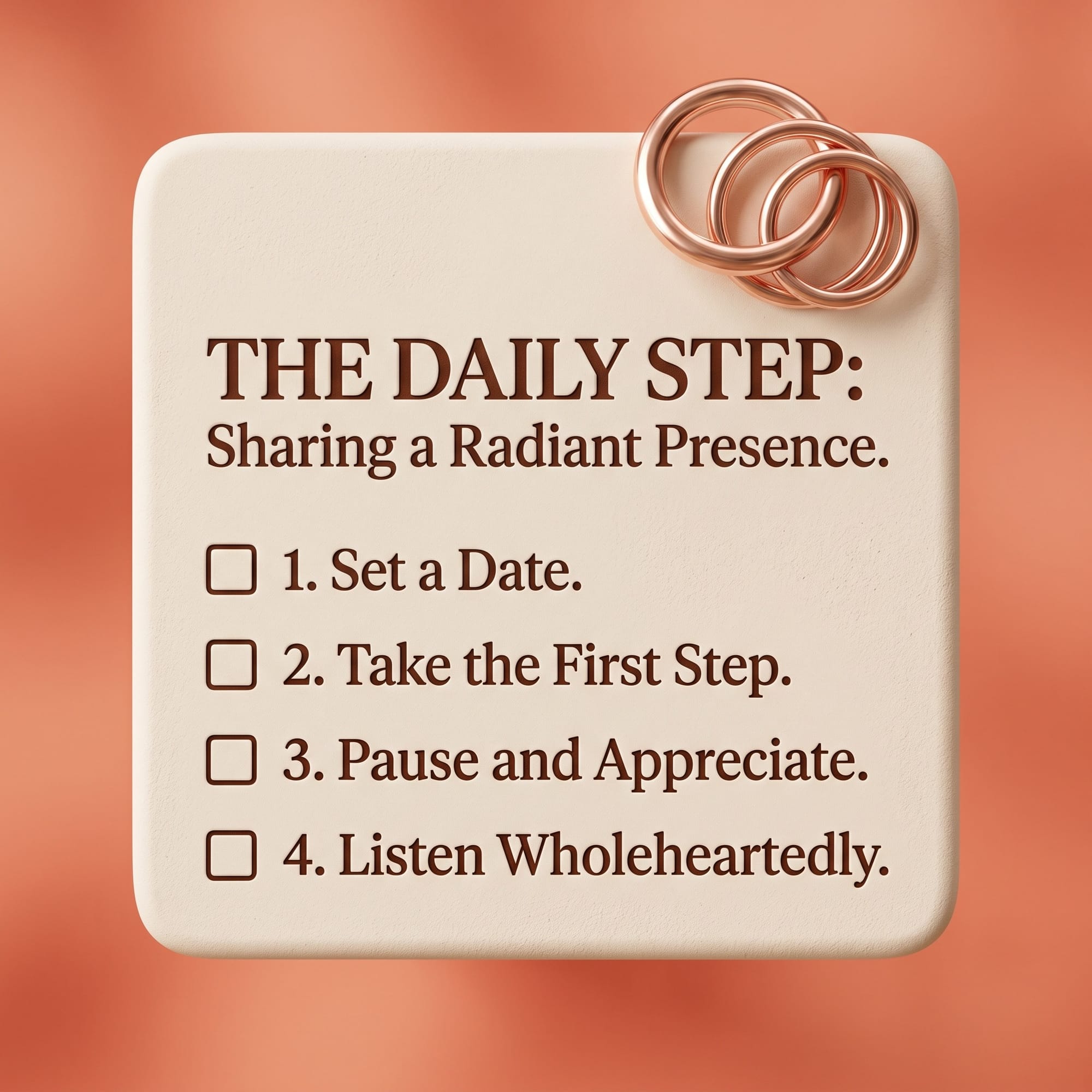
🛠️ The Daily Step: Sharing a Radiant Presence
- Set a Date: Schedule regular, unhurried time to connect with your family, close friends, or neighbors—whether that means a cozy face-to-face visit, a friendly phone call, or a warm video chat.
- Take the First Step: Don't wait for the world to reach out to you; take the initiative. Smile warmly at a neighbor, start a friendly conversation, or follow up with a new acquaintance. Look for local clubs, volunteer causes, or hobby groups centered around things you genuinely love.
- Pause and Appreciate: Before you walk into a social gathering, talk to a friend, or call a loved one, take a brief moment to close your eyes. Take three slow, deep breaths and think of one thing you truly appreciate about that person or your life.
- Listen Wholeheartedly: When you are interacting with someone, practice giving them your full, undivided attention. Smile, listen closely, and enjoy the shared warmth of the moment.
🌿 Shifting Perspective: Nurturing Your Environment and Balance

As life's journey unfolds, it naturally brings shifts and changes: changes in physical stamina, retirement, or the bittersweet loss of loved ones. True inner strength doesn't grow by pretending things don't change, but by leaning directly into these moments with deep kindness toward yourself. When difficult times arise, we can combine practical action (such as researching helpful health or lifestyle options) with emotional care (such as meditating, finding humor, or sharing our feelings with a trusted friend).
An incredibly fast and effective way to clear a heavy mind is to consciously change your physical surroundings. Every space we occupy has its own rhythm. Spending all our time in rigid, artificial, or sterile environments can unintentionally leave our minds feeling rushed or stuck in a rut.
Immersing ourselves in nature allows us to align our personal frequency with the Earth's peaceful, timeless rhythms. In fact, spending time with your hands or feet making direct contact with the grass, sand, or soil is a wonderful way to ground yourself. This simple physical connection directly helps reduce bodily tension, lower stress, and bring your mind back into a state of pure calm.
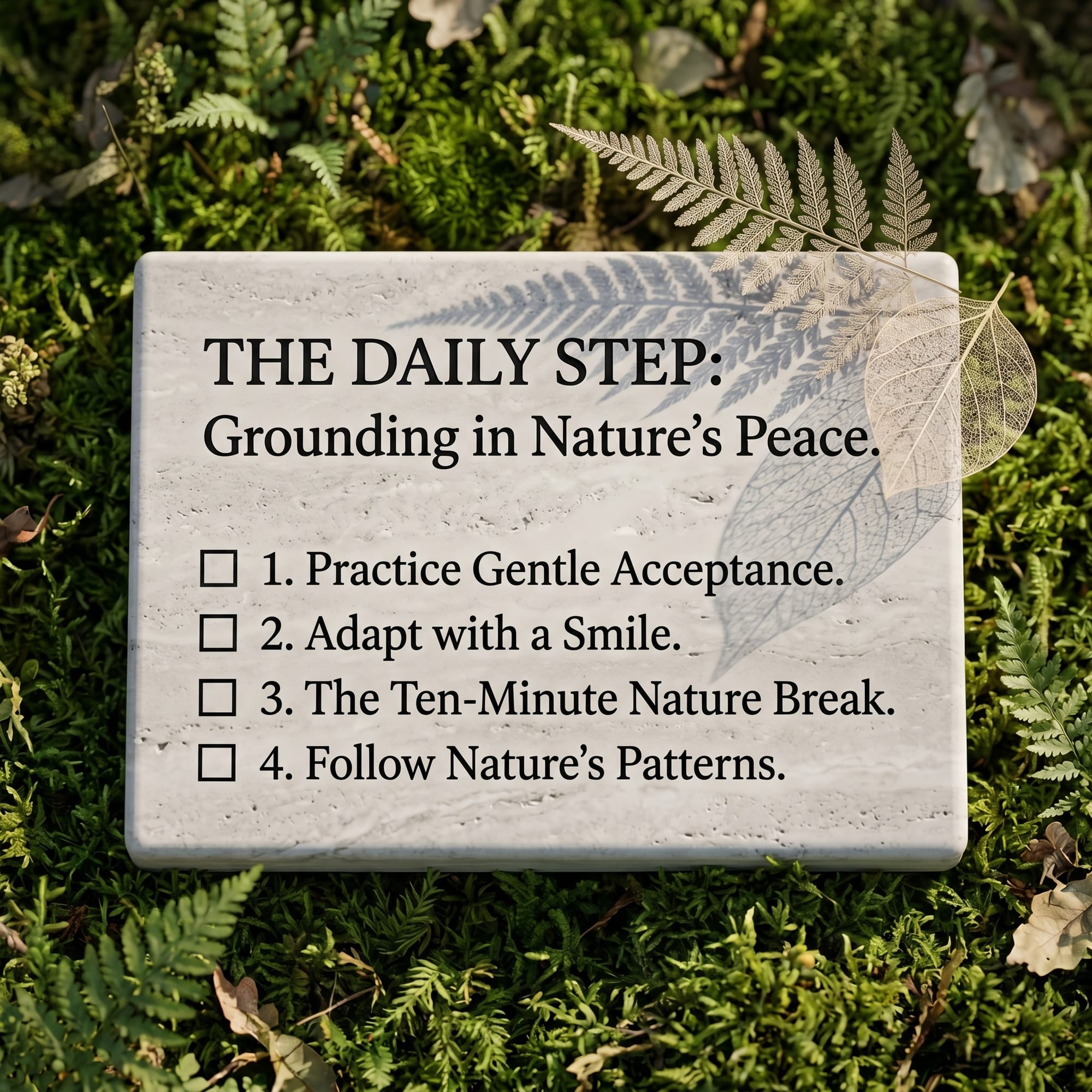
🛠️ The Daily Step: Grounding in Nature's Peace
- Practice Gentle Acceptance: Acknowledge the realities of change or loss without feeling like you have to be perfectly happy about them. This profound shift spares you the energy of being upset about what you cannot change, freeing you to focus entirely on what you can control: your current attitude and your next steps.
- Adapt with a Smile: If physical limitations arise, reframe them as creative new phases rather than mere losses. Find modified, fulfilling ways to enjoy your favorite activities—such as exploring gentle chair yoga, listening to excellent audiobooks, or adopting an accessible new hobby.
- The Ten-Minute Nature Break: Regularly visit a beautiful local park, quiet beach, or backyard garden. If the weather allows, safely place your hands directly onto the grass, soil, or the sturdy trunk of a living tree.
- Follow Nature's Patterns: Look closely at the intricate, repeating patterns found in the veins of a leaf, the spirals of a pinecone, or the beautiful branches of a tree. Let your mind relax into these timeless shapes, stepping completely out of calendar time and enjoying the peace of the present moment.
✨ Crafting a Purposeful Life: Embracing What Matters Most

Living your life in close, deliberate alignment with your deepest personal values creates a profound sense of inner happiness that completely goes beyond your age. Famous thinkers like Carl Jung noted that the second half of our journey holds a unique, beautiful purpose: it is a time designed for looking inward, discovering deeper meaning, and expanding our personal awareness. Similarly, developmental pioneers spoke of the incredible value of reflecting on our life's story with a sense of quiet satisfaction, wholeness, and complete acceptance.
True purpose does not require massive, world-altering achievements or grand public spotlights. It blossoms beautifully from the small, thoughtful, conscious choices you make day by day. It is found whenever you do what makes you feel deeply engaged, fully alive, and quietly helpful to the world around you. When you choose to let your joy dictate your daily actions, your years naturally transform into a wonderful collection of wisdom.
🛠️ The Daily Step: Living Your Values Every Day
- Make Time for Passions: Carve out regular, non-negotiable time in your week for creative hobbies and activities that bring you pure joy and absolute immersion—whether that is tending a garden, painting, writing, playing music, or helping a local cause.
- Share Your Wisdom: Find small, regular ways to pass along your unique skills, life stories, and heart-centered perspective to others. You can do this by volunteering, helping a younger person learn a skill, or simply lending a helping hand to your neighbors or family.
- The Weekly Joy Check: Take a few quiet moments every Sunday morning. Ask yourself these simple questions: "What brought me the deepest smile this week? How can I bring my favorite values into tomorrow? What small act of kindness do I want to share this week?" Let your honest answers guide exactly how you spend your beautiful time and energy.

And now, a poetic twist:
🔶🔶🔶
Ageless Echoes
In the quiet chambers of the soul,
Where time dances lightly on memory's floor,
Age sheds its skin like autumn leaves,
And wisdom blooms in the heart's core.
The mirror reflects the etchings of years,
Yet the spirit pirouettes, forever young,
For age is but a whisper in the wind,
A fleeting melody that leaves its song.
So let us sip from the cup of moments,
Taste the sweetness of laughter and tears,
And in the tapestry of our days woven,
Find eternity in the passing years.
For age, my friend, is but a waltz,
A dance we choreograph with grace,
And if we choose to waltz with joy,
We'll find that time wears a smiling face.
🔶🔶🔶
⏳ Your First Small Steps This Week
Redefining how you experience the passage of time doesn't require you to turn your entire life upside down overnight. True, lasting transformation begins with small, beautifully simple choices. Choose just one of these four daily steps to explore over the next seven days:
- The Mindset Pivot: The very next time you notice a heavy or self-critical thought about your age crosses your mind, gently pause. Take one deep breath, challenge the thought, and consciously change it into a supportive perspective that highlights your strengths and resilience.
- The Curiosity Spark: Dedicate just fifteen minutes to exploring something completely new to you. Browse a free online learning site, look up an educational documentary, or review a creative platform for a fun workshop.
- The Connection Commitment: Reach out directly to one person who has been on your mind lately. Send a thoughtful text, make a spontaneous phone call, or suggest a casual coffee date to share some genuine laughter, presence, and mutual support.
- The Environmental Shift: Commit to spending ten minutes this week sitting or walking in a natural space. Let your eyes focus gently on the beautiful, organic shapes of nature, allowing your mind to relax and step completely out of calendar time.
As you move forward into tomorrow, let your curiosity, your joy, and your intentional choices shape your reality. Your actions and decisions today are actively designing the bright, beautiful path you will walk tomorrow. Choose to step fully into the unique opportunities, unshakeable peace, and vibrant energy that each new stage of the journey brings.
“Our actions and decisions today will shape how we will live. And so it is.”
Disclaimer: The informational and inspirational content in this post, including mindfulness, visualization, and breathwork exercises, is for educational purposes only and is not a substitute for professional medical advice, diagnosis, or treatment. Always consult a qualified healthcare provider regarding any physical limitations, medical conditions, or changes to your health routine. Participating in any suggested daily steps is completely voluntary, and readers assume full responsibility for their own personal well-being.
If my writing made you pause, smile, or think, I’d love your support:
Your support helps me keep writing and sharing these ideas with you.
📚 Recommended Reads & Resources

Books (via Izalgo Bookstore)
Scientific Foundations of Mind-Body Longevity
- The Expectation Effect: How Your Mindset Can Change Your World by David Robson: This award-winning book investigates the cutting-edge science behind how our mindset and expectations shape every facet of our lives, including physiological responses. By bringing together evidence-based science and case studies, it reveals how reframing beliefs about aging and stress can create real psychological and physical changes, offering a powerful blueprint for how subjective expectations dictate biological realities.
- The Biology of Belief: Unleashing the Power of Consciousness, Matter & Miracles by Bruce H. Lipton: Offers a groundbreaking look at epigenetics, showing that our cells are not controlled by a rigid genetic code but rather by our perceptions and environmental signals. It beautifully charts the biological mechanisms by which internalizing positive or negative beliefs about aging directly modifies cellular health, health outcomes, and immune resilience.
- The Telomere Effect: A Revolutionary Approach to Living Younger, Healthier, Longer by Dr. Elizabeth Blackburn and Dr. Elissa Epel: Co-authored by a Nobel Prize winner, this work bridges cellular biology with daily stressors, demonstrating how chronic cortisol release shortens telomeres (the protective caps on chromosomes). It offers a firm scientific blueprint for why daily stress-reduction habits are essential to physically shielding our cells from premature aging.
- Soft-Wired: How the New Science of Brain Plasticity Can Change Your Life by Michael Merzenich: Authored by a leading pioneer in neuroplasticity, this book details how the human brain is systematically built to grow, rewire, and form fresh pathways across our entire lifespan. It provides the perfect empirical manual for breaking free from uninspired routines and leveraging lifelong learning to maintain cognitive sharpness.
- How Not to Age: The Scientific Approach to Getting Healthier as You Get Older by Michael Greger, M.D.: Examines the cellular mechanisms of aging and provides robust scientific evidence for how whole-food, plant-based dietary choices and targeted holistic supplementation (such as specific amino acids and collagen builders) can preserve physical vitality. This text translates complex anti-aging science into actionable nutritional strategies to sustain high energy and deeply nourish the physical body.
Metaphysical & Holistic Aging Theories
- Ageless Body, Timeless Mind: The Quantum Alternative to Growing Old by Deepak Chopra: Blends quantum physics with holistic medicine, asserting that aging is fluid and highly responsive to conscious awareness. It provides the metaphysical framework for shifting our internal timeline, exploring how expanding personal awareness lets us step out of calendar time and into a state of cellular vitality.
- The Biology of Transcendence: A Blueprint of the Human Spirit by Joseph Chilton Pearce: Examines the physiological connection between the heart and brain, showing how feelings of love, compassion, and appreciation smooth out cardiac rhythms. It explores the holistic theory that human biology is built for continuous spiritual growth, especially during the reflective second half of life.
- Spontaneous Healing by Andrew Weil: Illuminates the innate, self-healing capacity of the human body and mind when properly balanced and nurtured. It serves as an excellent holistic framework for understanding how gentle, intentional care, a proper connection to the environment, and lifestyle adjustments unlock our natural baseline of vibrant health.
- The Second Half of Life: Opening the Eight Gates of Wisdom by Angeles Arrien: Drawing on universal metaphors, poetry, and cross-cultural teachings, this work maps out the transition from outer ambition to inner meaning. It provides a step-by-step framework for reclaiming untended creative talents, deepening personal relationships, and intentionally harvesting a lifetime of wisdom to cultivate true psychological and spiritual maturity.
- Becoming Supernatural: How Common People Are Doing the Uncommon by Dr. Joe Dispenza: Merges esoteric principles, epigenetics, and neurobiology to explain how individuals can consciously recondition their physical bodies to a new, energized state of mind. It acts as an incredible bridge between metaphysical theories and practical science, offering concrete meditative frameworks to elevate your daily frequency and emotional well-being.
Practical "How-To" Elements & Daily Rituals
- The Little Book of Hygge: Danish Secrets to Happy Living by Meik Wiking: A practical guide to cultivating meaningful relationships, cozy environments, and a warm, present lifestyle. It offers actionable guidance on upgrading your daily environment, prioritizing the quality of your social circles, and finding joy in small, community-centered moments.
- Breath: The New Science of a Lost Art by James Nestor: Provides actionable mechanics on how deep, rhythmic breathing patterns fundamentally transform our nervous system. It serves as a perfect practical companion for learning to extend the peaceful pause between breaths and to utilize controlled exhalations as a physical circuit breaker for immediate calm.
- The Nature Fix: Why Nature Makes Us Happier, Healthier, and More Creative by Florence Williams: An investigation into nature therapy, providing concrete steps to use natural settings to ground our physiology. It explains the exact lifestyle protocols needed to align our personal frequencies with the Earth's rhythms, demonstrating how simple outdoor resets lower stress hormones and reduce overall body tension.
- The Path to Purpose: How Young People Find Their Calling in Life by William Damon: Written by one of the world's leading developmental psychologists, this seminal work unpacks the mechanisms by which human beings cultivate a deeply rooted sense of direction. It provides a brilliant, exercise-driven blueprint for analyzing personal values, ignoring uninspired external routines, and establishing a daily toolkit of meaningful habits that shield the mind and body from stress.
- The Blue Zones Kitchen: 100 Recipes to Live to 100 by Dan Buettner: Translates the daily habits of the world's longest-lived populations into vibrant culinary rituals. It highlights the incredible vitality derived from intentional, plant-based cooking. It provides a practical framework for transforming everyday meal preparation into a mindful, deeply grounding daily practice that nurtures the mind-body connection.
Online Resources
Nervous System Regulation & Heart-Brain Coherence
- HeartMath Institute: Provides scientific tools, biofeedback technology, and breathing apps to help manage stress and align cardiac patterns. The platform serves as a direct, practical tool for achieving heart-brain coherence, smoothing heart rhythms through targeted visualizations, and instantly transitioning the body from a rushed state to an active signal of safety.
- Insight Timer: A massive digital library offering thousands of free guided meditations, breathwork rhythms, and silent timers with customizable ambient chimes. This application is a great tool for establishing a 5-minute morning routine, anchoring visualization practices, and using 4-count breathing sequences to lower heart rate and calm the nervous system pathways.
- Waking Up: Delivers secular, scientifically backed meditation practices and thoughtful philosophical lectures on the nature of mind and consciousness. It maps perfectly to the text’s emphasis on intentional living and mindset shifts, helping users step back, observe their heavy thoughts, and systematically reframe their internal dialogues to promote emotional longevity.
- Soma Breath: Combines structured rhythmic breathing techniques with evocative audio tracks to elevate physical energy and build a resilient nervous system. This platform operationalizes the breathwork mechanics discussed in the text, maximizing vital life-force energy and instilling an unshakeable sense of inner calm throughout the day.
Neuroplasticity, Mind Stretching & Lifelong Learning
- Duolingo: A gamified language-learning platform that introduces users to unfamiliar vocabulary and grammar structures through short, repetitive, interactive exercises. It serves as an accessible mental playground for beginners, actively triggering neuroplasticity by challenging the brain to form new neural circuits and preserve flexible thinking.
- Coursera: Hosts free and paid online courses from top universities spanning diverse, unfamiliar topics from art history to quantum physics. It serves as an exceptional tool for sparking daily curiosity, enabling individuals to break out of rigid, predictable routines and treat learning as a joyful, expansive adventure.
- Grammarly: An AI-driven editing and writing assistant designed to refine communication structure, nuance, and tone. By utilizing its stylistic tools and Humanizer agents to analyze and perfect the emotional resonance of written words, individuals can actively stretch their cognitive flexibility while exploring the joyful, purposeful process of articulating esoteric or scientific concepts clearly.
- Google Workspace (Docs): A comprehensive, cloud-based canvas for outlining ideas, drafting essays, and structuring visual elements like tables or imagery. It serves as an incredibly versatile digital environment for the "Everyday Wonder Routine," making it easy to capture peak memories, document growth check-ins, or format in-depth writing that bridges holistic themes with scientific realities.
Somatic Circuit Breakers, Environmental Grounding & Expressing Wisdom
- AllTrails: This digital mapping tool helps users locate local parks, nature preserves, and trails tailored to specific physical abilities or limitations. It serves as a practical tool for planning consistent nature breaks, helping individuals escape artificial environments and find grounding in nature's timeless rhythms.
- Yoga International: Provides tailored, on-demand video sessions for all mobility levels, featuring specialized courses on gentle chair yoga, somatic movement, and deep relaxation techniques. It is an excellent resource for adapting to physical changes with a smile, offering modified and creative pathways to maintain an active mind-body connection.
- Ghost: A streamlined, powerful digital publishing platform optimized for independent bloggers and creators to seamlessly share their work, manage imagery, and connect directly with an audience. It perfectly supports the text’s directive to "Share Your Wisdom" by offering an elegant ecosystem for publishing meaningful content and building a supportive, purpose-driven community around shared values.
- Forks Over Knives: Features an extensive database of whole-food, plant-based recipes, educational articles, and intuitive meal planners. It grounds the abstract concepts of physical vitality and mindful aging in tangible, daily culinary actions, supporting a gentle yet highly effective nutritional lifestyle that continuously fuels cellular health and everyday energy.
Concise Learning & Summaries
- SoBrief.com: An AI-powered platform to quickly grasp the key takeaways of books related to energy management and well-being in about 10 minutes.
- Izalgo Bookstore: A curated digital space to find specific titles on holistic health and spiritual growth.
- Izalgo: This platform is a dedicated environment for exploring the harmonious integration of scientific, holistic, and metaphysical perspectives, presenting them as interconnected facets of a single truth. Through in-depth resources, it provides a central hub of concrete tools and practical advice to help you move from tension to deep inner tranquility.
Approach all books and resources with an open mind, recognizing that no single source is definitive, complete, or free from controversy and debate. Trust your intuition and inner guidance to discern what truly resonates with your personal path. If a concept or historical detail does not align with your truth, you are encouraged to disregard it and prioritize what best serves your growth.
SoBrief.com is an AI-powered digital platform that provides concise summaries of an extensive catalog of books, enabling users to grasp a book's key takeaways in about 10 minutes.
🔗Affiliate Note: Some links may be affiliate links, which means we may earn a small commission at no extra cost to you. Your support helps us continue this creative and healing work. Thank you!
Izalgo co-produced the images herein with AI-powered software.
Copyright ©️IZALGO, LLC. All Rights Reserved