After dark, all cats are leopards.
Ever wonder why a calm house cat transforms at midnight? Discover how modern neurobiology and ancient metaphysical wisdom intersect to turn life’s shadows into your greatest strength. Let’s awaken your inner leopard.
The Anatomy of Awakening: Using Science and Esoteric Wisdom to Unleash Your True Potential.
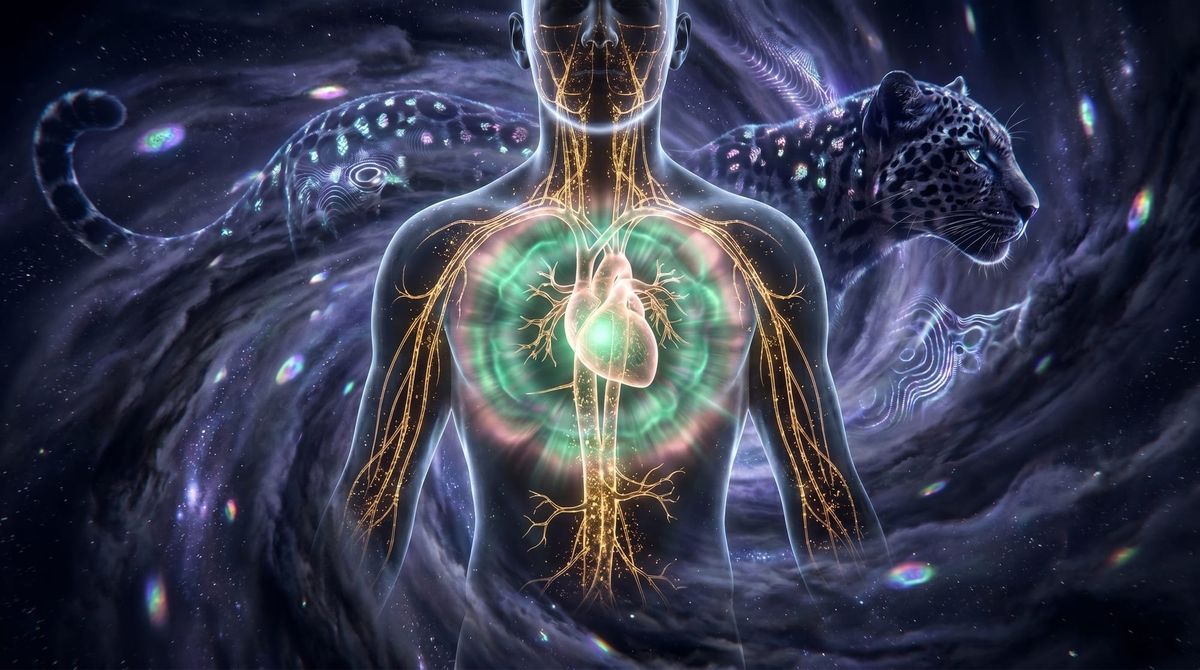
Have you noticed how a calm house cat becomes alert and mysterious at night? Its steps are quieter but stronger, and its eyes glow with wild energy. The old Zuni proverb, "After dark, all cats are leopards," describes this shift. But it’s not only about cats; it asks us to look within ourselves, consider our potential, and reflect on how we change.
🐆 Meeting the Wilderness Within
Just as a cat moves quietly at night, we can also explore the hidden parts of ourselves. The shift from day to night is more than just a change in light; it highlights the big contrasts in life, like light and dark, seen and unseen, tame and wild, awake and unaware. The Zuni people, a Pueblo tribe from the American Southwest, created this proverb. Their deep connection with nature and animals gives it special meaning. It reminds us that what we notice in the dark often means more than we realize.
Picture your inner world as a quiet mountain stream. During the day, it moves calmly and reflects the sky and trees. But at night, the stream seems to hold a deeper, stronger energy. The image shows that beneath our calm surface, we have a lot of hidden strength and instinct.
In this article, we’ll explore seven important life lessons from this old wisdom. Using ideas from biology, psychology, culture, and symbols, we’ll see how this proverb can help us be more real, strong, and curious. Let the darkness inspire you to find your inner leopard.
🎭 Appearances Can Be Deceiving

When the light is low, differences fade away. A house cat can look like a leopard, and normal things can seem magical. It's easy to forget how readily we form judgments about people or circumstances based solely on their outward appearance. On social media, for example, perfect photos can hide real struggles or sadness. What we see isn’t always the whole story.
The proverb teaches that what’s real is often hidden. A quiet person might be very wise. Great ideas can come from an employee who is overlooked or ignored in the workplace. A stranger might turn into a good friend.
Myth and folklore across cultures echo this truth. In Greek mythology, Zeus often disguised himself in humble form, testing mortals not by grandeur but by how they treated the unknown. Likewise, many fairy tales feature enchanted animals or cloaked beings who reveal their true power only after someone shows kindness or courage. Appearance is often a spiritual test.
Spiritual Insight: Many traditions say we only see part of the bigger picture. Everyone has a special spark inside, often hidden by ego or life’s struggles. To really understand, we need patience and presence.
Reflection Question: Where in my life might I be missing what’s really important?
🪞 The Power of Context and Perspective
Darkness changes how things look to us. The same object can seem very different in light or shadow. A shadow on the wall might seem scary, but it’s really nothing to worry about. Our mindset and the surrounding context are clearly of great importance. How we see things in life depends a lot on our feelings and thoughts. A challenge can seem scary if we’re afraid, but exciting if we’re hopeful. Whether we look at things calmly or with worry changes what they mean to us.
This principle applies to our relationships as well. How many times have we assumed something, only to learn a deeper truth later?
Practical Exercise: Think of a time when your view changed after hearing someone’s story. What changed for you? What became clearer or softer inside?
And here is where we make a beautiful leap: by calming the physical body, science opens a doorway straight into the metaphysical realm of our subconscious mind. Like in dreams, a symbol—a river, a bird, or a locked door—can mean different things based on how we feel or think. Engaging with holistic dreamwork acts like a mirror, decoding these images to provide direct, restorative feedback from our deeper, truer self. Our inner world shapes what we notice and how we understand it.
🌋 Unleashing Hidden Potential

A cat might relax in the sun, but in the dark, its instincts wake up. Similarly, challenges can reveal the hidden strength, creativity, and intuition that many of us possess.
Modern science supports this idea. Studies show that dealing with challenges and stress can activate brain regions that help us become more resilient, solve problems, and adapt. When life pushes us out of our comfort zone, our minds can discover hidden strengths and talents.
This proverb reminds us that everyone has hidden strengths within, waiting for the right moment to emerge. Sometimes, darkness is not something to fear but an opportunity to grow.
Growth Takeaway: Trust that you can rise to the occasion. When life gets tough, you might find your strongest self.
Guided Visualization: Imagine walking along a quiet path as night falls. The air is cool, and you hear the soft, soothing sound of a quiet mountain stream nearby, grounding you. Ahead, a glimmer of moonlight reveals a path to a hidden temple. You step inside. The air is still. In the center lies a sealed chamber. What lies within it? What forgotten strength, dream, or identity waits there, ready to awaken? Feel the fierce, vibrant power of the leopard building inside you, balanced perfectly by the calm of the stream.
🐆 Embracing Our Wild Side

Society often encourages us to fit in, be polite, and follow the rules. But deep down, everyone possesses a wild side—a free spirit that yearns to emerge. We should not fear the "leopard"; it reminds us to be true to ourselves.
Holistically, the "medicine" of the leopard brings incredible gifts of stealth, patience, focused power, and the ability to move effortlessly through unseen realms. While the daytime house cat thrives on comfort and social connection, the nighttime leopard reminds us that we can balance both: a gentle, cooperative outer life and a deeply grounded, powerful, instinctual inner self.
Many spiritual traditions embrace wildness not as chaos but as sacred wisdom. Across the globe, ancient cultures have revered wild spirits and the deep woods as places where the veil thins, and one’s most authentic self can emerge.
Ritual Invitation: Dance alone under moonlight. Let your body move without instruction. What rises? What feels ancient, forgotten, or free? Let that energy speak without words.
Cultural Connection: Many Indigenous traditions view wildness as sacred rather than dangerous. Living with your wild side means living in balance with the earth and your true self.
Journaling Prompt: “What parts of myself have I silenced to fit in—and what would it feel like to set them free?”
🌌 The Allure of the Unknown

Darkness stands for the unknown—a place full of dreams, fears, and mysteries. But the unknown isn’t empty; it’s full of life and new chances. The proverb asks us to meet the unknown with curiosity, not control. Let uncertainty teach you, and let mystery inspire you.
There’s something special and life-changing about the places we don’t yet understand. Science shows us that when the brain relaxes—during daydreaming, meditation, or quiet sitting—a special network called the default mode network becomes active. This area is crucial for reflection, deep self-awareness, and imagination, proving that the mind is actually most vibrant and creative when we let go of daytime tasks.
This state shows that sitting quietly in the dark is not just a passive moment. Both science and spirituality suggest it is a time when new ideas and inspiration can grow. The unknown is not empty; it is where new things begin. Just as stars form in darkness, new parts of ourselves can develop from the unknown.
“The stars, too, are only seen when darkness comes.”
Nighttime Reflection Ritual: Choose a quiet evening. Turn off your devices and light a single candle. Sit in its glow and journal freely—no agenda, just presence. Or walk outside at dusk. Feel the earth’s temperature shift, listen to the silence between bird calls, and ask the night a question. Don’t rush the answer. Let it arrive in metaphor, in feeling, in time.
🦋 Transformation and Change
Nightfall doesn’t just hide things; it changes them. The world looks and feels different. We also change during transitions. Transformation often arises through hardship, not as punishment, but as an invitation. Think of the people who have turned their deepest trials and quietest moments into beautiful art, poetry, and wisdom that have moved generations. These journeys show us that darkness can be a crucible, not of destruction, but of becoming.
Rather than fighting change, this proverb encourages us to see it as a normal and important part of life. Nightfall is not the end, but a step toward something new. What we leave behind is not lost; it helps us grow.
Holistic & Energetic Insight: Just as caterpillars undergo a complete transformation before becoming butterflies, we also need to let go of old identities, beliefs, or dreams so that new parts of us can grow. This conscious shedding is a beautiful, restorative necessity of life's cycles.
When we hold onto old versions of ourselves, we might feel it in our bodies, like tight shoulders or a heavy chest. Holistic healing sees this as a sign that our Heart Chakra (Anahata) is tight. If we treat these quiet or challenging times as important moments of rest, we give our bodies and hearts a chance to heal and grow. Seeing these moments as part of our growth helps us understand that our strength and energy are coming together to prepare us for a fresh start.
Ceremonial Practice: Write a letter to your “old self”—the version of you that no longer serves your highest path. Thank it. Bless it. Then, under the moonlight, burn the letter safely and scatter the ashes into the earth. As the smoke rises, plant a new intention into the soil. What do you wish to grow in its place?
🪶 Cultural Wisdom and Connection

The Zuni proverb “After dark, all cats are leopards” reflects a profound spiritual observation of the natural world shared by many Indigenous traditions. Animals, seasons, dreams—all are messages. All are medicines. Exploring this wisdom is more than mere curiosity; it’s an invitation to show respect, be humble, and build relationships.
It’s important to learn from Indigenous teachings with respect, honoring their origins and the cultures that keep them alive—giving credit and context matter. These are not just nice sayings—they are part of living traditions that have survived many challenges.
When we live in tune with the earth’s natural cycles, we also support our own body’s rhythms. Following the changes from light to dark helps balance our internal clocks. Noticing the shift from day to night makes it easier to slow down and find peace. Modern science now confirms what ancient cultures have known for thousands of years.
“Ancient voices carry truths we are just beginning to remember. We are not separate from these truths; we are the living continuation of sacred remembering.”
Enrichment Practice: Study other Native American or Indigenous proverbs. Reflect on what they awaken in you. Share them not as decoration but with deep gratitude and acknowledgment.
Suggested Resources:
- Robin Wall Kimmerer – Author of Braiding Sweetgrass; botanist and member of the Citizen Potawatomi Nation.
- The Native Governance Center – An Indigenous-led nonprofit that promotes Native leadership and sovereignty.
- Resmaa Menakem—author of My Grandmother's Hands—explores trauma and healing through an ancestral lens, incorporating Indigenous influences.
- IllumiNative – A nonprofit working to amplify contemporary Native voices in media and policy.
We can help heal relationships harmed by colonization by listening and learning with respect. When we approach Indigenous wisdom with care, we do more than learn; we help keep these traditions alive and growing.
The Nighttime Blueprint: A 5-Step Integration Practice

To help you use the wisdom of the evening and connect with your inner leopard, try this simple five-step practice before bed. It links your reflections with practical steps to help you live each day in balance.
- [ ] 1. Recognition: Quiet your mind and take a deep breath. Acknowledge the infinite intelligence, beauty, and wild potential flowing through the natural world, the night sky, and the entire universe.
- [ ] 2. Unification: Realize that you are not separate from this great mystery. Declare your personal connection to this infinite source, knowing that the same natural rhythms that guide the planetary cycles also move through you.
- [ ] 3. Realization: Mentally claim your true nature. Softly affirm your hidden strengths, your deep intuition, and your resilience, feeling them as completely alive and active within you right now.
- [ ] 4. Thanksgiving: Let a warm sense of gratitude fill your heart. Express deep appreciation for the gift of life, for the supportive networks that lift you, and for the wisdom gained through both light and shadow.
- [ ] 5. Release: Gently let go of any need to control. Turn your intentions over to the natural, evolutionary flow of life, trusting that you are safe, supported, and growing as you rest.
Conclusion: Let Your Leopard Awake
"After dark, all cats are leopards" is more than a poetic saying. It invites us to look deeper, be present, and discover who we really are. It encourages us to question what we know, welcome the unknown, and notice that change often happens quietly.
This proverb highlights the deeper self everyone possesses inside. In the dark, our true instincts emerge. In quiet moments, what we once feared can teach us the most. If you ever feel uncertain, repeat the proverb to yourself and notice what you feel. Let it guide you through the unknown, help you find peace in quiet times, and remind you of your inner strength.
“In the dark, what we fear becomes what teaches us. In the stillness, what we ignore becomes what empowers us.”
Affirmation: I honor the wild, the hidden, and the wise within me.
Optional Addition: I welcome the night as a teacher and trust what it reveals.
🎨 Call to Action: What Does Your Inner Leopard Say?
What part of this proverb spoke to you? Have you ever had a moment when your hidden strength showed up—when your inner leopard came forward?
Write a poem, share a story, or make art inspired by your nighttime experiences. Let your reflections take any form that feels right—words, pictures, music, or movement. There’s no wrong way to express what you find in the dark.
If you share online, you can use the hashtags #InnerLeopard or #WildWisdom. Through this process, we can celebrate and exchange ideas. Let’s create a welcoming space for reflection, creativity, and growth, where we honor wildness, embrace mystery, and everyone’s voice matters.
“Our actions and decisions today will shape how we will live. And so it is.”
📊 Summary Dashboard: Key Takeaways
Disclaimer: This article shares information, insights, and holistic practices for educational, inspirational, and informational purposes only; do not take them as professional medical, psychological, or psychiatric advice, diagnosis, or treatment. While this content explores the beautiful intersections of science, biology, and esoteric philosophy to support personal growth, always consult with a qualified healthcare professional or licensed practitioner regarding any specific physical or mental health concerns or before beginning any new wellness routine.
If my writing made you pause, smile, or think, I’d love your support:
Your support helps me keep writing and sharing these ideas with you.
📚 Recommended Reads & Resources

Books (via Izalgo Bookstore)
Scientific Foundations: Neurobiology, Trauma, and Circadian Rhythms
- The Pocket Guide to the Polyvagal Theory: The Transformative Power of Feeling Safe by Stephen W. Porges: This foundational text distills the complex science of the autonomic nervous system into accessible concepts. It provides the precise biological backdrop for understanding how the vagus nerve acts as a bridge, allowing you to shift from a high-alert daytime state to a calm, restorative nighttime rhythm.
- My Grandmother's Hands: Racialized Trauma and the Pathway to Mending Our Hearts and Bodies by Resmaa Menakem: An essential guide to somatic psychology exploring how stress and resilience are physically carried in the body. It offers a vital scientific framework for understanding how ancestral trauma and survival instincts shape our physiology, grounding the concept of our "inner wilderness" in biological reality.
- Waking the Tiger: Healing Trauma by Peter A. Levine: A brilliant exploration of the biological instinct of trauma recovery. Levine examines how wild animals use natural somatic cycles to physically shake off stress and recover their vitality, offering a perfect neurobiological manual for safely unleashing your untamed "inner leopard."
- Why We Sleep: Unlocking the Power of Sleep and Dreams by Matthew Walker: This deep dive into circadian biology and neuroscience explains exactly what happens when the lights go out. It outlines how the sleeping and dreaming brain processes the subconscious mind, validating the esoteric idea that darkness is a fertile space for physical and cognitive transformation.
- The Body Keeps the Score: Brain, Mind, and Body in the Healing of Trauma by Bessel van der Kolk: The definitive guide on how psychological stress manifests as physical tension. This book outlines how profound psychological shifts—such as shedding outdated identities and stepping into the unknown—require us to engage the physical body and rewire our brain's default mode network.
Metaphysical & Holistic Theories: Jungian Shadow, Archetypes, and Indigenous Wisdom
- Women Who Run with the Wolves: Myths and Stories of the Wild Woman Archetype by Clarissa Pinkola Estés: The ultimate psychological exploration of the untamed, creative, and instinctual "wild side" that modern society often pressures us to silence. It serves as the definitive companion to understanding the archetypal "leopard" and learning to honor the fierce, grounded power within.
- Memories, Dreams, Reflections by Carl Jung: A direct source of analytical psychology that helps decode the subconscious mind. Jung’s writings on dream symbology and the integration of the "Shadow" provide the theoretical framework for why meeting our unexpressed, hidden wilderness is essential for spiritual wholeness.
- Braiding Sweetgrass: Indigenous Wisdom, Scientific Knowledge, and the Teachings of Plants by Robin Wall Kimmerer: Written by a botanist and Indigenous elder, this masterpiece elegantly demonstrates that modern materials science and ancient, sacred nature are simply two different lenses on the same ultimate truth. It beautifully reinforces the Zuni proverb's call to align with natural planetary cycles.
- The Wheels of Life: A User's Guide to the Chakra System by Anodea Judith: A comprehensive look at human energetic architecture. It offers deep insights into how emotional blocks manifest as physical compression, providing specific, holistic context for how shedding old versions of ourselves relieves tightness in the Heart Chakra (Anahata).
- Owning Your Own Shadow: Understanding the Dark Side of the Psyche by Robert A. Johnson: A short, potent guide to Jungian shadow work. It explains how to identify and integrate the parts of ourselves we have hidden away in the dark, showing that embracing our internal contradictions unlocks our most authentic vitality and power.
Practical "How-To" Elements: Somatic Habits, Integration, and Daily Rituals
- Accessing the Healing Power of the Vagus Nerve: Self-Help Exercises for Anxiety, Depression, Trauma, and Autism by Stanley Rosenberg: A highly actionable manual filled with simple, somatic circuit breakers. It teaches you how to manipulate your vagus nerve to switch off your fight-or-flight response, offering practical techniques to induce the relaxation needed for deep, nighttime reflection.
- Eastern Body, Western Mind: Psychology and the Chakra System As a Path to the Self by Anodea Judith: This practical workbook seamlessly bridges Eastern holistic energy centers (chakras) with Western psychological development. It provides tangible exercises to release bodily tension, allowing you to manually process the energetic shifts that occur during periods of intense personal transformation.
- Atomic Habits: An Easy & Proven Way to Build Good Habits & Break Bad Ones by James Clear: While rooted in behavioral psychology, this book is essential for grounding your metaphysical goals. It provides the exact behavioral framework needed to turn abstract concepts—like the 5-step Nighttime Blueprint—into effortless, automated daily rituals.
- The Somatic Therapy Workbook: Stress-Relieving Exercises for Strengthening the Mind-Body Connection by Livia Shapiro: A direct, hands-on guide to physical emotional processing. It offers highly practical, daily somatic exercises that act as physical "reset buttons," helping you safely navigate the discomfort of the unknown and release trapped daytime tension from your muscles.
- The Power of Now: A Guide to Spiritual Enlightenment by Eckhart Tolle: A practical masterclass in sitting with the unknown. Tolle’s actionable advice on disconnecting from the ego and tuning in to the present moment provides a concrete strategy for quieting the mind's daily noise so you can more effectively hear the subtle guidance of your deeper self.
Online Resources
Scientific Foundations & Physiological Health
- The Polyvagal Institute: This platform provides accessible education, community forums, and courses that detail how the autonomic nervous system regulates emotional states. It is a premier resource for understanding the biological basis of how your body determines whether it is safe enough to relax into your "inner leopard" state.
- HeartMath Institute: Dedicated to researching heart-brain coherence, this institute offers tools and free courses on Heart Rate Variability (HRV). Their biofeedback techniques show you exactly how to use heart-focused breathing to harmonize your biological oscillators, providing a concrete method to shift out of daytime stress.
- Somatic Experiencing International: The global hub for Peter Levine’s somatic experiencing framework. It provides a directory to find licensed practitioners and free resources that explain how to use biological circuit breakers to discharge accumulated daytime trauma and safely reset the nervous system.
- Huberman Lab: Hosted by neuroscientist Dr. Andrew Huberman, this platform offers highly actionable protocols to optimize sleep, neuroplasticity, and circadian biology. It is the ultimate practical toolkit for understanding how viewing light and dark at specific times anchors your biological clock.
- The Sleep Foundation: An excellent, evidence-based digital database exploring the latest peer-reviewed research on circadian rhythms and sleep hygiene. It offers actionable strategies for setting up your physical environment to support the restorative, subconscious dreamwork referenced in the article.
Metaphysical Exploration & Cultural Wisdom
- The C.G. Jung Center: A premier digital repository offering educational essays and digital workshops dedicated to analytical psychology. It provides structured guidance on dream analysis and shadow integration, serving as a digital mirror to decode the symbols your mind produces in the dark.
- The Center for Action and Contemplation: This digital space explores mystical traditions across cultures and offers daily guided meditations focused on sitting comfortably with the unknown. It is a fantastic resource for learning how to find spiritual peace and transformative potential in the darkness.
- Native Governance Center: An Indigenous-led educational platform providing concrete toolkits and webinars. It teaches individuals how to show genuine respect and learn from living tribal traditions—such as the Zuni proverb—ensuring that you integrate this wisdom with proper lineage honor and context.
- IllumiNative: A Native-led nonprofit collective amplifying contemporary Indigenous voices and cultural wisdom. It is a vital resource for breaking down stereotypes and ensuring that the deep ecological and spiritual knowledge of Indigenous peoples is accurately understood and respected in the modern digital era.
- Society for Shamanic Practice: An educational hub dedicated to the exploration of modern shamanic practices. It offers audio resources, articles, and community support for those looking to safely explore esoteric rituals, connect with their animal archetypes, and honor the spiritual intelligence of the natural world.
Practical Tools for Integration & Daily Rituals
- Insight Timer: A massive, free digital library of guided meditations, breathwork sessions, and ambient tracks. It is the perfect tool to support your 5-step Nighttime Blueprint, featuring thousands of tracks designed to activate the vagus nerve and promote parasympathetic rest.
- Day One App: A highly secure, elegant digital journaling tool. Perfect for engaging with the article's "Journaling Prompts," it lets you easily track your nighttime reflections, record your shadow work over time, and safely document the transitions in your inner world.
- Waking Up: Created by neuroscientist and philosopher Sam Harris, this app goes beyond basic relaxation to teach the actual mechanics of mindfulness and non-dual awareness. It provides rigorous, daily audio lessons designed to help you detach from the ego and observe the "unknown" spaces within your own mind.
- SoBrief: An AI-powered platform that provides ultra-concise, 10-minute summaries of thousands of books. It is a highly practical tool for busy individuals who want to rapidly absorb the core takeaways of dense neurobiological or esoteric texts before integrating them into their daily habits.
- Calm: Known for its "Sleep Stories" and soundscapes, this tool is masterfully designed around circadian biology. It offers practical, daily audio interventions specifically engineered to lower heart rate, distract the default mode network, and ease the transition from daytime hyper-vigilance into deep, restorative sleep.
Approach all books and resources with an open mind, recognizing that no single source is definitive, complete, or free from controversy and debate. Trust your intuition and inner guidance to discern what truly resonates with your personal path. If a concept or historical detail does not align with your truth, you are encouraged to disregard it and prioritize what best serves your growth.
SoBrief.com is an AI-powered digital platform that provides concise summaries of an extensive catalog of books, enabling users to grasp a book's key takeaways in about 10 minutes.
🔗Affiliate Note: Some links may be affiliate links, which means we may earn a small commission at no extra cost to you. Your support helps us continue this creative and healing work. Thank you!
Izalgo co-produced the images herein with AI-powered software.
Copyright ©️IZALGO, LLC. All Rights Reserved