A dream which is not interpreted is like a letter which is not read.
Ever wake up from a vivid dream feeling deeply curious? Your nightly visions aren't random noise—they’re unread letters from your soul. Step into a journey blending sleep science and metaphysics to decode your dreams and upgrade your life.
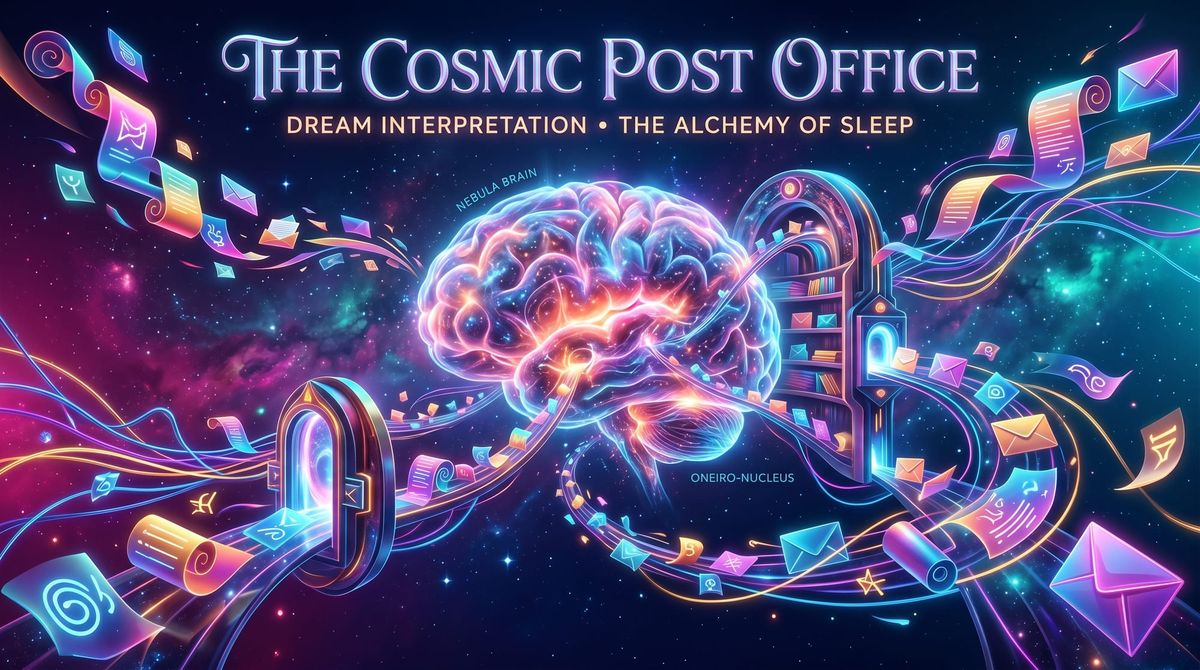
The Alchemy of Sleep: Using Science and Metaphysics to Decode Your Dreams and Upgrade Your Life
Have you ever woken up from a dream feeling confused, curious, or unsettled? Those images can stick with you. You're not alone—people have been fascinated by dreams for centuries.
People have used dreams to understand themselves for a long time. Ancient Egyptians saw dreams as messages from the gods, and Freud and Jung studied how dreams relate to the unconscious mind. Dreams give us more than just psychological insights—they can open us to the deeper, spiritual side of life, beyond what we can see or touch. They also show how our minds, bodies, and spirits are connected. Looking at dreams this way helps us see ourselves as whole people, with our inner world closely tied to our well-being.
In this guide, we'll look at the history, psychology, and spiritual sides of dream interpretation. You'll find tips to help you find hidden meanings in your dreams. Get ready to learn more about yourself and grow as we explore what dreams reveal. We'll also talk about the idea that dreams might connect us to universal energies or a shared consciousness. It's an exciting thought!
🏺 The Significance of Dream Interpretation Across Cultures: A Bridge to the Spiritual

Dreams are more than just personal experiences. They have shaped beliefs, guided important decisions, and inspired stories in many cultures. People have seen dreams as prophecies, messages from the divine, or reflections of their deepest wishes.
As cultures met through trade and migration, they shared their ideas about dream interpretation. Today, there are many ways to understand dreams. In the past, people often believed dreams were more than just thoughts. They saw dreams as a bridge between the physical and spiritual worlds, a place to receive messages from beyond.
Cultural Perspectives Through History
- Ancient Egypt: These folks were serious about dreams! They kept detailed "dream books," believing dreams were direct messages from their gods. Pharaohs even used dream interpretation to guide their rule and their wars. Priests were often the go-to interpreters, deciphering the deities' messages and offering advice based on them. It wasn't just about predicting the future but ensuring their actions aligned with the gods' will.
- Native American Traditions: Indigenous tribes considered dreams incredibly sacred. They saw them as a vital link to ancestral spirits and the spiritual world. Shamans were key figures here, interpreting dreams to offer wisdom, healing, and even warnings about the future. Dreams provided practical and spiritual guidance not only for the individual but also for the whole community. It wasn't just about understanding yourself, but about connecting with the energy and wisdom of a larger spiritual reality and honoring the guidance of those who came before.
- Chinese Dream Theory: In Taoism and Buddhism, dreams were a significant concern, often linked to spiritual growth and the idea that we live in multiple realities simultaneously. Analyzing dreams was sometimes used to achieve enlightenment. The idea was that decoding dreams could reveal truths about the very nature of existence and accelerate your spiritual path. Dreams were viewed as integral to spiritual awakening, serving as a path to profound cosmic insight and a deeper understanding of reality.
- Greek and Roman Beliefs: The Greeks built dream temples dedicated to Asclepius, the god of healing. People would go there hoping to receive healing visions in their dreams. The text suggests that the dream state is considered a source of both physical and spiritual health. Romans believed dreams could predict the future and even guide military strategies. Dreams were integrated into significant life decisions, even affecting the fate of empires! This points to a belief in destiny or premonition conveyed through dreams. They saw dreams as a way to tap into guidance for a more aligned, healthier life.
All these views show that people often believe dreams are more than just random thoughts. Many see them as meaningful messages from a deeper source, such as divine beings, ancestors, a universal mind, or even our own soul. Dreams can give us insights that go beyond daily life. In many ways, people have always felt that dreams are special and even sacred.
🎭 Psychological Perspectives on Dreams: Weaving in the Holistic Self
Psychologists have long studied dreams to understand the deeper parts of our minds. While modern science often views dreams as thoughts, memories, and emotions, psychology also helps us see them as part of our whole selves.
Sigmund Freud and Carl Jung are two of the most well-known thinkers in dream psychology. Freud believed dreams showed our hidden wishes and called them "the royal road to the unconscious." Jung took these ideas even further.
Jung believed that dreams reveal both the parts of our own unconscious and a shared, collective unconscious. He described archetypes—universal symbols like the Hero, the Shadow, and the Wise Old Man—that appear in many people's dreams. These symbols connect us to deeper patterns shared by everyone. It's as if our dreams tap into a vast, ancient store of human experience and wisdom. Modern cognitive science offers a grounded perspective on this phenomenon, viewing these archetypes as evolutionary schemas. These inherited neural pathways, shaped by thousands of years of human survival, dictate how we naturally perceive meaning, safety, danger, and community.
Jung saw dreams as more than just memories. He believed they could help us grow and become our true selves. By working with dreams, we can bring together different parts of our minds and find balance. Jung suggested practices like talking to dream figures, keeping a dream journal, and meditating on dream images. These methods help us connect with our unconscious and support personal growth. Transpersonal psychology and similar approaches broaden the interpretation of dreams by viewing them as avenues to spiritual experiences or heightened awareness. This perspective enriches our comprehension of dreams.
📜 The Role of Dreams in Different Spiritual Traditions: Divine Messages and Pathways

Throughout history, in many different faiths and beliefs, dreams have been seen as sacred messengers and paths to spiritual understanding. This idea appears in many spiritual traditions:
Sacred Dream Traditions
- Ancient Egypt: When priests interpreted dreams as divine visions, it reinforced the belief that dreams were a direct line to the gods' communication.
- Hinduism & Buddhism: Here, dreams were sometimes seen as a reflection of karma, maybe even a glimpse into past lives, or a sign of how you're doing on your spiritual path. This perspective holds that our dreams can offer insights into our spiritual journey across lifetimes. They might show us lessons we've learned or challenges we still need to face on our karmic path. It's like getting a cosmic report card for your soul!
- Islamic Tradition: Prophet Muhammad emphasized the importance of dreams, believing they could offer guidance and reveal hidden truths. Dreams are widely seen as a valuable source of guidance, offering helpful wisdom for our lives.
- Christianity & Judaism: Consider biblical figures such as Joseph and Daniel, renowned for interpreting dreams as divine revelations. People have always seen dreams as a way for the divine to communicate, often bringing prophetic messages or helpful advice for individuals or even whole groups. The stories show that dreams can really change people's destinies and even nations'.
- Indigenous Traditions: Many Native American tribes believed dreams connected them to ancestral spirits and offered prophetic insights. They saw the dream world as a place where the line between the physical and spiritual was thin, allowing for direct communication with the wisdom of those who came before. Dreaming is a powerful way to stay connected to your roots and receive guidance from the spirit world.
All these traditions suggest that dreams can reveal spiritual truths and guide us toward a higher purpose. Dreams can also bring comfort or understanding that goes beyond daily life. They play an important role in many people's spiritual journeys and their connection to something greater. Dreams hint at more to reality than what we see when we're awake, and they may help us discover those deeper layers.
🗝️ The Symbolic Language of the Soul: Decoding Deeper Meanings

Dreams use symbols to communicate, not just to show us our thoughts. Many people believe this is the soul or a higher awareness speaking to us. Freud saw dream symbols as signs of hidden wishes, and Jung saw them as universal patterns. A holistic view sees these symbols as having deep, often spiritual, meaning.
Dream symbols are rarely literal. For example, a forest might not just be a group of trees. It could represent feeling lost or overwhelmed in life, or the unexplored parts of yourself. If a symbol appears often, such as a particular animal or object, it could point to an energy you need to accept, a challenge you are facing, or even a spiritual guide offering support or wisdom. These symbols can reflect personal issues as well as deeper archetypal energies and spiritual lessons important to your soul's journey.
"Understanding dream symbols is like reading a letter from your deepest self or even the universe. This language goes beyond words and speaks directly to you."
Understanding dream symbols is like reading a letter from your deepest self or even the universe. This language goes beyond words and speaks directly to you. Often, you feel the message more than you think about it. If a symbol keeps showing up, it might be your inner self trying to get your attention until you understand its meaning.
🧠 Dreams as a Source of Intuition and Higher Knowing

Paying attention to your dreams can strengthen your intuition and help you make better choices. It's more than just a gut feeling. Working with your dreams regularly can help you connect with a deeper sense of knowing and hear your inner guidance.
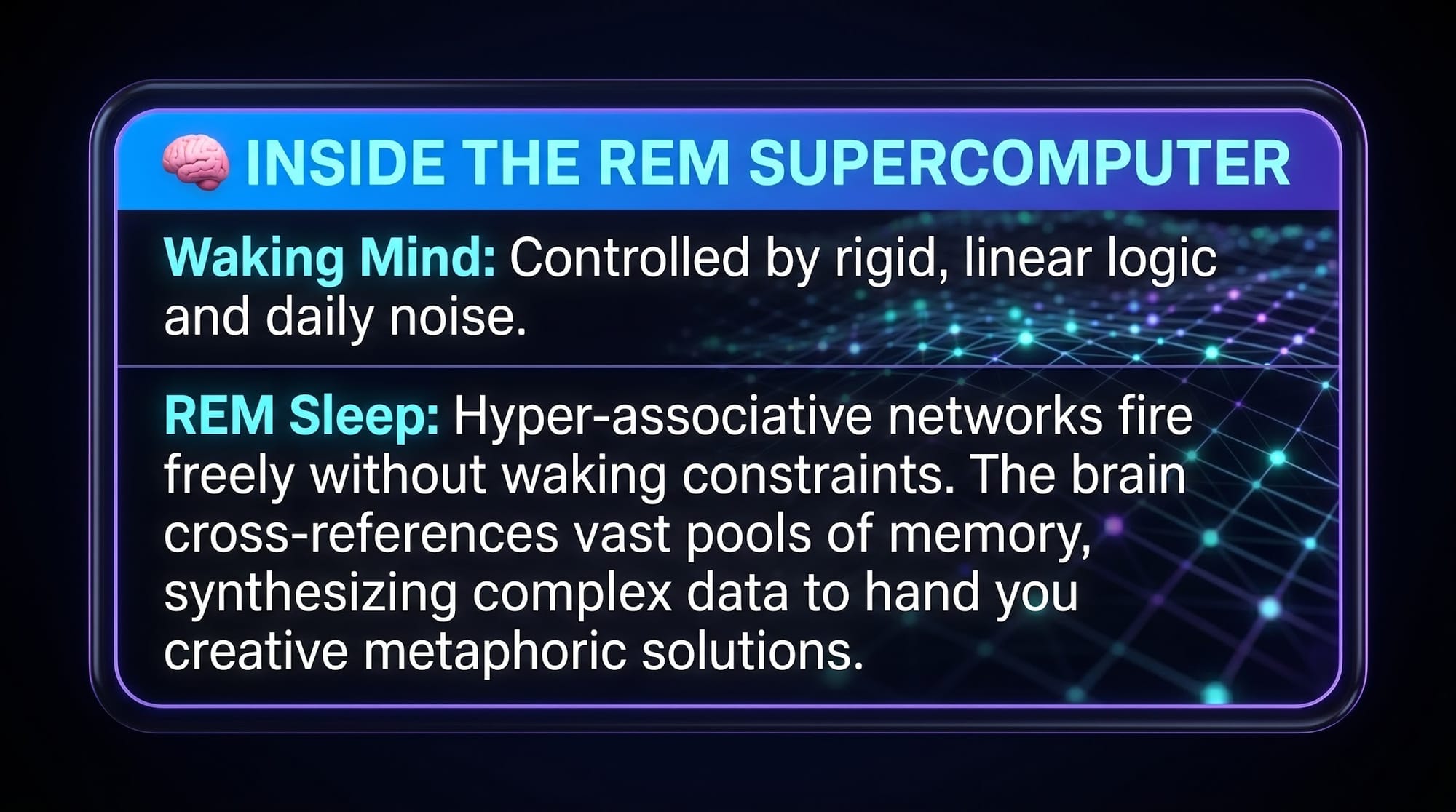
Dreams often present solutions to problems, but they do it through metaphor and symbolism. They offer creative and intuitive answers because, during REM sleep, our brain's hyper-associative networks fire without the constraints of waking logic. This biological shift allows the brain to cross-reference memories and synthesize insights, effectively functioning as an organic supercomputer that processes data beneath our conscious awareness. This natural process yields deep, innovative answers that our busy, logical minds might miss when we're awake.
When we notice the feelings, images, and stories in our dreams, we connect more deeply with our inner wisdom and see the world in new ways. Dreams can feel like a direct link to a higher understanding, whether that's universal wisdom or a deeper consciousness. They cut through the noise of daily life to bring us important insights. By working with our dreams, we can feel more in tune and balanced each day. It's encouraging to know that paying attention to our dreams can unlock this natural wisdom.
🌿 Energetic and Spiritual Healing Through Dreams

Just as the Greeks sought healing in their dream temples, many people today believe that dreams can aid energetic and spiritual healing. Dreams can bring up hidden blocks, old emotions, or spiritual imbalances that affect our feelings. You can think of these blocks as stuck energy—or, in neurobiological terms, unresolved somatic stress trapped within the autonomic nervous system.
When we notice and work with what shows up in our dreams, such as facing a fear as a creature or accepting a caring figure, we start to heal and let go. Dreams help us process our feelings and inner struggles. When you face a frightening symbol in a dream, you are participating in a natural form of exposure therapy within a safe, neurochemically isolated environment, since the body is naturally paralyzed during REM sleep. This process allows old, stuck energy to move again, reducing physical stress and bringing greater inner peace.
Shamans have long used dream interpretation for healing, showing how old this idea is. Addressing the spiritual or energetic issues that dreams reveal can truly help our overall well-being. Real healing involves the mind, body, and spirit. Dreams offer a way to bridge our internal experiences with traditional energy systems, such as chakras and auras, thereby supporting healing from within. Seeing dreams this way is hopeful and encouraging because it treats them as a tool for deep healing, not just physical healing.
📓 The Process of Dream Interpretation: A Holistic Approach

Interpreting dreams takes practice and self-reflection, but a holistic approach can reveal even more. By following a few simple steps, you can start to understand your dreams and connect your inner world with your daily life and spiritual path.
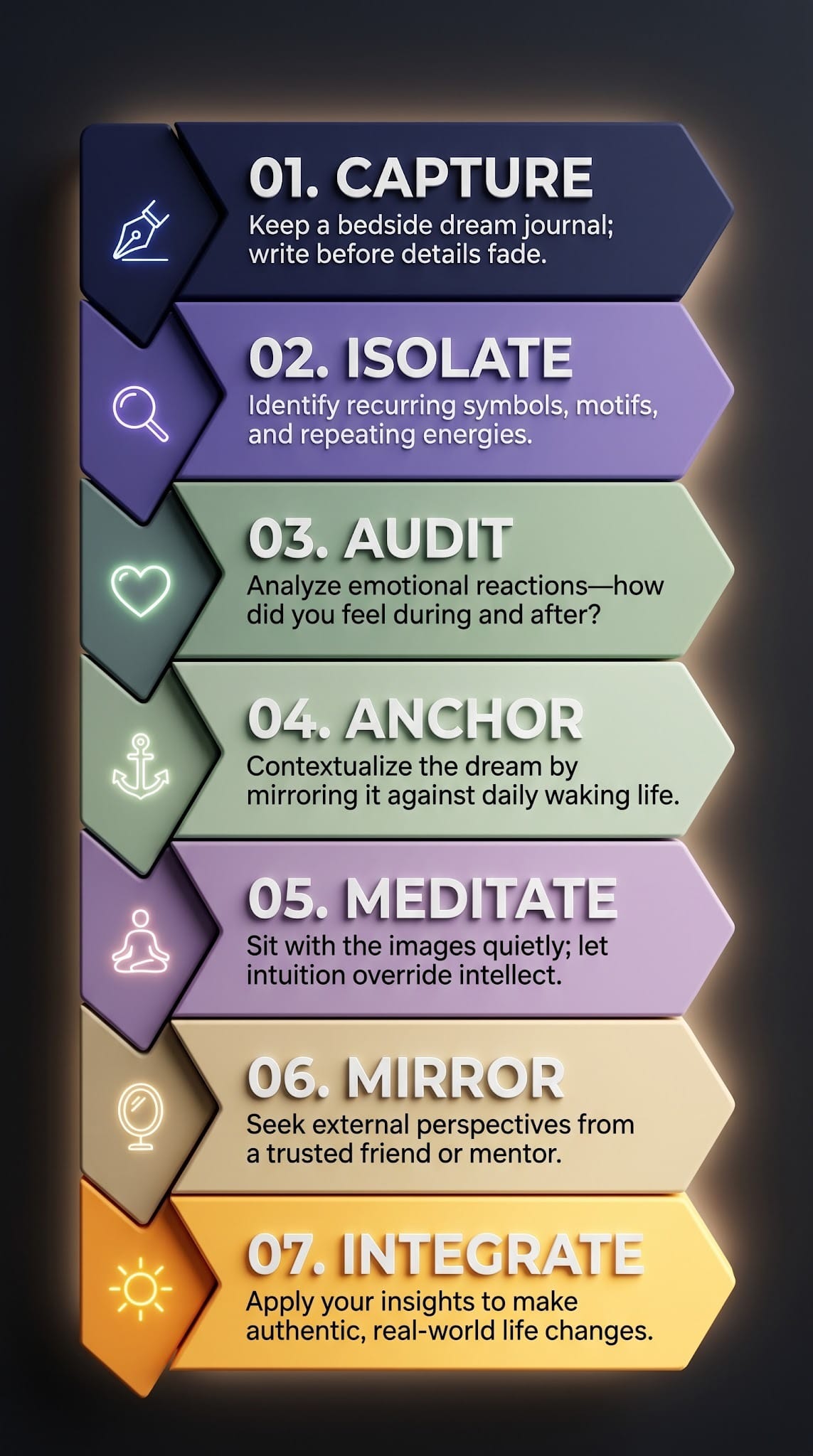
Seven Practical Steps for Daily Practice
- Keep a Dream Journal: Write down your dreams as soon as you wake up to catch all the details before they fade. Include your emotions, symbols, characters, settings, and the overall story. Think of this as creating a special space to connect with your inner world and, possibly, with spiritual guides. The more details you write, the more you can understand.
- Identify Recurring Symbols and Themes: Look for recurring elements in your dreams. These often point to ongoing patterns, unresolved issues, or energies in your life that need attention. It's like your soul or the universe keeps sending you the same message until you notice.
- Analyze Emotional Reactions: Think about how you felt during and after the dream. These emotions are strong clues to what's happening in your subconscious. They can reveal hidden thoughts, worries, hopes, or fears that the dream brings up. Your feelings can help you find the main message of your dream.
- Contextualize the Dream: Connect the symbols and events in your dream to what is happening in your daily life. How do they relate to your current situations, challenges, relationships, or goals? Are they showing your daily experiences, hidden fears, or guiding you toward new solutions? Notice how the dream story mirrors or gives insight into your life.
- Use Meditation and Reflection: Take some quiet time to picture your dream and explore its deeper meaning through meditation or reflection. Sometimes, just sitting with a dream image or feeling can bring insights that aren't immediately clear. Deepening your connection is an intuitive, not purely intellectual, process. Consider incorporating mindfulness or energy work as methods for this.
- Seek External Perspectives: Talk about your dreams with someone you trust, like a friend, mentor, therapist, or dream analyst. Others can offer new ideas and insights you might not notice on your own. They can give you a broader view of the dream's message. Sometimes, another person's perspective helps you see connections you missed.
- Apply Your Insights: Use what you learn from your dreams to make positive changes, set goals, handle challenges, or better understand yourself. The main idea is to bring dream insights into your daily life. By using these lessons, you can create a more rewarding and authentic life. Dream work is a personal journey to discover more about yourself.
🧩 Addressing the Challenges and Limitations of Dream Interpretation

Dream interpretation can be very helpful, but it's not an exact science, and that's okay. It's important to stay open-minded and recognize the challenges. Symbols can mean different things to different people because everyone has their own experiences. Sometimes, we might overthink dreams, but not every detail has a deep meaning. Our backgrounds can also affect how we see our dreams. While science studies dreams, much of their deeper meaning is still unknown. It can be difficult to recall dreams, but even fragmented memories can offer valuable insights. By reflecting on these small pieces and employing our intuition, we create space to explore novel ideas.
Even with these challenges, exploring dreams with an open mind and a holistic view can be a powerful tool for self-reflection and growth. It's a personal journey, and the meanings that feel true to you are the most important. Trust your intuition. Your inner self often knows the message. We can notice the difficulties while still valuing how much dream work can offer.
🕯️ Conclusion: Embracing the Mystery and Wisdom of Dreams

In the text "A dream which is not interpreted is like a letter which is not read," the Talmud offers a beautiful metaphor for how dreams can help us understand our subconscious, uncover hidden truths, and guide us as we grow and change.
Recurring dreams can be important signs. They often show us unresolved feelings, worries, or areas where we need to grow. If you notice the same themes or symbols, it might mean you haven't worked through something yet or that your inner self wants you to hear a message. By noticing and understanding these patterns, you can learn more about your fears, relationships, or the changes you need to make. Bringing these messages into your awareness helps you heal and grow. It's like your inner world is gently guiding you toward feeling more whole.
By paying attention to your dreams and exploring their meanings, you can start a rewarding journey of self-discovery and spiritual growth. It's an ongoing conversation with your inner self, and maybe even with something greater, like the divine, the universe, or a shared consciousness. Embrace the mystery and the journey. Let your dreams guide you and help you find your path.
✉️ Ready to Read Your Dream Letters? Let's Do This!

Have you ever woken up from a strange or amazing dream? Those images and feelings aren't just random. They can be special messages from your inner self, or maybe even from something greater. But just like a letter, they only help if you take time to understand them.
Interpreting your dreams is an exciting way to learn more about yourself and discover deep wisdom. It's a personal journey, and every insight you find is a step forward.
Ready to start decoding those nightly messages? Here are some simple, actionable steps you can take:
Actionable Checkpoints
- Keep a Journal: To remember your dreams, keep a notebook and pen by your bed. As soon as you wake up, write down everything you remember, like how you felt, who was there, what happened, and where it took place. A dream journal is a valuable tool for beginning your personal dream interpretation journey.
- Spot the Repeats: As you write in your journal, look for things that show up again and again. It might be a certain symbol, place, or feeling. These repeats can point to something important your inner self wants you to notice.
- Feel the Feelings: Besides writing the story, notice how the dream made you feel during and after. These emotions are important clues to what your dream means.
- Connect it to Your Day: Think about how your dream might relate to your life right now. Is it similar to something you're going through, or does it give you a new way to look at a problem? Dreams can show us things we might miss when life gets busy.
- Just Sit and Reflect: Take a quiet moment to think about your dream. Close your eyes, remember the images, or focus on the feelings. Sometimes the meaning becomes clear when you give it space and don't overthink it.
- Chat About It (If You Like!): Sharing your dream with someone you trust, such as a friend, family member, or someone familiar with dreams, can give you new insights you might not have thought of.
- Apply Your Insights: The best part is putting what you learn from your dreams to use. Insights from dreams can help you handle situations, make decisions, or understand yourself better. Let your dreams guide you and try to use their lessons in your daily life.
A sample dream journal entry form can be found here.
Embracing your dreams is like starting an interesting conversation with yourself. It may feel mysterious, but that's part of what makes it enjoyable. Let your dreams help you feel more connected and fulfilled.
“Our actions and decisions today will shape how we will live. And so it is.”
Disclaimer: This guide is intended for informational, educational, and personal growth purposes only. While exploring the psychology and metaphysics of dreams can be a wonderful holistic tool for self-discovery and stress relief, it is not a substitute for professional medical advice, mental health counseling, diagnosis, or treatment. Always consult with a qualified healthcare provider or licensed therapist if you are experiencing severe sleep disruptions, chronic anxiety, or mental health concerns. Your journey into dreamland should always support, not replace, your professional care!
If my writing made you pause, smile, or think, I’d love your support:
Your support helps me keep writing and sharing these ideas with you.
🗂️ Recommended Reads & Resources

Books (via Izalgo Bookstore)
Scientific Foundations of Neurobiology & Cognitive Sleep
- Why We Sleep: Unlocking the Power of Sleep and Dreams by Matthew Walker: This book provides an essential scientific examination of REM sleep, demonstrating how the brain functions as an organic supercomputer, processing emotions and synthesizing memories. It directly supports the text's discussion of hyper-associative neural networks, explaining the physiological mechanisms that enable our brains to free themselves from waking logic and generate creative breakthroughs during the dream state.
- The Oracle of Night: The History and Science of Dreams by Sidarta Ribeiro: A masterful blend of evolutionary biology, neurophysiology, and history that charts how dreaming became a vital survival tool for the human species. The author traces the development of neural pathways that map perfectly onto the text’s exploration of evolutionary schemas, demonstrating how our ancestors used the dream state as an ancient biological theater for threat simulation and community preservation.
- The Committee of Sleep by Deirdre Barrett: This research investigates how artists, scientists, and creatives harness the hyperassociative processing power of REM sleep to solve complex problems while awake. The book validates the text's assertion that dreams serve as intuitive problem-solvers, showing that neural activation during sleep yields innovative solutions that the analytical waking mind often misses.
- Dreaming: A Very Short Introduction by J. Allan Hobson: A definitive primer on the neurobiology of consciousness during sleep, outlining the chemical shifts and temporary paralysis that occur during REM states. It serves as a foundational text for understanding the neurochemically isolated environment mentioned in the guide, illustrating how the brain safely processes trapped somatic stress and intense emotional imagery without physical consequence.
Metaphysical, Archetypal & Holistic Dream Theories
- Man and His Symbols by Carl G. Jung: This seminal work introduces the concepts of the collective unconscious and archetypal energy and establishes how universal symbols such as the Hero and the Shadow manifest in our nightly visions. It offers the foundational architecture for understanding the text's metaphysical lens, showing how personal dream journeys connect to an ancient, shared human wisdom.
- Inner Work: Using Dreams and Active Imagination for Personal Growth by Robert A. Johnson: A brilliant Jungian guide that bridges the gap between personal consciousness and the collective unconscious through the practical analysis of dream images. The author teaches readers how to interact directly with dream figures, aligning with the guide’s holistic approach of treating dream symbols as literal, sacred letters written by the deepest self.
- The Tibetan Yogas of Dream and Sleep by Tenzin Wangyal Rinpoche: This text illuminates the spiritual traditions of the East, explaining how the dream state is used to navigate simultaneous realities and accelerate spiritual awakening. It deepens the text's exploration of Taoist and Buddhist dream theories, showing how conscious awareness during sleep can dissolve energetic blocks and elevate personal karma.
- Dream Tending: Awakening to the Healing Power of Dreams by Stephen Aizenstat: This book introduces a transpersonal approach to dreamwork in which dream images are treated as living, energetic entities that offer deep psychological and spiritual guidance. It aligns seamlessly with the text's framework on spiritual healing, demonstrating how acknowledging these internal archetypes can release unresolved somatic stress locked in the body.
Practical "How-To" Dream Work & Rituals
- Exploring the World of Lucid Dreaming by Stephen LaBerge and Howard Rheingold: The premier instructional blueprint for gaining conscious awareness within the dream state using scientifically validated exercises. This manual serves as a practical "how-to" tool that empowers individuals to confront frightening dream symbols consciously, enabling the precise exposure therapy and energetic healing highlighted in the guide.
- The Curious Dreamer's Practical Guide to Dream Interpretation by Nancy Wagaman: A highly structured, step-by-step handbook designed to help readers systematically untangle complex dream metaphors and emotional reactions. This text expands upon the seven practical steps outlined in the guide, offering intuitive exercises to connect nightly symbolism directly with waking challenges and relationships.
- The Dream Interpretation Handbook: A Guide to Understanding the Symbols and Meanings of Your Dreams by Karen Frazier: This highly practical, entry-level handbook provides a step-by-step framework for establishing a seamless morning dream-recall routine. It guides readers in tracking recurring dream patterns, mapping emotional shifts experienced upon waking, and translating abstract subconscious symbolism into clear, actionable advice for daily emotional regulation.
- A Field Guide to Lucid Dreaming: Mastering the Art of Oneironautics by Dylan Tuccillo, Jared Zeizel, and Thomas Peisel: This practical, step-by-step guidebook demystifies the mechanics of waking up within your subconscious mind. It provides direct instruction on the timing of REM cycles, sensory reality checks, and the essential ritual of dream journaling. By teaching readers how to stabilize and navigate the dream world, it offers a concrete blueprint for problem-solving, facing internal fears, and unlocking deep creative intuition.
Online Resources
Dream Architecture & Synthesis Tools
- SoBrief.com: An AI-powered platform designed to provide rapid, highly accurate text summaries of expansive literature on energy management, psychology, and holistic well-being in under 10 minutes. This tool maps back to the document by allowing users to quickly cross-reference deep psychological concepts—such as Jungian schemas or cognitive sleep science—saving hours of research time and expanding their intellectual toolkit for active self-reflection.
- Izalgo Dream Journal Form: A dedicated digital framework designed explicitly for logging, structuring, and meditating upon subconscious imagery immediately upon waking. This platform operationalizes the guide’s seven-step holistic process by prompting users to record emotional reactions, identify recurring themes, and connect dream symbols directly to their current daily life challenges.
Somatic Regulation & Nervous System Calming
- Othership: A specialized breathwork application that utilizes guided, scientifically backed breathing patterns to shift autonomic nervous system states rapidly. It serves as an excellent somatic circuit breaker, allowing users to move stuck energy, clear unresolved somatic stress, and achieve internal tranquility before engaging in morning dream journaling or evening reflection.
- HeartMath Inner Balance: A biofeedback hardware and app system designed to measure and optimize heart-brain coherence through paced breathing and emotional focus. This tool aligns with the guide's emphasis on holistic well-being by providing a physiological metric for inner peace and helping users reduce waking anxiety, enabling them to enter sleep states with an open, receptive mind.
Mindful Rituals & Restorative Sleep Environments
- Calm: A wellness platform featuring expansive audio libraries dedicated to sleep meditation, soundscapes, and mindfulness training designed to lower central nervous system arousal. This platform supports the guide's daily rituals by providing structured evening meditation tracks that help calm the conscious mind, paving the way for deeper REM cycles and clearer dream recall.
- Sleep Cycle: An intelligent sleep tracking platform that analyzes sleep phases by monitoring movement and sound patterns throughout the night. It directly serves the text's scientific dimension by pinpointing exactly when an individual transitions into hyper-associative REM sleep, allowing users to align their morning wake times with the natural conclusions of their dream cycles.
Concise Learning & Summaries:
- Izalgo Bookstore: A curated digital space to find specific titles on holistic health and spiritual growth.
- Izalgo: This platform is a dedicated environment for exploring the harmonious integration of scientific, holistic, and metaphysical perspectives, presenting them as interconnected facets of a single truth. Through in-depth resources, it provides a central hub of concrete tools and practical advice to help you move from tension to deep inner tranquility.
Approach all books and resources with an open mind, recognizing that no single source is definitive, complete, or free from controversy and debate. Trust your intuition and inner guidance to discern what truly resonates with your personal path. If a concept or historical detail does not align with your truth, you are encouraged to disregard it and prioritize what best serves your growth.
SoBrief.com is an AI-powered digital platform that provides concise summaries of an extensive catalog of books, enabling users to grasp a book's key takeaways in about 10 minutes.
🔗Affiliate Note: Some links may be affiliate links, which means we may earn a small commission at no extra cost to you. Your support helps us continue this creative and healing work. Thank you!
Izalgo co-created the images in this post using AI software.
Copyright ©️IZALGO, LLC. All Rights Reserved